
📋 Key Facts at a Glance
- Land Ownership: The Hong Kong SAR Government owns virtually all land – only St. John’s Cathedral (1847) has freehold status
- Property Rates: 5% of rateable value applies uniformly to all properties (except exempt religious/charitable)
- Government Rent: 3% of rateable value for post-May 27, 1985 leases; fixed amounts for older leases
- 2047 Renewals: Automatic 50-year extension without premium under the Extension of Government Leases Ordinance (2024)
- Typical Lease Terms: 50 years for post-1985 leases; 75-999 years for historical leases
- Annual Revaluation: Rateable values updated yearly based on market rental values
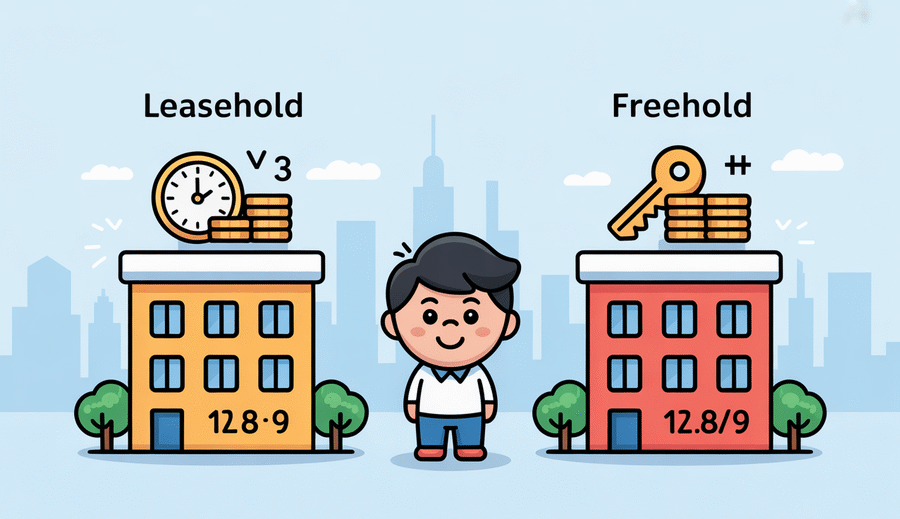
Did you know that when you “own” property in Hong Kong, you’re actually just holding a long-term lease from the government? Unlike most global financial centers where freehold ownership is common, Hong Kong operates on a unique leasehold system where the government retains ownership of virtually all land. This comprehensive guide demystifies Hong Kong’s land tenure system, explains how property rates and government rent work, and reveals what the 2047 lease expiry means for property owners today.
Hong Kong’s Unique Land Tenure System: Leasehold vs. Freehold
Hong Kong’s land ownership structure is one of the most distinctive in the world. Since the 1997 handover, all land in Hong Kong is owned by the People’s Republic of China, with the Hong Kong Special Administrative Region (HKSAR) Government responsible for its management and development. This system is enshrined in Article 7 of the Basic Law, creating a leasehold framework where property owners hold land under government leases rather than owning it outright.
The Sole Freehold Exception: St. John’s Cathedral
In 1847, during the British Crown Colony period, Queen Victoria granted St. John’s Cathedral in Central a freehold lease to ensure British Christians had a permanent place of prayer. This unique grant provides perpetual ownership under the condition that the land must be continually used for ecclesiastical purposes. Codified in Hong Kong law in 1930 under the Church of England Trust Ordinance, this makes St. John’s Cathedral the only true freehold property in Hong Kong today.
Understanding Lease Types and Terms
Hong Kong’s lease terms have evolved significantly over time, with the Sino-British Joint Declaration of 1984 marking a fundamental shift in land policy.
| Lease Type | Typical Term | Key Features |
|---|---|---|
| Historical Leases | 75-999 years | Fixed Crown rent; various terms based on original grant |
| Post-1985 Leases | 50 years from grant | 3% variable government rent; premium paid upfront |
| Extended NT Leases | To June 30, 2047 | Extended under 1988 Ordinance; 3% rent from July 1997 |
| Village Lots | Varies (often to 2047) | Historic rent for male-line descendants of 1898 villagers |
The Significance of May 27, 1985
This date marks when the Sino-British Joint Declaration entered into force, fundamentally changing Hong Kong’s land policy:
- Before May 27, 1985: Leases on Hong Kong Island and Kowloon had fixed Crown rent amounts specified in lease documents
- After May 27, 1985: All new leases require payment of government rent equal to 3% of rateable value, adjustable annually
- Between 1985-1997: New leases granted for 50 years with premium plus 3% government rent, per Annex III of the Joint Declaration
The 2047 Lease Expiry: What Property Owners Need to Know
On June 30, 2047, approximately 300,000 land lots will see their leases expire simultaneously. This represents a significant portion of Hong Kong’s developed land, affecting residential, commercial, and industrial properties across the territory.
The Legislative Solution: Extension of Government Leases Ordinance (2024)
In July 2024, the Hong Kong government enacted landmark legislation establishing a standing statutory mechanism for lease renewals. This provides crucial certainty to property owners and investors by creating an automatic renewal process.
| Feature | Details |
|---|---|
| Automatic Extension | 50 years from expiry date without owner action |
| Premium Requirement | No land premium payment required |
| Government Rent | 3% of rateable value continues to apply |
| Notice Period | Extension Notices published 6 years before expiry |
| First Batch | 376 land lots with leases expiring before June 2030 included in first notice (July 2024) |
Property Rates: Hong Kong’s Indirect Property Tax
Property rates are an indirect tax levied on all properties in Hong Kong under the Rating Ordinance (Cap. 116). The revenue collected forms part of the Government’s general revenue and funds public services. Rates are administered and collected by the Rating and Valuation Department (RVD).
How Property Rates Are Calculated
Property rates are calculated as 5% of the rateable value of a property. The rateable value is defined as “the estimated annual rental value of a property in the open market at a designated valuation reference date, assuming that the property was then vacant and to let.”
Annual Revaluation Process
Rateable values are reviewed annually during the general revaluation to reflect changes in market rental values. For the 2025-26 valuation list, the designated valuation reference date is October 1, 2024, with rateable values taking effect from April 1, 2025.
Government Rent: Your Lease Payment to the Government
Government rent (formerly Crown rent) is paid by property owners to the Government in return for the right to hold and occupy leased land for the term specified in the lease document. Unlike property rates (a general tax), government rent is a specific obligation arising from the lease agreement.
| Lease Category | Applicable Area/Date | Rent Type | Collection Agency |
|---|---|---|---|
| Old Schedule Leases | HK Island & Kowloon; pre-May 27, 1985 | Fixed Crown rent (historic amount) | Lands Department |
| New Leases | All areas; post-May 27, 1985 | 3% of rateable value (variable) | Rating & Valuation Department |
| Extended NT Leases | New Territories; extended to 2047 | 3% of rateable value from July 1, 1997 | Rating & Valuation Department |
| Village Lots | New Territories; indigenous villagers | Historic rent (unchanged) | Lands Department |
Calculation Formula for Modern Leases
For properties subject to variable government rent, the amount is calculated as:
Like property rates, government rent is adjusted automatically in step with any changes in the rateable value during annual revaluations.
Practical Examples: Calculating Your Costs
Example 1: Modern Residential Property (Post-1985 Lease)
| Detail | Value |
|---|---|
| Location | Taikoo Shing, Hong Kong Island |
| Lease Term | 1990-2040 (50 years) |
| Rateable Value (2025) | HK$480,000 |
| Property Rates (5%) | HK$480,000 × 5% = HK$24,000 |
| Government Rent (3%) | HK$480,000 × 3% = HK$14,400 |
| Total Annual Cost | HK$38,400 (HK$9,600 per quarter) |
Example 2: New Territories Property (Extended to 2047)
| Detail | Value |
|---|---|
| Location | Sha Tin, New Territories |
| Lease Status | Extended to June 30, 2047 |
| Rateable Value (2025) | HK$360,000 |
| Property Rates (5%) | HK$360,000 × 5% = HK$18,000 |
| Government Rent (3%) | HK$360,000 × 3% = HK$10,800 |
| Total Annual Cost | HK$28,800 (HK$7,200 per quarter) |
| Renewal Status | Automatic 50-year extension to 2097 guaranteed |
Common Misconceptions Debunked
| Myth | Reality |
|---|---|
| “Shorter leases pay lower rates” | Rates are 5% of rateable value regardless of lease length. Market rental value may be lower for short leases, affecting rateable value indirectly. |
| “When my lease expires, the property becomes worthless” | Automatic 50-year extensions are now guaranteed for 2047 expiries. The government has established renewal mechanisms for all leases. |
| “Freehold properties don’t exist in Hong Kong” | St. John’s Cathedral is a true freehold property granted in perpetuity in 1847. |
| “I can avoid government rent by not renewing my lease” | Government rent is payable throughout the lease term as specified in your lease agreement. Not renewing means losing the property entirely. |
What Happens When Your Lease Expires?
Legally, when a land lease expires, the land and any buildings or improvements on it revert to the government without compensation. However, in practice, actual reversion of developed property is extremely rare in Hong Kong due to established renewal policies.
Renewal Process for Non-2047 Leases
- Apply Early: Submit renewal application to Lands Department well before expiry (recommended 2-3 years in advance)
- Property Valuation: Government assesses current land value based on market conditions
- Premium Negotiation: Land premium typically required based on property value enhancement
- New Rent Terms: Usually converted to 3% variable government rent for modern leases
- Execution: Sign new lease documents and pay agreed premium
✅ Key Takeaways
- Leasehold System: Virtually all Hong Kong properties are leasehold – you own the right to use land for a specified period, not the land itself
- Financial Obligations: Property rates (5% of rateable value) + government rent (3% or fixed) = ongoing annual costs
- 2047 Certainty: Automatic 50-year extensions guaranteed without premium for leases expiring in 2047
- Check Your Lease: Review your lease document to understand specific terms, expiry date, and rent type
- Annual Adjustments: Both rates and government rent adjust yearly based on market rental value revaluations
- Renewal Planning: For non-2047 expiries, contact Lands Department 2-3 years before expiry to start renewal process
Hong Kong’s unique leasehold land system, while complex, provides secure long-term property rights within a framework that has evolved to meet modern needs. The recent enactment of the Extension of Government Leases Ordinance in 2024 has provided crucial certainty for property owners, particularly those facing the 2047 expiry. Understanding your specific lease terms, financial obligations for rates and government rent, and renewal processes is essential for informed property ownership in Hong Kong. Always consult the Rating and Valuation Department or Lands Department for property-specific advice, and consider professional guidance for lease renewal negotiations.
📚 Sources & References
This article has been fact-checked against official Hong Kong government sources and authoritative references:
- Inland Revenue Department (IRD) – Official tax rates, allowances, and regulations
- Rating and Valuation Department (RVD) – Property rates and valuations
- GovHK – Official Hong Kong Government portal
- Legislative Council – Tax legislation and amendments
- Rating and Valuation Department – Rates Information – Official property rates guidance
- Rating and Valuation Department – Government Rent – Official government rent information
- Government Press Release – Extension of Government Leases Ordinance – Official announcement of 2024 legislation
Last verified: December 2024 | Information is for general guidance only. Consult a qualified tax professional for specific advice.

 Chinese
  English