
📋 Key Facts at a Glance
- Hong Kong’s Pillar Two Implementation: Enacted June 6, 2025, effective January 1, 2025
- Global Minimum Tax Rate: 15% applies to MNE groups with revenue ≥ EUR 750 million
- Hong Kong’s Corporate Tax Rate: 8.25% on first HK$2 million, 16.5% on remainder for corporations
- FSIE Regime: Phase 1 implemented January 2023, Phase 2 expanded January 2024
- Territorial System: Only Hong Kong-sourced profits are taxable under traditional rules
Imagine your multinational enterprise has enjoyed Hong Kong’s competitive tax rates for years, but now a global revolution is reshaping international taxation. The OECD’s BEPS 2.0 initiative is fundamentally changing how profits are taxed worldwide, and Hong Kong-based operations must adapt or face significant compliance challenges and potential tax liabilities. With Hong Kong’s Pillar Two legislation now enacted and effective, understanding this new landscape isn’t just advisable—it’s essential for survival in the global marketplace.
BEPS 2.0: The Global Tax Revolution Explained
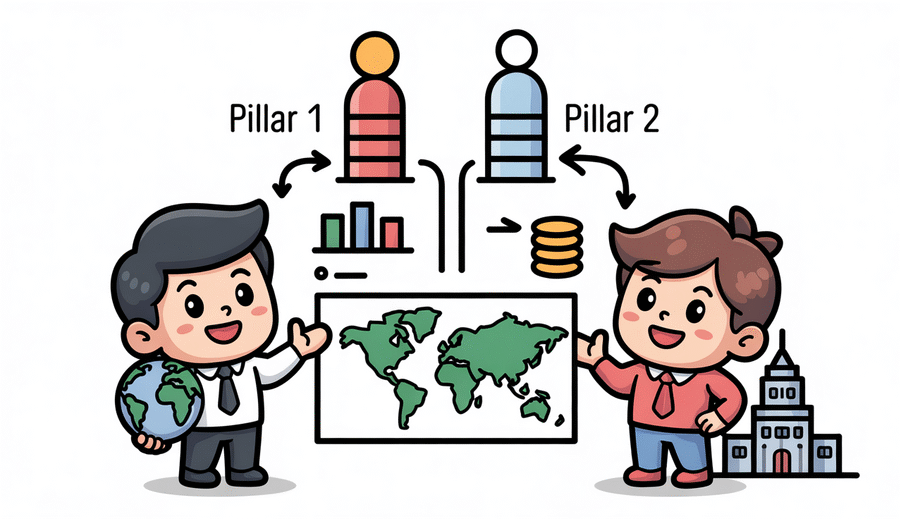
The OECD’s Base Erosion and Profit Shifting (BEPS) 2.0 project represents the most significant overhaul of international tax rules in decades. Born from concerns that multinational enterprises were shifting profits to low-tax jurisdictions without economic substance, this initiative aims to create a fairer global tax system. The framework operates on two complementary pillars that work together to ensure profits are taxed where economic activities occur and value is created.
| Feature | Pillar 1: Profit Reallocation | Pillar 2: Global Minimum Tax |
|---|---|---|
| Primary Goal | Reallocate taxing rights to market jurisdictions | Ensure minimum 15% tax rate on MNE profits globally |
| Scope | Largest and most profitable MNEs | MNEs with consolidated revenue > €750M |
| Key Mechanism | Allocation of “Amount A” based on market revenue | GloBE rules (IIR, UTPR) enabling top-up tax |
| Status in Hong Kong | Monitoring global developments | Enacted June 6, 2025, effective January 1, 2025 |
Hong Kong’s Unique Position in the BEPS Landscape
Hong Kong’s tax system operates on a territorial basis—only income sourced within Hong Kong is subject to profits tax. This stands in stark contrast to BEPS 2.0’s global approach. While Hong Kong’s standard corporate tax rate of 16.5% appears above the 15% minimum threshold, the actual effective tax rate for Pillar Two purposes can differ significantly due to various adjustments required under the GloBE rules.
Pillar Two: Hong Kong’s Implementation and Impact
Hong Kong has taken decisive action by enacting Pillar Two legislation on June 6, 2025, with retroactive effect from January 1, 2025. This includes both the Income Inclusion Rule (IIR) and the Hong Kong Minimum Top-up Tax (HKMTT), ensuring that large multinationals pay at least 15% tax on their profits in every jurisdiction where they operate.
How Pillar Two Actually Works in Practice
The mechanics of Pillar Two involve several critical calculations that every MNE must understand:
- Scope Determination: First, determine if your MNE group meets the €750 million consolidated revenue threshold.
- Effective Tax Rate Calculation: Calculate the effective tax rate for each jurisdiction using the GloBE rules, which differ from domestic tax calculations.
- Substance-Based Income Exclusion: Apply the SBIE, which excludes income based on payroll costs and tangible assets in each jurisdiction.
- Top-up Tax Application: If the effective tax rate falls below 15%, calculate and apply the top-up tax.
Hong Kong’s FSIE Regime: Aligning with BEPS Principles
Hong Kong has proactively refined its Foreign-Sourced Income Exemption (FSIE) regime to align with BEPS principles. The phased implementation began in January 2023 and expanded in January 2024, covering dividends, interest, disposal gains, and IP income received in Hong Kong.
Under the refined FSIE regime, foreign-sourced passive income is only exempt from Hong Kong profits tax if the recipient entity meets specific economic substance requirements. This represents a significant shift from Hong Kong’s traditional territorial approach and directly addresses BEPS concerns about profit shifting to low-tax jurisdictions.
- Phase 1 (January 2023): Initial implementation covering foreign-sourced dividends, interest, and disposal gains
- Phase 2 (January 2024): Expanded to include foreign-sourced IP income
- Economic Substance Test: Requires adequate employees, operating expenditures, and physical premises in Hong Kong
- Participation Exemption: Available for dividends and disposal gains from qualifying equity interests
Operational Impacts on Hong Kong-Based MNEs
BEPS 2.0 requires multinationals to fundamentally rethink their Hong Kong operations. The days of establishing entities with minimal substance purely for tax advantages are ending. Here’s what you need to consider:
Intellectual Property Holding Structures
IP holding companies in Hong Kong must now demonstrate genuine economic substance. The refined FSIE regime and Pillar Two’s substance requirements mean that profits must align with actual economic activities. If your Hong Kong entity holds valuable IP but lacks corresponding R&D or management functions, you may face challenges under both domestic and international rules.
Transfer Pricing Documentation
Hong Kong’s transfer pricing rules, already aligned with OECD principles, will face heightened scrutiny under BEPS 2.0. Your Master File and Local File documentation must robustly support the arm’s length nature of all intercompany transactions, particularly those involving:
- Intra-group financing arrangements
- Management service fees
- Royalty payments for IP usage
- Cost-sharing arrangements
Compliance Roadmap for Hong Kong Entities
Navigating BEPS 2.0 requires a structured approach. Here’s your step-by-step compliance roadmap:
- Scope Assessment: Determine if your MNE group meets the €750 million revenue threshold for Pillar Two.
- Data Collection: Implement systems to collect the detailed financial and tax data required for GloBE calculations.
- Substance Evaluation: Assess whether your Hong Kong entities have sufficient economic substance for FSIE purposes.
- Transfer Pricing Review: Update your transfer pricing documentation to meet enhanced BEPS standards.
- Effective Tax Rate Calculation: Calculate your Hong Kong effective tax rate using GloBE methodology.
- Reporting Preparation: Prepare for the GloBE Information Return and other required filings.
Strategic Responses to Maintain Competitiveness
Despite the challenges, Hong Kong remains a competitive location for multinational operations. Here are strategic responses to maintain your edge:
Consider these additional strategies:
- Regional Headquarters Optimization: Centralize key management, control, and value-adding functions in Hong Kong to reinforce substance arguments
- Family Investment Holding Vehicles: Explore the FIHV regime offering 0% tax on qualifying income for entities with minimum HK$240 million AUM and substantial activities
- Double Taxation Agreements: Utilize Hong Kong’s network of 45+ CDTAs to mitigate double taxation and provide certainty
- Working Capital Planning: Model potential tax increases and compliance costs to ensure adequate liquidity
✅ Key Takeaways
- Hong Kong’s Pillar Two legislation is now effective (January 1, 2025), requiring MNEs with €750M+ revenue to pay minimum 15% tax
- The refined FSIE regime requires economic substance for foreign-sourced income exemptions
- Hong Kong’s 16.5% corporate tax rate doesn’t guarantee Pillar Two compliance—effective tax rate calculations differ
- Substance-based income exclusions can significantly reduce or eliminate top-up tax liabilities
- Proactive compliance planning and strategic restructuring are essential for maintaining competitiveness
The BEPS 2.0 era represents both challenge and opportunity for Hong Kong-based multinationals. While compliance requirements are increasing, Hong Kong’s fundamental advantages—its strategic location, robust legal system, and business-friendly environment—remain intact. By understanding the new rules, enhancing substance, and strategically positioning your operations, you can navigate this transformation successfully. The key is to act now: assess your current position, develop a compliance roadmap, and implement strategic changes before enforcement actions begin.
📚 Sources & References
This article has been fact-checked against official Hong Kong government sources and authoritative references:
- Inland Revenue Department (IRD) – Official tax rates, allowances, and regulations
- Rating and Valuation Department (RVD) – Property rates and valuations
- GovHK – Official Hong Kong Government portal
- Legislative Council – Tax legislation and amendments
- IRD: Global Minimum Tax and Hong Kong Minimum Top-up Tax – Official BEPS 2.0 guidance
- IRD: Foreign-sourced Income Exemption (FSIE) Regime – Official FSIE guidance
- OECD BEPS – International tax framework and standards
Last verified: December 2024 | Information is for general guidance only. Consult a qualified tax professional for specific advice.

 Chinese
  English