
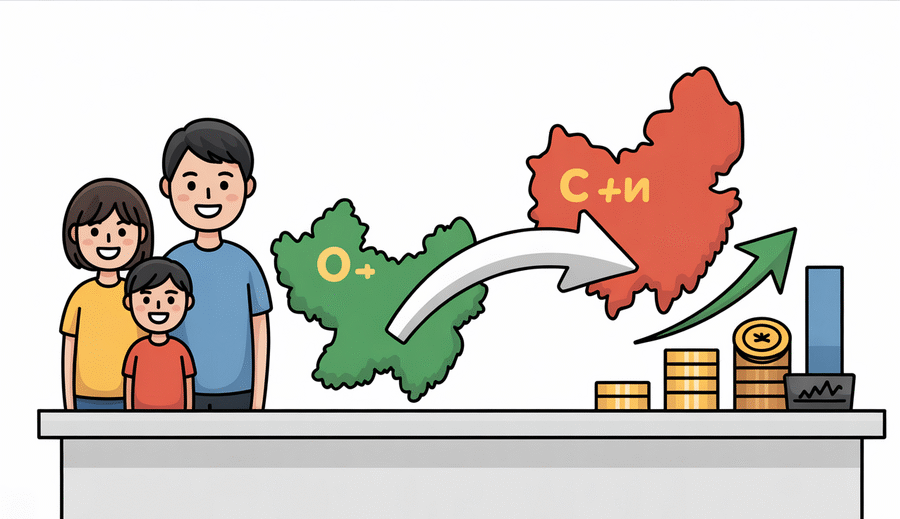
📋 Key Facts at a Glance
- FIHV Tax Rate: 0% profits tax on qualifying investment income for eligible Family-owned Investment Holding Vehicles
- HK-China DTA Rates: 5% withholding tax on dividends, 7% on interest and royalties (vs. standard 10%)
- Substantial Activities: Minimum 2 full-time qualified employees and HK$2 million annual operating expenditure in Hong Kong
- FSIE Exemption: Family offices exempt from economic substance requirements on foreign-sourced passive income
- Greater Bay Area Benefits: 15% effective individual income tax rate for overseas talent in designated zones
- Capital Investment Entrant Scheme: HK$30 million investment qualifies for Hong Kong residency, integrated with FIHV structures
For high-net-worth families navigating the complex tax landscape between Hong Kong and Mainland China, establishing a strategically structured family office isn’t just about wealth management—it’s about unlocking significant tax efficiencies across both jurisdictions. With Hong Kong’s unique position as a Special Administrative Region boasting its own tax system and deep economic integration with China through the Greater Bay Area initiative, savvy families can achieve remarkable tax optimization while maintaining full compliance with evolving regulatory frameworks.
The Dual-Jurisdiction Advantage: Hong Kong-China Tax Synergy
Hong Kong’s territorial tax system, which doesn’t tax capital gains, dividends, or inheritance, combined with China’s comprehensive tax regime, creates both challenges and opportunities. The key to success lies in understanding how to leverage Hong Kong’s favorable tax policies while efficiently managing China-sourced income and operations.
Hong Kong-China Double Taxation Arrangement (DTA)
The foundation of cross-border tax planning is the Arrangement between Mainland China and Hong Kong for the Avoidance of Double Taxation. This bilateral agreement, most recently updated through the Fifth Protocol effective from 2020, provides preferential withholding tax rates that are critical for family office structures:
| Income Type | Standard Rate | DTA Rate | Tax Saving |
|---|---|---|---|
| Dividends | 10% | 5% | 50% reduction |
| Interest | 10% | 7% | 30% reduction |
| Royalties | 10% | 7% | 30% reduction |
Hong Kong’s Family Office Tax Regime: The FIHV Framework
Hong Kong’s formal family office tax concession regime, established through the Inland Revenue (Amendment) (Tax Concessions for Family-owned Investment Holding Vehicles) Ordinance 2023, offers a powerful 0% profits tax rate on qualifying investment income. This regime applies retrospectively to years of assessment commencing on or after April 1, 2022.
Core Structure Requirements
The FIHV regime requires at least two distinct entities working together:
- Single Family Office (SFO): A dedicated management entity providing investment management and administrative services exclusively for one family’s assets, normally managed or controlled in Hong Kong
- Family-owned Investment Holding Vehicle (FIHV): The investment entity holding and managing the family’s assets, with at least 95% beneficial interest held by family members (reducible to 75% with charitable institutions)
Substantial Activities Requirements
To ensure genuine economic substance in Hong Kong, the FIHV regime imposes minimum requirements that can be satisfied through outsourcing to the SFO:
| Requirement | Minimum Standard | Flexibility |
|---|---|---|
| Qualified Employees | 2 full-time in Hong Kong | Can be outsourced to SFO |
| Operating Expenditure | HK$2 million annually | Incurred in Hong Kong for CIGAs |
| Management & Control | Normally in Hong Kong | Board meetings, key decisions in HK |
The Foreign-Sourced Income Exemption (FSIE) Regime: Family Office Carve-Out
Hong Kong’s FSIE regime, effective from January 1, 2023 and expanded on January 1, 2024, addresses international concerns about “double non-taxation” while preserving Hong Kong’s territorial tax system. Crucially for family offices, the regime includes a specific carve-out that exempts family offices from economic substance requirements on foreign-sourced passive income.
What This Means for Your Family Office
This exemption is essential for dual Hong Kong-China family office structures because it allows Hong Kong-based family offices to receive China-sourced investment income without triggering additional economic substance obligations beyond those already required under the FIHV regime. The covered income types include:
- Interest income from China investments
- Dividends from Chinese companies
- Disposal gains on equity interests in China entities
- Intellectual property income from China licenses
Greater Bay Area Tax Opportunities
The Guangdong-Hong Kong-Macao Greater Bay Area initiative creates unique opportunities for family offices with operations across the border. The preferential policies offer substantial tax relief that can be integrated into your family office structure.
Individual Income Tax Incentives
Eligible overseas talent (including Hong Kong residents) working in the nine GBA mainland cities receive financial subsidies calculated as the difference between actual IIT paid and 15% of their taxable income. This effectively reduces the IIT burden from China’s progressive rates of 3-45% to Hong Kong’s standard rate of 15%.
Corporate Income Tax Benefits
Designated GBA zones offer reduced corporate income tax rates for qualified enterprises:
- Qianhai (Shenzhen), Hengqin (Zhuhai), Nansha (Guangzhou): 15% CIT rate versus China’s standard 25% for encouraged industries
- Technology and Innovation Zones: 15% preferential CIT rate for qualified enterprises
Strategic Structuring for Maximum Efficiency
Optimal Entity Structure
Sophisticated dual-jurisdiction structures typically involve multiple entities optimized for different asset types:
- Hong Kong FIHV: Holds international portfolio investments, China equity investments benefiting from DTA reductions, and intellectual property licensed to China operations
- China WFOE or Holding Company: Manages direct ownership of China operating businesses, real estate holdings, and RMB-denominated portfolios
- Interposed Hong Kong Company: Positioned between Hong Kong FIHV and China operating entities to access DTA benefits and facilitate foreign exchange management
Dividend Repatriation Strategy
For families with operating businesses in China, structuring the ownership chain to include a Hong Kong holding company achieves significant tax efficiency:
Intellectual Property Structuring
For families with valuable IP used in China operations, a Hong Kong IP holding structure can be particularly tax-efficient:
- IP owned by Hong Kong FIHV or dedicated IP holding entity
- Licensed to China operating companies at arm’s length rates
- Royalties flow from China to Hong Kong at 7% withholding tax rate under DTA
- Royalty income potentially qualifies for FIHV tax exemption
Integration with Capital Investment Entrant Scheme (CIES)
The relaunched Capital Investment Entrant Scheme provides a pathway to Hong Kong residency for investors committing HK$30 million to qualifying assets. Significantly, investments held through an FIHV or Family-owned Special Purpose Entity (FSPE) managed by an eligible SFO will qualify for CIES purposes, creating a powerful combination:
- Family members obtain Hong Kong residency through CIES by investing through their family office structure
- The same structure qualifies for 0% profits tax on qualifying investment income
- Maintain flexibility to manage a diversified portfolio of qualifying assets
Compliance and Documentation Essentials
Maintaining eligibility for dual-jurisdiction tax benefits requires meticulous compliance and documentation:
For FIHV Benefits
- Annual certification of beneficial ownership percentages
- Documentation of employee qualifications and Hong Kong presence
- Detailed records of HK$2 million+ operating expenditure incurred in Hong Kong
- Evidence that management and control occur in Hong Kong (board minutes, investment committee records)
For DTA Benefits
- Tax residency certificates from Hong Kong IRD
- Documentation supporting benefit eligibility under Principal Purpose Test
- Transfer pricing documentation for intercompany transactions
- Evidence of beneficial ownership and control
2024-2025 Proposed Enhancements
Hong Kong continues to enhance its family office regime to remain competitive. Proposed enhancements include:
- Expanded Qualifying Assets: Inclusion of virtual assets (cryptocurrencies, digital tokens) and fine arts/collectibles
- Incidental Income Threshold Removal: Elimination of the 5% threshold on incidental income
- Enhanced FSPE Flexibility: Broader permissible activities for special purpose entities
- Growing Ecosystem: With approximately 2,700 family offices currently operating and 43% growth forecast for 2025
✅ Key Takeaways
- Hong Kong’s FIHV regime offers 0% profits tax on qualifying income when combined with proper structure and substance
- The HK-China DTA provides 5% withholding tax on dividends (vs. 10% standard), creating significant savings on profit repatriation
- Family offices enjoy a carve-out from FSIE economic substance requirements on foreign-sourced passive income
- Minimum 2 qualified employees and HK$2 million annual expenditure in Hong Kong are essential for FIHV eligibility
- Greater Bay Area initiatives offer 15% effective tax rates for both individuals and qualifying enterprises
- Strategic use of interposed Hong Kong companies between FIHV and China entities optimizes tax efficiency
- The Capital Investment Entrant Scheme integrates with FIHV structures for residency planning
- Robust transfer pricing documentation is critical for cross-border related-party transactions
- Hong Kong’s growing family office ecosystem provides increasing access to specialized services and opportunities
- Proposed 2025 enhancements will make Hong Kong increasingly competitive with other family office hubs
Hong Kong’s unique position as a Special Administrative Region with its own tax system, combined with deep integration with Mainland China through the Greater Bay Area initiative, creates compelling opportunities for families with cross-border wealth. By leveraging the FIHV regime’s 0% tax rate, accessing DTA withholding tax reductions, and maintaining genuine operational substance in Hong Kong, families can achieve remarkable tax efficiency while positioning themselves to access opportunities across both jurisdictions. As Hong Kong continues to enhance its family office regime, the dual Hong Kong-China structure represents a sophisticated solution for optimizing cross-border wealth management.
📚 Sources & References
This article has been fact-checked against official Hong Kong government sources and authoritative references:
- Inland Revenue Department (IRD) – Official tax rates, allowances, and regulations
- IRD FIHV Regime – Family-owned Investment Holding Vehicles tax concessions
- IRD FSIE Regime – Foreign-sourced Income Exemption guidelines
- IRD DTA Rates – Double Taxation Arrangement withholding tax rates
- GovHK – Official Hong Kong Government portal
- FamilyOfficeHK – Hong Kong family office development initiatives
- Legislative Council – Tax legislation and amendments
Last verified: December 2024 | Information is for general guidance only. Consult a qualified tax professional for specific advice.

 Chinese
  English