Understanding Assessable Profits in Hong Kong: What Counts and What Doesn’t
📋 Key Facts at a Glance
- Tax Rate: Corporations pay 8.25% on first HK$2 million, 16.5% on remainder; unincorporated businesses pay 7.5% and 15% respectively
- Territorial Principle: Only Hong Kong-sourced profits are taxable – foreign-sourced income is generally exempt
- Capital Gains: Hong Kong does NOT tax capital gains from investment assets
- Record Keeping: Businesses must maintain financial records for 7 years
- FSIE Regime: Foreign-sourced income exemption requires economic substance in Hong Kong (effective 2024)
Ever wondered why Hong Kong remains one of the world’s most attractive business hubs? The answer lies in its clear, predictable tax system centered around the concept of “assessable profits.” But what exactly counts as taxable profit in Hong Kong, and what doesn’t? Understanding this distinction is crucial for every business operating in the territory, from startups to multinational corporations. Let’s demystify Hong Kong’s assessable profits framework and help you navigate your tax obligations with confidence.
The Foundation: Territorial Source Principle
Hong Kong’s entire corporate tax system rests on one fundamental principle: the territorial source principle. This means Profits Tax is levied only on profits that arise in or are derived from Hong Kong from a trade, profession, or business carried on in Hong Kong. The geographical source of the profit determines taxability, not the taxpayer’s residence or where business decisions are made.
Revenue vs. Capital: The Critical Distinction
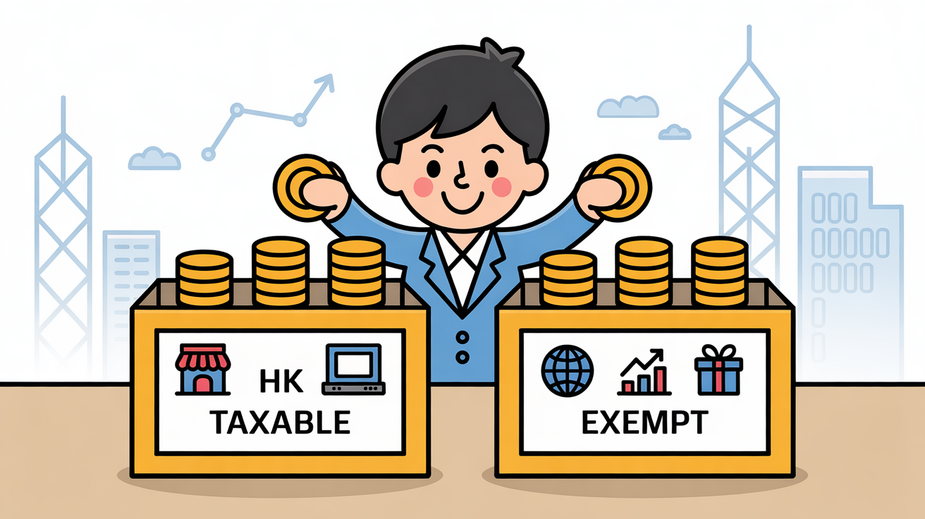
A vital distinction within assessable profits is between income of a revenue nature and capital gains. Profits Tax targets profits arising from ordinary business activities – what you do day-to-day to generate income. Capital gains, however, are generally exempt from taxation in Hong Kong.
| Taxable Revenue Income | Exempt Capital Gains |
|---|---|
| Trading income from buying/selling goods | Profit from selling company’s office building held as investment |
| Fees for services rendered in Hong Kong | Gains from selling shares held as long-term investments |
| Rental income from properties in Hong Kong | Profit from selling machinery held for business use (not trading) |
What Counts: Taxable Income Streams
Based on the territorial source principle, Hong Kong’s Profits Tax specifically applies to these defined income streams derived from activities within its jurisdiction:
| Source Type | Description | Key Consideration |
|---|---|---|
| Trading Profits | Income from core business operations conducted in or from Hong Kong | Location of profit-generating activities determines source |
| Service Fees | Earnings from services performed physically within Hong Kong | Where work is performed, not client location or contract signing |
| Rental Income | Revenue from leasing out properties situated in Hong Kong | Property must be located in Hong Kong |
| Manufacturing Profits | Income from goods manufactured in Hong Kong | Production location determines source |
What Doesn’t Count: Exemptions and Exclusions
Hong Kong’s tax system provides significant exemptions that make it attractive for international business. Understanding what’s excluded is as important as knowing what’s included.
| Exempt Item | Description | Important Notes |
|---|---|---|
| Capital Gains | Profits from selling capital assets held for investment | Must be genuine investment, not trading stock |
| Foreign-Sourced Income | Income from activities conducted entirely outside HK | FSIE regime requires economic substance in HK (2024) |
| Dividends | Income distributed from company profits | No withholding tax on dividends in Hong Kong |
| Interest Income | Most interest earned by businesses | Some exceptions for financial institutions |
Step-by-Step: Calculating Your Assessable Profits
Calculating assessable profits follows a systematic process. Here’s your practical guide:
- Step 1: Identify Gross Income – Aggregate all taxable income from Hong Kong-sourced activities: trading profits, service fees, rental income, etc.
- Step 2: Subtract Allowable Deductions – Deduct expenses incurred “wholly and exclusively” for producing assessable profits. This includes:
- Cost of goods sold
- Salaries and wages
- Rent for business premises
- Utilities and office expenses
- Depreciation allowances on qualifying assets
- Step 3: Apply Loss Carry-Forward – If you have tax losses from previous years, you can carry them forward indefinitely to offset current profits.
- Step 4: Calculate Tax – Apply the appropriate tax rate:
- Corporations: 8.25% on first HK$2 million, 16.5% on remainder
- Unincorporated businesses: 7.5% on first HK$2 million, 15% on remainder
Common Calculation Pitfalls to Avoid
- Mixing Revenue and Capital: Classifying capital asset sales as revenue income, or deducting capital expenditures as revenue expenses
- Incorrect Expense Categorization: Claiming personal expenses or expenses not directly related to profit generation
- Source Misidentification: Failing to properly determine whether income is Hong Kong-sourced or foreign-sourced
- Double Taxation Treaty Misuse: Assuming all overseas income is automatically exempt without proper analysis
Compliance Essentials for 2024-2025
Proper compliance goes beyond accurate calculation. Here’s what every business must know:
| Requirement | Details | Deadline/Period |
|---|---|---|
| Record Keeping | Maintain detailed records of all transactions | 7 years minimum retention |
| Tax Return Filing | Submit Profits Tax return with financial statements | Usually 1 month from issue (early June) |
| FSIE Compliance | Maintain economic substance for foreign income exemption | Ongoing requirement (effective 2024) |
| Transfer Pricing | Document cross-border transactions with related parties | Contemporaneous documentation required |
Emerging Trends and Future Considerations
The assessable profits landscape is evolving. Stay ahead of these key developments:
- Global Minimum Tax (Pillar Two): Effective January 1, 2025, multinational enterprises with revenue ≥ €750 million face a 15% minimum effective tax rate in Hong Kong
- Digital Economy Taxation: Increasing focus on how digital services and e-commerce profits are sourced and taxed
- Enhanced Transfer Pricing Scrutiny: IRD is more actively reviewing cross-border transactions between related entities
- Anti-Avoidance Enforcement: Greater emphasis on commercial substance over legal form in tax arrangements
- Family Investment Holding Vehicles: New 0% tax regime for qualifying family offices with minimum HK$240 million AUM
✅ Key Takeaways
- Hong Kong taxes only profits sourced within its territory – foreign income is generally exempt
- Capital gains are NOT taxable in Hong Kong, distinguishing it from many other jurisdictions
- The two-tiered profits tax system offers reduced rates on first HK$2 million of profits
- Proper documentation and economic substance are crucial for FSIE compliance (2024 regime)
- Maintain records for 7 years and meet annual filing deadlines to avoid penalties
- Stay informed about emerging trends like Global Minimum Tax and digital economy taxation
Understanding assessable profits is fundamental to operating successfully in Hong Kong’s business-friendly tax environment. By mastering the territorial source principle, distinguishing between revenue and capital transactions, and staying compliant with evolving regulations, you can optimize your tax position while maintaining full compliance. Remember: when in doubt, consult with a qualified Hong Kong tax professional who can provide guidance tailored to your specific business circumstances.
📚 Sources & References
This article has been fact-checked against official Hong Kong government sources and authoritative references:
- Inland Revenue Department (IRD) – Official tax rates, allowances, and regulations
- Rating and Valuation Department (RVD) – Property rates and valuations
- GovHK – Official Hong Kong Government portal
- Legislative Council – Tax legislation and amendments
- IRD Profits Tax Guide – Official guidance on assessable profits
- IRD Territorial Source Principle – Detailed explanation of TSP
- IRD FSIE Regime – Foreign-sourced income exemption requirements
- OECD BEPS – International tax standards and guidelines
Last verified: December 2024 | Information is for general guidance only. Consult a qualified tax professional for specific advice.