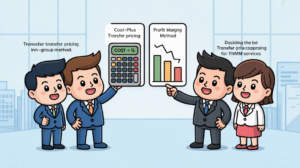

How to Apply the Arm’s Length Principle in Hong Kong Cross-Border Transactions
📋 Key Facts at a Glance
- Legal Basis: The Arm’s Length Principle is embedded in Hong Kong’s Inland Revenue Ordinance and aligns with OECD guidelines
- Documentation Required: Master File (global overview) and Local File (Hong Kong-specific) must be prepared contemporaneously
- Hong Kong Tax Context: Applies to profits tax calculations under Hong Kong’s territorial system (8.25%/16.5% for corporations)
- Dispute Resolution: Hong Kong offers MAP through 45+ DTAs and APA programs for advance certainty
- Recent Developments: Enhanced focus on digital transactions and alignment with BEPS 2.0 global standards
Did you know that multinational companies operating in Hong Kong could face significant tax adjustments if their cross-border transactions aren’t priced correctly? With Hong Kong’s territorial tax system and increasing global scrutiny, understanding and applying the Arm’s Length Principle isn’t just compliance—it’s essential business strategy. This comprehensive guide walks you through everything you need to know about implementing this critical principle in your Hong Kong operations.
What Exactly is the Arm’s Length Principle?
The Arm’s Length Principle (ALP) is the international standard for pricing transactions between related entities in different countries. At its core, it requires that transactions between companies within the same multinational group be priced as if they were conducted between independent, unrelated parties under similar circumstances. This principle prevents artificial profit shifting between jurisdictions and ensures each country taxes the appropriate share of profits.
Why It Matters for Hong Kong Businesses
Hong Kong operates under a territorial tax system where only Hong Kong-sourced profits are taxable. For corporations, this means profits tax rates of 8.25% on the first HK$2 million and 16.5% on the remainder. Without proper ALP application, multinationals could artificially shift profits away from Hong Kong to lower-tax jurisdictions through non-arm’s length pricing. The Inland Revenue Department (IRD) actively enforces ALP compliance to protect Hong Kong’s tax base and maintain fair competition.
Common Pitfalls in Hong Kong Cross-Border Transactions
Even experienced multinationals stumble when applying the Arm’s Length Principle in Hong Kong. Here are the most frequent mistakes we see:
- Inadequate Comparability Analysis: Using broad industry data without adjusting for specific Hong Kong market conditions, functions performed, or risks assumed
- Ignoring Local Market Dynamics: Applying global pricing policies that don’t reflect Hong Kong’s unique economic conditions, competition, or regulatory environment
- Inconsistent Documentation: Having written agreements that don’t match actual business conduct or transfer pricing policies
- Overlooking Digital Transactions: Failing to properly value intangible assets, data, or digital services flowing between Hong Kong and overseas entities
- Poor Functional Analysis: Not clearly documenting the functions, assets, and risks of the Hong Kong entity versus its overseas affiliates
Step-by-Step Application Framework
Applying the Arm’s Length Principle systematically reduces risk and creates defensible documentation. Follow this proven framework:
- Conduct Functional Analysis: Document the specific functions performed, assets used, and risks assumed by your Hong Kong entity and its related parties. Be detailed about what value each entity creates.
- Select Appropriate Transfer Pricing Method: Choose from the OECD-recognized methods based on your functional analysis and transaction type.
- Perform Comparability Analysis: Find comparable independent transactions or companies operating under similar conditions to Hong Kong’s market.
- Determine Arm’s Length Range: Use your comparables to establish a reasonable price or profit margin range for your transactions.
- Document Everything Contemporaneously: Prepare your Master File and Local File as transactions occur, not when the IRD asks for them.
Choosing the Right Transfer Pricing Method
Hong Kong follows OECD guidelines for transfer pricing methods. Your choice depends on your transaction type and functional analysis:
| Method | Best For | Hong Kong Example |
|---|---|---|
| Comparable Uncontrolled Price (CUP) | Standard goods with identical third-party sales | Electronics components sold to related distributor |
| Resale Price Method (RPM) | Distribution activities with minimal value-add | Hong Kong distributor reselling imported goods |
| Cost Plus Method (CPM) | Manufacturing, services, or R&D activities | Hong Kong factory producing for group companies |
| Transactional Net Margin Method (TNMM) | Routine activities like distribution or services | Most common for Hong Kong operational entities |
| Profit Split Method (PSM) | Highly integrated operations or unique intangibles | Joint development of valuable intellectual property |
Hong Kong Documentation Requirements
Hong Kong requires contemporaneous transfer pricing documentation following the OECD’s three-tiered approach. The key requirement is that documentation must be prepared at the time transactions occur or pricing decisions are made.
| Document | Purpose | Key Contents | Timing |
|---|---|---|---|
| Master File | Global group overview | Group structure, value drivers, intangibles, finance activities, TP policies | Annual update |
| Local File | Hong Kong-specific analysis | Entity functional analysis, transaction details, comparability study, financials | Contemporaneous with transactions |
| Country-by-Country Report | High-level group allocation | Revenue, profit, tax paid, employees, assets by jurisdiction | Annual (if group revenue ≥ €750M) |
Resolving Disputes with Hong Kong’s IRD
Even with careful planning, transfer pricing disputes can arise. Hong Kong offers several mechanisms to resolve disagreements and prevent double taxation:
Mutual Agreement Procedure (MAP)
Hong Kong has comprehensive Double Taxation Agreements (DTAs) with over 45 jurisdictions, including Mainland China, Singapore, the UK, and Japan. These agreements include MAP provisions that allow the IRD and foreign tax authorities to negotiate and resolve transfer pricing disputes that could lead to double taxation.
Advance Pricing Agreements (APAs)
For proactive certainty, Hong Kong offers:
- Unilateral APAs: Agreements between your company and the IRD only
- Bilateral/Multilateral APAs: Agreements involving the IRD and foreign tax authorities
APAs provide binding certainty on your transfer pricing methodology for future transactions, typically covering 3-5 years. They’re particularly valuable for complex transactions or when entering new markets.
Future Trends and Compliance Strategies
The transfer pricing landscape is evolving rapidly. Here’s what Hong Kong businesses need to watch:
BEPS 2.0 and Global Minimum Tax
Hong Kong has enacted the Global Minimum Tax (Pillar Two) effective January 1, 2025, applying a 15% minimum effective tax rate to multinational groups with revenue ≥ €750 million. While this doesn’t change the Arm’s Length Principle directly, it increases scrutiny on profit allocation and requires careful documentation of substance in Hong Kong.
Digital Economy Focus
The IRD is paying increasing attention to digital transactions, including:
- Valuation of data and user contributions
- Remote digital services provided to/from Hong Kong
- Marketing intangibles and digital platforms
Technology-Driven Enforcement
The IRD is increasingly using data analytics and automated tools to identify transfer pricing risks. This means:
- Your financial data needs to be accurate and consistent
- Discrepancies between tax returns and transfer pricing documentation will be flagged automatically
- Digital documentation systems are becoming essential, not optional
✅ Key Takeaways
- The Arm’s Length Principle is legally binding in Hong Kong and essential for proper profits tax calculation under the territorial system
- Documentation must be prepared contemporaneously—Master File for global overview and Local File for Hong Kong-specific analysis
- Choose your transfer pricing method based on a detailed functional analysis of what your Hong Kong entity actually does
- Hong Kong offers MAP through its extensive DTA network and APA programs for dispute prevention and resolution
- Stay ahead of trends like digital economy focus, BEPS 2.0 alignment, and technology-driven enforcement
- Proper ALP application protects your Hong Kong tax position and prevents costly double taxation
Applying the Arm’s Length Principle correctly in Hong Kong isn’t just about compliance—it’s about strategic tax management. With proper documentation, method selection, and proactive planning, you can minimize audit risks, prevent double taxation, and ensure your Hong Kong operations are taxed appropriately. As global standards evolve and enforcement becomes more sophisticated, investing in robust transfer pricing practices today will pay dividends in audit defense and business certainty tomorrow.
📚 Sources & References
This article has been fact-checked against official Hong Kong government sources and authoritative references:
- Inland Revenue Department (IRD) – Official tax rates, allowances, and regulations
- Rating and Valuation Department (RVD) – Property rates and valuations
- GovHK – Official Hong Kong Government portal
- Legislative Council – Tax legislation and amendments
- IRD Transfer Pricing Documentation – Official guidance on Master File and Local File requirements
- IRD Mutual Agreement Procedure – Official MAP guidelines and DTA information
- OECD BEPS – International transfer pricing standards and guidelines
Last verified: December 2024 | Information is for general guidance only. Consult a qualified tax professional for specific advice.