
📋 Key Facts at a Glance
- Global Standard: HS codes are used by over 200 countries and economies worldwide
- Hong Kong’s Trade Volume: Processes millions of shipments annually through one of the world’s busiest ports
- Classification Updates: HS system updates every 5 years, with 2024 amendments taking effect
- Compliance Critical: Misclassification can lead to penalties, duty repayments, and customs audits
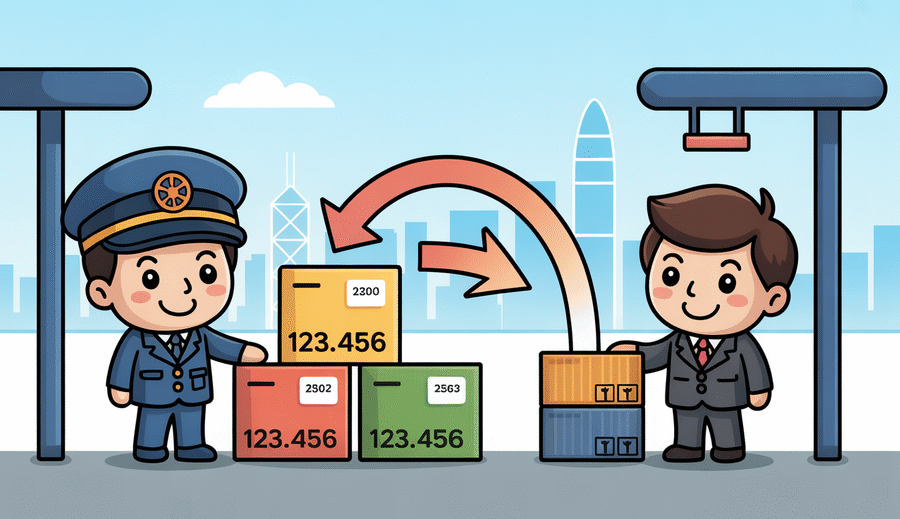
Did you know that a single six-digit code can determine whether your shipment clears Hong Kong customs in hours or gets stuck for days? In a city that handles over 23 million TEUs (twenty-foot equivalent units) annually through its world-class port, the Harmonized System (HS) codes serve as the universal language of international trade. These seemingly simple numbers hold the key to efficient customs clearance, accurate duty calculation, and seamless global commerce. For businesses operating in Hong Kong—one of the world’s premier trading hubs—mastering HS codes isn’t just about compliance; it’s about competitive advantage.
The Global Language of Trade: Understanding HS Codes
Imagine trying to conduct international business without a common language for describing products. That’s exactly what the Harmonized System (HS) solves. Developed and maintained by the World Customs Organization (WCO), this globally standardized nomenclature provides a uniform method for classifying virtually every traded product, from raw materials to sophisticated electronics.
How HS Codes Work: The Six-Digit Structure
The HS system follows a logical hierarchical structure that becomes more specific as you move through the digits:
| Digits | What They Represent | Example: Live Horses |
|---|---|---|
| First 2 digits | Chapter (broad category) | 01 – Live Animals |
| Next 2 digits | Heading (specific group) | 0101 – Live horses, asses, mules and hinnies |
| Final 2 digits | Subheading (detailed classification) | 0101.21 – Pure-bred breeding animals |
Countries can add additional digits beyond the standard six for national requirements, but those first six digits remain consistent globally. This consistency is what makes HS codes so powerful—they’re understood by customs authorities, statisticians, and trade negotiators worldwide.
HS Codes in Action: Driving Hong Kong’s Customs Efficiency
Hong Kong’s status as a global trading hub depends on efficient customs operations. HS codes play three critical roles in making this possible:
1. Accurate Duty Calculation and Tax Compliance
Each HS code corresponds to specific duty rates and tax obligations. While Hong Kong maintains a generally low-tariff regime, certain products like tobacco, alcohol, and hydrocarbon oils are subject to duties. Correct classification ensures:
- Predictable costs for importers and exporters
- Accurate revenue collection for the government
- Compliance with trade agreements and preferential tariff arrangements
2. Smart Risk Assessment and Targeted Inspections
Hong Kong Customs uses sophisticated electronic systems that analyze HS codes alongside other declaration data to assess shipment risk. This enables:
- Rapid clearance for low-risk shipments
- Targeted inspections for higher-risk goods
- Strategic allocation of customs resources
3. Accelerated Cargo Release
When goods are correctly classified from the start, they move through customs with minimal delays. Accurate HS codes help avoid:
- Requests for additional information
- Physical inspections triggered by classification discrepancies
- Demurrage costs from extended port stays
Common Classification Challenges and How to Overcome Them
Even experienced traders face classification challenges. Understanding these common pitfalls is the first step toward avoiding them:
| Challenge | Description | Solution |
|---|---|---|
| Multi-component Products | Items with multiple materials or functions (e.g., smart devices with cameras, sensors, and communication capabilities) | Determine the “essential character” based on primary function and value |
| Vague Descriptions | Using proprietary terms or insufficient technical specifications | Provide detailed, standardized descriptions with technical specifications |
| System Updates | HS codes change every 5 years; using outdated classifications | Regularly check for updates and maintain current classification databases |
| New Technologies | Emerging products without established classification precedents | Seek binding rulings from Hong Kong Customs for certainty |
Strategic Approaches for Accurate HS Code Selection
Getting HS codes right requires more than guesswork. Here’s a systematic approach that successful traders use:
- Start with Official Resources: Use Hong Kong’s official classification tools, including the Census and Statistics Department’s online search system. These reflect current local interpretations and rulings.
- Seek Binding Rulings: For complex or ambiguous products, apply for an advance ruling from Hong Kong Customs. This provides legal certainty before shipment.
- Implement Internal Protocols: Establish clear classification procedures within your organization, including training, documentation requirements, and review processes.
- Maintain Classification Records: Keep detailed records of how and why you classified each product, including supporting documentation and any rulings obtained.
- Regularly Review and Update: Schedule periodic reviews of your classification database to ensure compliance with the latest HS updates and rulings.
The High Cost of Getting It Wrong: Compliance Risks
Misclassification isn’t just an administrative error—it carries serious consequences that can impact your bottom line and business operations:
| Scenario | Potential Consequences | Financial Impact |
|---|---|---|
| Genuine Error (Non-Recurring) | Warnings, duty repayment with interest | Modest fines + outstanding duties + interest |
| Repeated/Significant Errors | Higher fines, increased scrutiny, potential audit trigger | Substantial fines + duty repayment + interest + penalties |
| Deliberate Misclassification (Fraud) | Substantial fines, legal action, criminal charges, reputational damage | Severe financial penalties + legal costs + business disruption |
Beyond direct penalties, misclassification can trigger customs audits—detailed examinations of your import/export declarations over extended periods. These audits are resource-intensive, disruptive, and often uncover additional errors across multiple transactions.
Leveraging Technology for Smarter HS Code Management
Modern technology offers powerful solutions to streamline HS code management and enhance accuracy:
| Technology Solution | Key Benefits | Implementation Tips |
|---|---|---|
| AI-Powered Classification Tools | Analyzes product descriptions, specs, and images to suggest accurate codes; reduces human error | Use as a first-pass tool, but always verify with official sources |
| ERP System Integration | Embeds classification data in core business systems; ensures consistency across departments | Integrate with procurement, inventory, and logistics modules |
| Automated Documentation | Populates customs forms and shipping documents automatically; reduces manual entry errors | Implement with validation checks to catch discrepancies |
| Digital Trade Platforms | Facilitates electronic data exchange with customs; speeds up clearance processes | Ensure compatibility with Hong Kong’s electronic customs systems |
The Future of HS Codes: Digital Trade and Sustainability
As global trade evolves, so does the HS system. Several trends are shaping its future development:
Digital Trade Integration
Emerging technologies like blockchain could revolutionize how HS data is recorded and verified. Imagine immutable records of product classification throughout the entire supply chain, accessible to all authorized parties. This would enhance transparency, reduce disputes, and streamline digital customs procedures.
Green Tariff Classifications
With growing emphasis on sustainability, future HS updates may incorporate environmental criteria. We could see classifications based on:
- Recycled content percentages
- Carbon footprint measurements
- Sustainable production methods
- Environmental impact ratings
Regional Digital Trade Alignment
Hong Kong’s continued success as a trading hub depends on aligning with regional digital trade initiatives. This includes ensuring HS classification systems remain compatible with frameworks developed by key trading partners in ASEAN and beyond.
✅ Key Takeaways
- HS codes are the universal language of international trade, used by over 200 countries including Hong Kong
- Accurate classification is essential for efficient customs clearance, duty calculation, and compliance
- Common challenges include multi-component products, vague descriptions, and keeping up with system updates
- Misclassification risks include penalties, duty repayments, interest charges, and disruptive customs audits
- Technology solutions like AI tools and ERP integration can significantly improve classification accuracy and efficiency
- The HS system continues to evolve, with future developments focusing on digital trade integration and sustainability
In Hong Kong’s dynamic trade environment, HS codes are more than just numbers on a form—they’re strategic assets that can determine your competitive edge. By investing in accurate classification processes, leveraging technology, and staying informed about system updates, businesses can transform customs compliance from a regulatory burden into a source of operational efficiency. Remember: in international trade, the right code at the right time can mean the difference between seamless global operations and costly delays. Make HS code mastery a priority, and watch your Hong Kong trade operations reach new levels of efficiency and reliability.
📚 Sources & References
This article has been fact-checked against official Hong Kong government sources and authoritative references:
- Inland Revenue Department (IRD) – Official tax rates, allowances, and regulations
- Rating and Valuation Department (RVD) – Property rates and valuations
- GovHK – Official Hong Kong Government portal
- Legislative Council – Tax legislation and amendments
- Hong Kong Customs and Excise Department – Official customs regulations and HS code guidance
- Census and Statistics Department – Hong Kong HS code search tool and classification database
- GovHK Press Release – 2024 HS code amendments and implementation details
Last verified: December 2024 | Information is for general guidance only. Consult a qualified tax professional for specific advice.

 English
  Chinese