
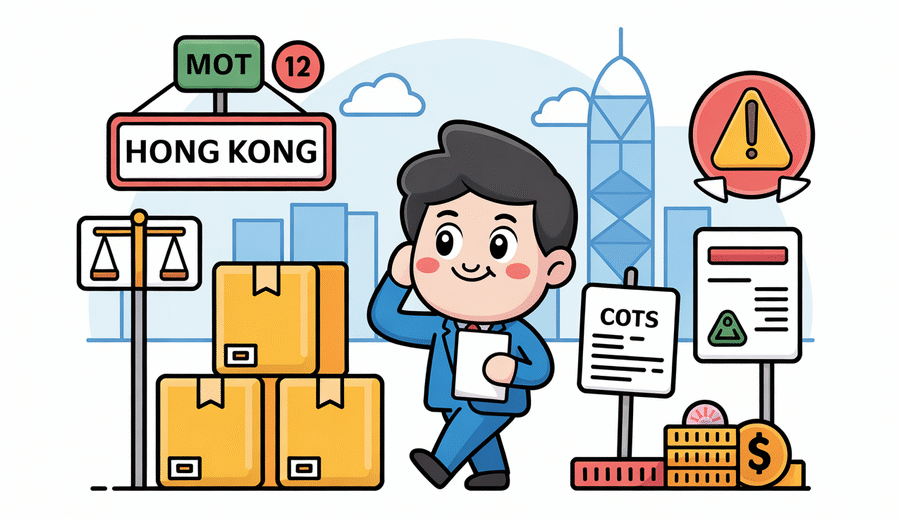
Key Facts: Hong Kong’s Anti-Dumping and Countervailing Duties
- No AD/CVD Imposed: Hong Kong does NOT impose anti-dumping or countervailing duties as a free trade policy principle
- WTO Member: Hong Kong is a separate WTO member under the name “Hong Kong, China” since 1986 (founding member)
- Free Port Status: No import tariffs except on 4 dutiable commodities (liquor >30%, tobacco, hydrocarbon oil, methyl alcohol)
- Re-Export Hub: Hong Kong’s role as transshipment hub means origin determination is critical for AD/CVD purposes
- Certificate of Origin: Essential documentation to prove goods are Hong Kong origin vs. re-exports from other countries
- US Treatment Change (2025): Products of Hong Kong now treated same as China for US duties (effective February 4, 2025)
Understanding Anti-Dumping and Countervailing Duties
Anti-Dumping Duties: Core Concepts
Anti-dumping measures constitute a vital component of international trade regulation, specifically designed to counteract the practice known as “dumping” – when foreign manufacturers export products at prices below their normal value or below the cost of production, potentially harming domestic industries in the importing country.
Under WTO rules established by the Agreement on Implementation of Article VI of GATT 1994, anti-dumping duties can only be imposed when three conditions are met:
- Dumping exists: Products are sold at less than “normal value” (typically the price in the exporter’s home market)
- Material injury: The dumped imports cause or threaten material injury to a domestic industry
- Causal link: A direct connection exists between the dumped imports and the injury
The WTO Anti-Dumping Agreement requires detailed investigations following strict procedural rules, including evaluating all relevant economic factors affecting the domestic industry. Investigations must be completed within one year, and no more than 18 months from initiation.
Countervailing Duties: Addressing Unfair Subsidies
Countervailing duties (CVDs), also known as anti-subsidy duties, are imposed under the WTO Agreement on Subsidies and Countervailing Measures (SCM Agreement) to offset the effects of subsidies provided by foreign governments to their exporters.
The SCM Agreement categorizes subsidies into:
| Subsidy Type | Description | Action Required |
|---|---|---|
| Prohibited Subsidies | Export subsidies and import substitution subsidies | Must be withdrawn immediately if confirmed by dispute settlement |
| Actionable Subsidies | Subsidies causing adverse effects to other countries’ interests | Permitted unless adverse effects are demonstrated |
| Specific Subsidies | Benefits provided to specific enterprises or industries | Subject to SCM Agreement disciplines; widely available subsidies presumed not to distort allocation |
Countervailing duties can only be imposed after a detailed investigation determines that imports are subsidized and causing injury to the domestic industry. Like anti-dumping duties, CVDs normally expire after five years unless extended through a review process.
Hong Kong’s Unique Position on Trade Remedies
Hong Kong Does NOT Impose Anti-Dumping or Countervailing Duties
Hong Kong maintains a steadfast commitment to free trade principles. As a free port, Hong Kong does not impose anti-dumping duties or countervailing duties on any imports, regardless of their origin or pricing. This policy reflects Hong Kong’s fundamental approach to international commerce.
Key characteristics of Hong Kong’s trade policy:
- No tariffs: Hong Kong levies no customs duties on imports or exports (except 4 specific commodities)
- No trade barriers: Hong Kong pursues a free trade policy without barriers on trade
- Minimal licensing: Import/export licensing required only for specific goods to fulfill international obligations or meet public health, safety, or security needs
- No AD/CVD mechanisms: Hong Kong has no domestic legal framework to investigate or impose anti-dumping or countervailing duties
Hong Kong’s WTO Membership and Separate Customs Territory Status
Hong Kong holds a unique position in the international trading system as a separate customs territory and independent WTO member.
Historical Background
- 1986: Hong Kong became a separate contracting party to GATT under Article XXVI:5(c)
- 1995: Founding member of the WTO when it succeeded GATT
- 1997: After Hong Kong’s return to China, continued as separate WTO member under “Hong Kong, China”
- 2001: Mainland China joined WTO as separate member
Legal Basis: Hong Kong Basic Law
- Article 116: HKSAR is a separate customs territory
- Article 151: HKSAR may participate in international organizations (including WTO) using the name “Hong Kong, China”
Hong Kong’s separate customs territory status grants it full autonomy to:
- Develop independent trade policies
- Negotiate and implement free trade agreements
- Maintain separate tariff schedules (zero tariffs in Hong Kong’s case)
- Establish relationships with other WTO members
- Participate in WTO dispute settlement independently
Trade significance: As of 2024, Hong Kong ranks as the world’s 7th largest trading entity in merchandise trade and 21st largest in commercial services according to WTO data. Hong Kong is also the 9th biggest budget contributor to the WTO.
Critical Implications for Hong Kong Importers and Exporters
When Exporting FROM Hong Kong: Origin Matters
While Hong Kong does not impose anti-dumping or countervailing duties, goods exported from Hong Kong may be subject to AD/CVD investigations and duties when entering countries that do implement trade remedies.
Critical Distinction: The country of origin determines AD/CVD treatment, not the country of export. Goods transshipped through Hong Kong retain their original country of origin for trade remedy purposes.
Scenario Analysis: Origin Determination
| Scenario | Origin Status | AD/CVD Exposure |
|---|---|---|
| Goods manufactured wholly in Hong Kong | Hong Kong origin | Subject to AD/CVD only if Hong Kong is under investigation (rare given HK’s free trade policy) |
| Goods manufactured in China, re-exported via Hong Kong | China origin | Subject to all AD/CVD measures targeting China |
| Goods manufactured in China, substantially transformed in Hong Kong | Hong Kong origin (if transformation meets origin rules) | Generally not subject to China-specific AD/CVD (but see US exception below) |
| Goods transshipped through Hong Kong (no processing) | Original manufacturing country origin | Subject to AD/CVD of origin country |
Certificate of Origin: Essential Documentation
The Certificate of Hong Kong Origin (CHKO) serves as official proof that goods are manufactured in Hong Kong and plays a crucial role in trade remedy contexts.
Key requirements for Hong Kong origin certification:
- Wholly produced: Goods wholly grown, mined, or manufactured in Hong Kong
- Substantial transformation: Manufacturing processes that permanently and substantially change the shape, nature, form, or utility of basic materials
- Excluded processes: Simple diluting, packing, bottling, drying, simple assembling, sorting, or decorating are NOT considered genuine manufacturing
Issuing authorities: Certificates of Origin can be issued by:
- Trade and Industry Department (TID)
- Government Approved Certification Organizations (GACOs):
- Hong Kong General Chamber of Commerce
- Chinese Manufacturers’ Association of Hong Kong
- Federation of Hong Kong Industries
- Indian Chamber of Commerce Hong Kong
Hong Kong Exporters in Anti-Dumping Investigations
When goods exported from Hong Kong originate in a country subject to anti-dumping investigation, Hong Kong exporters may be required to provide information to investigating authorities.
Information typically requested from Hong Kong exporters:
- Price at which products were acquired from the country of origin
- Handling charges and associated costs for transshipment
- Documentation proving the country of origin
- Details of any processing or transformation in Hong Kong
- Export prices to the destination market
Importance of Cooperation: It is generally in the interest of Hong Kong exporters to cooperate fully in anti-dumping investigations. Non-cooperation may result in the imposition of the highest dumping margin or “residual” duty rate, which can be significantly higher than rates assigned to cooperating exporters.
Impact of Major Trading Partners’ AD/CVD Measures
United States: Critical Policy Change (2025)
A significant development affecting Hong Kong businesses occurred in early 2025 when the United States changed its treatment of Hong Kong products for duty purposes.
Executive Order 13936: Hong Kong Normalization
Effective Date: February 4, 2025
Key Changes:
- Products of Hong Kong now treated the same as products of China
- Articles entered for consumption on or after February 4, 2025 subject to additional 10% ad valorem duties
- Hong Kong products subject to all anti-dumping, countervailing, and other duties applicable to Chinese products
- Hong Kong/China products NOT eligible for “de minimis” exemption from duty
- Export control rules: exports to Hong Kong treated as exports to China
Practical implications for Hong Kong exporters to the US:
- Even goods genuinely manufactured in Hong Kong may face duties previously applicable only to China
- All US AD/CVD orders targeting Chinese products now potentially apply to Hong Kong products
- Heightened scrutiny of origin documentation
- Increased compliance burden for proving Hong Kong origin vs. Chinese origin
Important exception: For Section 301 duties (separate from AD/CVD), the US still recognizes origin distinctions. Goods legitimately the product of Hong Kong are NOT subject to Section 301 duties, which apply only to products of China. However, origin determination is based on manufacturing location, not export location.
European Union Anti-Dumping Actions
The EU actively conducts anti-dumping investigations, many targeting products originating from Mainland China. Hong Kong’s Trade and Industry Department regularly issues circulars to inform Hong Kong traders about EU anti-dumping proceedings.
Recent EU anti-dumping actions affecting China/Hong Kong trade (2025):
- Monosodium glutamate: Expiry review of anti-dumping measures on imports from Mainland China (Notice C/2025/4009, July 22, 2025)
- PET Spunbond: Initiation of anti-dumping proceeding on imports from Mainland China (Notice C/2025/5010, September 15, 2025)
EU’s approach to non-market economies: Until 2017, China was treated as a non-market economy (NME) under EU anti-dumping regulations. NME status resulted in:
- Different methodology for calculating normal value (often using surrogate country prices)
- Generally higher anti-dumping duties than market economy exporters
- Uniform duties across all firms rather than firm-specific rates
In 2017, the EU officially abandoned the NME concept, though special methodologies may still apply when significant market distortions exist.
Mainland China’s Use of Trade Remedies
While Hong Kong does not impose AD/CVD, Mainland China actively uses these trade remedy instruments. China joined the WTO in 2001 and has developed comprehensive anti-dumping and countervailing duty regulations.
China’s AD/CVD framework:
- Governed by “Regulations of the People’s Republic of China on Anti-dumping” and corresponding countervailing duty regulations
- Ministry of Commerce (MOFCOM) conducts investigations
- China has imposed AD/CVD on various products from the US, EU, Japan, South Korea, and other trading partners
- Recent years have seen increased use of trade remedies, including retaliatory actions
Impact on Hong Kong businesses: Hong Kong companies importing from countries subject to China’s AD/CVD or exporting to China should monitor MOFCOM announcements, as duties may affect supply chain costs and competitiveness.
Transshipment and Circumvention Concerns
Hong Kong as a Transshipment Hub
Hong Kong’s strategic location, world-class infrastructure, and free port status make it one of the world’s premier transshipment hubs. However, this role creates specific compliance challenges in the context of anti-dumping and countervailing duties.
What is Transshipment?
Transshipment refers to the practice of transferring goods from one carrier to another or from one route to another during their journey from origin to final destination. In Hong Kong, this commonly involves:
- Goods arriving from Mainland China or other Asian manufacturing centers
- Temporary storage in Hong Kong warehouses
- Re-export to final destinations (US, EU, other markets)
- Minimal or no processing in Hong Kong
Circumvention Through Transshipment
Trade authorities worldwide are increasingly vigilant about circumvention schemes that use transshipment to evade anti-dumping or countervailing duties.
Common Circumvention Methods
- False origin declarations: Claiming goods originate in Hong Kong when they actually originate in a country subject to AD/CVD
- Minimal processing: Performing superficial operations in Hong Kong to claim substantial transformation
- Document fraud: Falsifying Certificates of Origin or other customs documentation
- Third-country routing: Routing goods through Hong Kong to obscure true Chinese origin
Regulatory response: Both the US and EU have enhanced their anti-circumvention provisions:
- US: December 2024 regulations enhanced administration of AD/CVD laws, including stronger circumvention detection
- EU: Investigates changes in trade patterns without economic justification other than AD duty avoidance
- Both: Increased focus on verifying country of origin through factory visits, document reviews, and third-party audits
Best Practices for Compliance
Hong Kong businesses engaged in international trade should implement robust compliance measures:
| Compliance Area | Recommended Actions |
|---|---|
| Documentation |
|
| Origin Determination |
|
| Supplier Due Diligence |
|
| AD/CVD Monitoring |
|
| Internal Controls |
|
Practical Examples and Case Studies
Example 1: Hong Kong Electronics Re-Exporter
Scenario
ABC Trading Ltd., a Hong Kong company, purchases smartphones manufactured in Shenzhen, China, and re-exports them to the United States. The US has imposed a 25% anti-dumping duty on smartphones from China.
Analysis
- Country of Origin: China (place of manufacture)
- Re-export Status: Goods merely transshipped through Hong Kong without substantial transformation
- AD Duty Application: 25% anti-dumping duty applies
- Certificate of Origin: Cannot obtain CHKO; must declare Chinese origin
- Additional Consideration (2025): Under Executive Order 13936, even if goods had Hong Kong origin, they would still face AD duties applicable to Chinese products
Compliance Requirements
- Accurately declare Chinese origin on US customs entry
- Pay applicable 25% AD duty plus 10% additional duty per EO 13936
- Maintain documentation showing purchase from Chinese supplier and transshipment through HK
- Do NOT claim Hong Kong origin or attempt to circumvent duties
Example 2: Hong Kong Garment Manufacturer
Scenario
Fashion Co. Ltd. operates a manufacturing facility in Hong Kong. They import fabric from Vietnam, cut and sew garments in Hong Kong, and export finished clothing to the EU. The EU has anti-dumping duties on certain garments from China but not Vietnam or Hong Kong.
Analysis
- Country of Origin: Hong Kong (substantial transformation occurred in HK)
- Manufacturing Process: Cutting and sewing constitute substantial transformation under origin rules
- AD Duty Application: No EU AD duties apply (neither Vietnam fabric nor HK garments are subject to duties)
- Certificate of Origin: Eligible for CHKO as goods manufactured in Hong Kong
Compliance Requirements
- Obtain CHKO from authorized issuer
- Maintain records documenting manufacturing operations in Hong Kong
- Keep purchase records for Vietnamese fabric
- If questioned by EU authorities, provide evidence of substantial transformation in HK
Example 3: Hong Kong Company in EU Anti-Dumping Investigation
Scenario
Steel Trading HK Ltd. imports steel pipes from Chinese manufacturers and re-exports to the EU. The European Commission initiates an anti-dumping investigation of steel pipes from China. The company receives a questionnaire from the EU.
Analysis
- Investigation Status: Hong Kong company is involved because goods originate in China
- Information Required: EU needs data on purchase prices, transshipment costs, and export prices
- Cooperation Importance: Critical to respond fully and accurately
Recommended Actions
- Immediate response: Acknowledge receipt of questionnaire and request extension if needed
- Full cooperation: Provide all requested information accurately and completely
- Documentation: Submit evidence of:
- Purchase prices from Chinese suppliers
- Handling and storage costs in Hong Kong
- Shipping costs to EU
- Sales prices to EU customers
- Legal advice: Consider engaging trade lawyer with EU anti-dumping expertise
- Risk of non-cooperation: Failure to respond may result in highest “residual” AD duty rate
Potential Outcomes
- If EU determines dumping exists and causes injury, AD duties will be imposed on Chinese steel pipes
- These duties apply to all Chinese steel pipes, including those re-exported via Hong Kong
- Cooperating exporters may receive individual duty rates; non-cooperating exporters subject to residual rate
- Hong Kong company must pay applicable AD duties on all subsequent imports to EU
Monitoring and Resources for Hong Kong Businesses
Key Information Sources
Hong Kong businesses should regularly monitor the following resources to stay informed about anti-dumping and countervailing duty developments:
| Resource | Description | Purpose |
|---|---|---|
| Hong Kong TID Trade Circulars | Regular notifications about foreign AD/CVD investigations affecting HK trade | Stay informed about EU, US, and other investigations involving Chinese products |
| US Federal Register | Official publication of US government actions, including Commerce Department AD/CVD determinations | Monitor US investigations, preliminary/final determinations, and duty rates |
| EU Official Journal | Publication of European Commission AD/CVD notices and regulations | Track EU trade remedy actions, especially those targeting China |
| WTO Anti-Dumping Committee | Semi-annual reports from WTO members on AD/CVD actions | Broad overview of global AD/CVD activity |
| HKTDC Research | Hong Kong Trade Development Council analysis of trade issues | In-depth articles on AD/CVD impacts on HK businesses |
| China MOFCOM | Ministry of Commerce announcements on China’s AD/CVD investigations | Monitor trade remedies affecting imports to China or retaliatory actions |
When to Seek Professional Advice
Hong Kong businesses should consider engaging professional advisors in the following situations:
- Receiving investigation questionnaires: AD/CVD questionnaires are complex and mistakes can be costly
- Planning substantial transformation operations: Ensure operations qualify for Hong Kong origin before investing
- Supply chain changes: When reshoring or nearshoring to avoid AD/CVD, ensure compliance with origin rules
- High-value exports: When AD/CVD exposure could significantly impact business profitability
- Circumvention allegations: If authorities suggest your operations constitute circumvention
- Advance ruling requests: To obtain certainty on origin or duty treatment before committing to transactions
Looking Ahead: Future Developments
Evolving Trade Remedy Landscape
Several trends are shaping the future of anti-dumping and countervailing duty enforcement:
- Increased scrutiny of transshipment: US and EU continue enhancing circumvention detection capabilities
- Technology and data analytics: Customs authorities using advanced analytics to identify suspicious trade patterns
- Third-country production shifts: As duties hit China, manufacturing relocates to Southeast Asia, prompting new investigations
- Geopolitical tensions: Trade remedies increasingly used as tools in broader economic/political disputes
- Hong Kong’s status: US treatment of Hong Kong as equivalent to China may extend to other countries
Strategic Considerations for Hong Kong Businesses
To navigate this evolving landscape, Hong Kong businesses should:
- Diversify supply chains: Reduce dependence on suppliers from countries frequently targeted by AD/CVD
- Consider genuine manufacturing in Hong Kong: If economically viable, substantial transformation in HK may provide origin benefits (though limited given US policy change)
- Enhance compliance infrastructure: Invest in systems and expertise to ensure accurate origin determination and customs declarations
- Monitor regulatory developments: Stay current on AD/CVD investigations and policy changes
- Build flexibility: Maintain ability to adapt supply chains as trade remedy landscape shifts
Key Takeaways
- Hong Kong imposes no AD/CVD: As a free port, Hong Kong does not use anti-dumping or countervailing duties, maintaining its commitment to free trade principles.
- Separate WTO member: Hong Kong participates in the WTO as an independent member with full autonomy in trade policy under the name “Hong Kong, China.”
- Origin determines duty treatment: Country of manufacture, not country of export, determines whether goods are subject to AD/CVD in destination markets.
- Certificate of Origin is critical: CHKO proves Hong Kong origin and may help avoid duties targeting other countries (except for US after February 2025).
- US policy shift (2025): Executive Order 13936 treats Hong Kong products the same as Chinese products for AD/CVD purposes, significantly impacting HK exporters to the US.
- Re-export compliance: Hong Kong companies re-exporting goods from China or other countries must accurately declare origin and cannot misrepresent origin to avoid duties.
- Cooperation in investigations: When involved in AD/CVD investigations, full cooperation is essential to avoid highest penalty rates.
- Circumvention risks: Using Hong Kong as a transshipment point to evade AD/CVD is illegal and subject to penalties; authorities actively investigate such schemes.
- EU investigations: European Commission continues AD/CVD actions targeting Chinese products, affecting Hong Kong re-exporters.
- Documentation and compliance: Maintain comprehensive records of supply chain, manufacturing processes, and costs to support accurate origin declarations.
- Monitor developments: Regularly check Hong Kong TID trade circulars, US Federal Register, and EU Official Journal for AD/CVD actions affecting your products.
- Seek expert advice: Engage trade lawyers and customs advisors when facing AD/CVD investigations or complex origin determinations.

 English
  Chinese