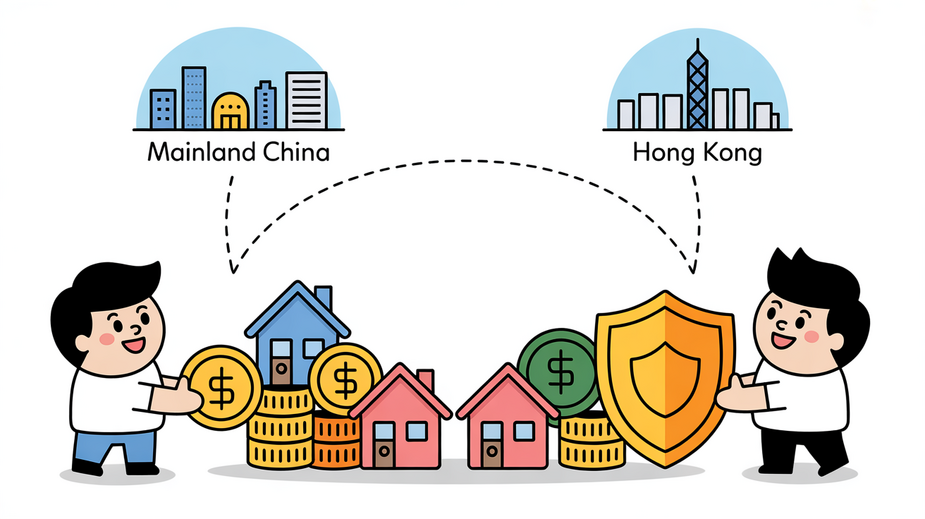
Cross-Border Estate Planning: How Hong Kong Trusts Can Safeguard Mainland Assets
📋 Key Facts at a Glance
- Tax Advantage: Hong Kong’s territorial tax system means offshore-sourced income/assets in a trust are generally not taxed in Hong Kong
- Legal Flexibility: Hong Kong trusts bypass Mainland China’s mandatory heirship rules, allowing customized distribution plans
- Asset Protection: Trust assets are legally separate from personal estates, shielding them from creditors and personal liabilities
- Cross-Border Efficiency: Hong Kong has a comprehensive double taxation agreement with Mainland China to prevent dual taxation
What happens when a Hong Kong-based entrepreneur with substantial mainland factory assets passes away without proper planning? The answer often involves years of legal battles, forced asset sales, and family conflicts across two different legal systems. For families with assets spanning Hong Kong and Mainland China, cross-border estate planning isn’t just a luxury—it’s essential protection against the complex interplay of two distinct legal and financial systems. This guide explores how Hong Kong trusts offer a sophisticated solution for safeguarding mainland assets while navigating the intricate landscape of cross-border wealth management.
The Cross-Border Challenge: Two Systems, One Family Legacy
Managing assets across the Hong Kong-Mainland border presents unique challenges that stem from fundamentally different legal and financial frameworks. While both are part of China, their approaches to asset management, ownership, and succession couldn’t be more different. Understanding these differences is crucial for protecting your family’s wealth across generations.
Legal Systems in Conflict
Mainland China operates under a civil law system with specific, often rigid inheritance laws that include mandatory heirship provisions. These rules dictate who inherits what percentage of your estate, regardless of your personal wishes. In stark contrast, Hong Kong follows common law principles with deeply embedded trust concepts that offer flexible, private wealth management and succession planning options.
| Legal Aspect | Mainland China | Hong Kong |
|---|---|---|
| Legal System | Civil Law | Common Law |
| Inheritance Rules | Mandatory heirship with fixed shares | Testamentary freedom with trusts |
| Probate Process | Complex, time-consuming, often public | Streamlined, private trust administration |
| Asset Control | Limited by statutory rules | Full control via trust structures |
Currency Control Complications
Mainland China maintains strict regulations on capital movement through the State Administration of Foreign Exchange (SAFE). Transferring significant assets between jurisdictions involves approvals, quotas, and specific procedures that can complicate everything from investment strategies to inheritance distributions. These controls create additional layers of complexity for cross-border estate planning.
Hong Kong Trusts: Your Strategic Solution
Hong Kong trusts offer a powerful mechanism for navigating the complexities of cross-border estate planning. By understanding how these structures work, you can create a seamless transition plan that respects both jurisdictions’ requirements while protecting your family’s interests.
Bypassing Mandatory Heirship Rules
One of the most significant advantages of a Hong Kong trust is its ability to potentially bypass Mainland China’s mandatory heirship rules. These statutory provisions dictate fixed inheritance shares among family members, which may not align with your specific wishes or family dynamics. A properly structured trust allows you to:
- Establish precise distribution instructions that override statutory defaults
- Create conditional distributions based on beneficiaries’ ages, achievements, or needs
- Protect assets from beneficiaries who may not be financially responsible
- Maintain privacy in wealth transfer arrangements
Avoiding Probate Complexities
Assets held within a valid Hong Kong trust generally bypass the probate process. While Mainland probate can be lengthy and complex—especially for diverse asset portfolios—trust assets continue under trustee management according to your trust deed. This ensures:
- Immediate Continuity: No interruption in asset management during probate
- Reduced Costs: Avoidance of probate fees and legal expenses
- Privacy Protection: Trust arrangements remain confidential
- Efficient Transfer: Smooth wealth transition to next generations
Tax Efficiency Across Borders
Navigating the fiscal landscape is crucial in cross-border estate planning. Hong Kong’s favorable tax regime, combined with strategic trust structuring, can significantly enhance tax efficiency for families with mainland assets.
Leveraging Hong Kong’s Territorial Tax System
Hong Kong operates on a territorial tax basis, meaning only Hong Kong-sourced income is taxable. For a trust holding mainland assets:
- Income generated by mainland assets may not be taxed in Hong Kong
- The trust provides a potentially tax-neutral platform for wealth management
- This flexibility isn’t available through direct ownership structures
Double Taxation Avoidance
Hong Kong and Mainland China have a comprehensive double taxation agreement (DTA) designed to prevent the same income from being taxed in both jurisdictions. Strategic trust structuring can help:
| Tax Advantage | How It Works | Benefit |
|---|---|---|
| Territorial Taxation | Only HK-sourced income taxed in HK | Mainland income potentially tax-free in HK |
| DTA Application | Prevents dual taxation on same income | Reduces overall tax burden |
| Future Planning | Prepares for potential mainland inheritance tax | Proactive wealth protection |
Practical Implementation Strategies
Successfully integrating mainland assets into a Hong Kong trust requires careful planning and execution. Here are key strategies for effective implementation:
Ownership Structure Design
Direct ownership of mainland property by an offshore trust is often impractical. Instead, consider these approaches:
- Corporate Holding Structure: The trust holds shares in mainland holding companies that own the underlying assets
- Joint Venture Entities: Use specific joint venture structures compliant with PRC investment regulations
- Asset-Specific Solutions: Different asset types (real estate, business operations, investments) may require different structures
SAFE Compliance and Capital Flows
Any trust holding mainland-linked assets must navigate SAFE regulations. Key considerations include:
- Understanding permissible channels for cross-border transfers
- Planning for profit repatriation, investment proceeds, and capital reductions
- Ensuring compliance with foreign exchange controls and reporting requirements
- Coordinating between Hong Kong trustees and mainland legal representatives
Real-World Applications
Understanding how Hong Kong trusts work in practice helps illustrate their value in cross-border estate planning:
| Scenario | Challenge | Trust Solution |
|---|---|---|
| Manufacturing Business | Smooth transfer of mainland factory operations | Trust holds shares in mainland holding company, bypasses probate, ensures continuity |
| Mixed-Nationality Family | Conflicting inheritance laws across jurisdictions | Unified distribution plan avoids mainland forced heirship rules |
| Tech Entrepreneur IPO | Asset protection and long-term wealth structuring | Trust segregates assets, manages post-IPO proceeds, enables generational planning |
Future-Proofing Your Estate Plan
Estate planning involving cross-border trusts requires ongoing attention. Here’s how to ensure your strategy remains effective over time:
Regular Trust Reviews
Schedule periodic reviews of your trust deed with specialized legal counsel to:
- Ensure compliance with evolving laws in both jurisdictions
- Align trust terms with changing family circumstances
- Update beneficiary arrangements as needed
- Address new regulatory requirements
International Compliance
Stay informed about evolving international standards:
| Consideration | Importance | Action Required |
|---|---|---|
| Common Reporting Standard (CRS) | Increasing transparency requirements | Ensure trust administration remains compliant |
| Geopolitical Changes | Potential impact on cross-border structures | Develop contingency plans for various scenarios |
| Tax Law Updates | Both HK and mainland tax systems evolve | Regular professional consultation |
✅ Key Takeaways
- Hong Kong trusts offer a powerful solution for navigating the complex legal differences between Hong Kong and Mainland China
- Proper trust structuring can bypass mandatory heirship rules and avoid lengthy probate processes
- Hong Kong’s territorial tax system provides potential tax advantages for mainland-sourced income
- Strategic implementation requires careful consideration of ownership structures and SAFE compliance
- Regular reviews and updates are essential to maintain an effective cross-border estate plan
- Professional guidance from experts in both jurisdictions is crucial for success
Cross-border estate planning between Hong Kong and Mainland China requires sophisticated strategies that account for two distinct legal and financial systems. Hong Kong trusts provide a flexible, effective framework for protecting mainland assets, ensuring your wealth transfers according to your wishes rather than statutory defaults. By leveraging Hong Kong’s favorable legal environment and tax system, while respecting Mainland China’s regulatory requirements, you can create a seamless succession plan that preserves your family legacy across borders. Remember: the most successful cross-border plans begin with expert guidance and are maintained through regular review and adaptation.
📚 Sources & References
This article has been fact-checked against official Hong Kong government sources and authoritative references:
- Inland Revenue Department (IRD) – Official tax rates, allowances, and regulations
- Rating and Valuation Department (RVD) – Property rates and valuations
- GovHK – Official Hong Kong Government portal
- Legislative Council – Tax legislation and amendments
- IRD Double Taxation Agreements – Comprehensive DTA information including Mainland China agreement
- IRD Territorial Source Principle – Official guidance on Hong Kong’s territorial tax system
- Financial Services and Treasury Bureau – Double taxation agreement details
Last verified: December 2024 | Information is for general guidance only. Consult a qualified tax professional for specific advice.