Dividend Tax Strategies for Hong Kong Companies With Mainland China Shareholders
📋 Key Facts at a Glance
- Hong Kong’s Tax Advantage: No dividend withholding tax – companies can distribute profits tax-free to shareholders
- China-HK DTA Benefit: Reduced 5% withholding tax in China (vs. standard 10%) for eligible corporate shareholders holding ≥25% equity
- Hong Kong Profits Tax: Two-tier system: 8.25% on first HK$2 million, 16.5% on remainder for corporations (2024-25)
- Critical Compliance: Mainland shareholders must obtain tax residency certificates to claim DTA benefits
- New Global Rules: Hong Kong’s FSIE regime (Phase 2 effective Jan 2024) and Global Minimum Tax (effective Jan 2025) affect cross-border structures
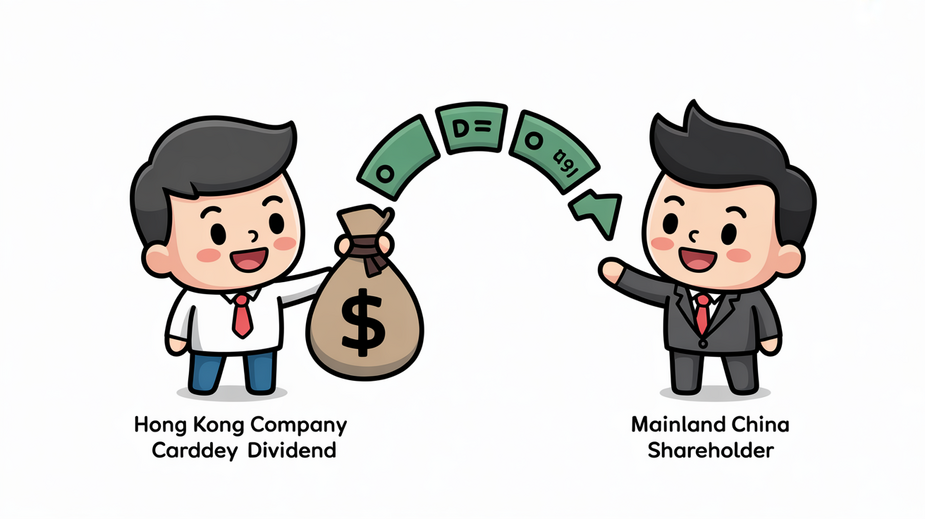
Did you know that a Hong Kong company distributing dividends to Mainland China shareholders can face dramatically different tax outcomes depending on how the structure is designed? With Hong Kong’s territorial tax system offering zero dividend withholding tax, but Mainland China’s worldwide tax system imposing up to 10% withholding, navigating this cross-border dividend landscape requires strategic planning. The good news? Properly leveraging the China-Hong Kong Double Taxation Arrangement can cut the Chinese tax burden in half for eligible shareholders. This guide explores practical strategies for optimizing dividend flows while ensuring compliance with both jurisdictions’ evolving tax regulations.
Understanding the Cross-Border Tax Landscape
Hong Kong and Mainland China operate fundamentally different tax systems that create both opportunities and challenges for cross-border dividend distributions. Hong Kong’s territorial tax system means only Hong Kong-sourced profits are taxable, and crucially, there is no dividend withholding tax when a Hong Kong company distributes profits to shareholders anywhere in the world.
In contrast, Mainland China employs a worldwide tax system where resident enterprises and individuals are taxed on their global income. When dividends flow from Hong Kong to Mainland China, the tax obligation arises on the recipient’s side. The standard withholding tax rates in Mainland China are:
| Recipient Type | Standard Withholding Tax Rate | Notes |
|---|---|---|
| Corporate Shareholders | 10% | Applies to dividends from non-resident entities |
| Individual Shareholders | 20% | Subject to individual income tax rules |
Hong Kong’s Profits Tax: The Starting Point
Before dividends can be distributed, the Hong Kong company must generate profits subject to Hong Kong’s two-tiered profits tax system (2024-25 rates):
- Corporations: 8.25% on first HK$2 million of assessable profits, 16.5% on remainder
- Unincorporated businesses: 7.5% on first HK$2 million, 15% on remainder
- Important restriction: Only ONE entity per connected group can claim the lower tier rate
Leveraging the China-Hong Kong Double Taxation Arrangement
The China-Hong Kong DTA is the most powerful tool for reducing cross-border dividend taxation. While it doesn’t create a dividend tax in Hong Kong (since none exists), it significantly reduces the withholding tax imposed by Mainland China on eligible recipients.
To qualify for the reduced 5% rate under the DTA, Mainland corporate shareholders must meet these conditions:
- Minimum Ownership: Directly hold at least 25% of the Hong Kong company’s equity
- Beneficial Ownership: Be the true economic owner of the shares (not merely a nominee)
- Tax Residency Certificate: Obtain official certification from Mainland tax authorities
- Proper Documentation: Submit complete application with supporting evidence
| Scenario | Withholding Tax Rate | Tax Saving |
|---|---|---|
| Standard Rate (No DTA) | 10% | – |
| DTA Rate (≥25% ownership) | 5% | 50% reduction |
| Individual Shareholders | 20% | No DTA reduction typically available |
Strategic Corporate Structures for Optimal Tax Efficiency
The right corporate structure can significantly enhance tax efficiency while maintaining compliance with both Hong Kong and Mainland China regulations. Here are key structural considerations:
Hong Kong Holding Company Strategy
Using a Hong Kong company as an intermediate holding entity offers several advantages:
- Consolidation Hub: Pool profits from multiple sources before distribution
- DTA Access: Potentially qualify for reduced withholding rates under various treaties
- Substance Requirements: Must demonstrate genuine economic activities in Hong Kong
Navigating Mainland China’s CFC Rules
Mainland China’s Controlled Foreign Corporation (CFC) rules present significant compliance challenges:
- Attribution Risk: Undistributed profits of offshore entities may be attributed to Mainland shareholders
- Reporting Obligations: Mainland shareholders must disclose offshore entity financials
- Substance Defense: Genuine commercial activities can help mitigate CFC risks
Practical Implementation: Steps for Success
Implementing an effective cross-border dividend strategy requires careful execution. Follow this practical roadmap:
- Step 1: Structure Assessment
- Review current ownership structure and equity percentages
- Determine eligibility for DTA benefits (≥25% ownership test)
- Assess substance requirements for Hong Kong entities
- Step 2: Documentation Preparation
- Obtain tax residency certificates from Mainland authorities
- Prepare beneficial ownership documentation
- Maintain proper corporate records for 7+ years (Hong Kong requirement)
- Step 3: DTA Application Process
- Submit complete application to Mainland tax authorities
- Include proof of ownership, residency, and beneficial ownership
- Allow sufficient processing time (typically 1-3 months)
- Step 4: Ongoing Compliance
- File Hong Kong Profits Tax Returns annually (due date varies)
- Maintain substance in Hong Kong (office, employees, decision-making)
- Monitor CFC reporting requirements in Mainland China
Future-Proofing Against Regulatory Changes
The international tax landscape is evolving rapidly. Hong Kong companies with Mainland shareholders must prepare for these key developments:
Global Minimum Tax (Pillar Two)
Hong Kong has enacted the Global Minimum Tax framework effective January 1, 2025:
- Applies to: Multinational groups with revenue ≥ €750 million
- Minimum Rate: 15% effective tax rate
- Includes: Income Inclusion Rule (IIR) and Hong Kong Minimum Top-up Tax
- Impact: May affect holding company structures and dividend planning
Enhanced Transparency Requirements
Increased information sharing between jurisdictions means:
- CRS Reporting: Automatic exchange of financial account information
- CbCR Requirements: Country-by-country reporting for large multinationals
- Greater Scrutiny: Tax authorities have better visibility into cross-border structures
✅ Key Takeaways
- Hong Kong offers zero dividend withholding tax – a significant advantage for international distributions
- The China-HK DTA can reduce Mainland withholding tax from 10% to 5% for eligible corporate shareholders (≥25% ownership)
- Proper documentation, especially tax residency certificates, is essential for claiming DTA benefits
- Substance requirements are increasing under Hong Kong’s FSIE regime and global tax reforms
- Mainland China’s CFC rules require careful monitoring and compliance for offshore structures
- Future-proof strategies must consider Global Minimum Tax (effective 2025) and enhanced transparency
Optimizing dividend flows between Hong Kong companies and Mainland China shareholders requires balancing Hong Kong’s tax-efficient environment with Mainland China’s comprehensive tax system. By strategically leveraging the China-Hong Kong DTA, maintaining proper substance, and staying ahead of regulatory changes, businesses can achieve significant tax savings while ensuring full compliance. Remember that while tax efficiency is important, structures must withstand increasing international scrutiny and demonstrate genuine commercial purpose. Regular reviews with tax professionals familiar with both jurisdictions are essential as regulations continue to evolve.
📚 Sources & References
This article has been fact-checked against official Hong Kong government sources and authoritative references:
- Inland Revenue Department (IRD) – Official tax rates, allowances, and regulations
- Rating and Valuation Department (RVD) – Property rates and valuations
- GovHK – Official Hong Kong Government portal
- Legislative Council – Tax legislation and amendments
- IRD DTA Tax Rates – Double Taxation Arrangement rates and provisions
- IRD Profits Tax Guide – Two-tier profits tax system details
- IRD FSIE Regime – Foreign-sourced income exemption requirements
Last verified: December 2024 | Information is for general guidance only. Consult a qualified tax professional for specific advice.