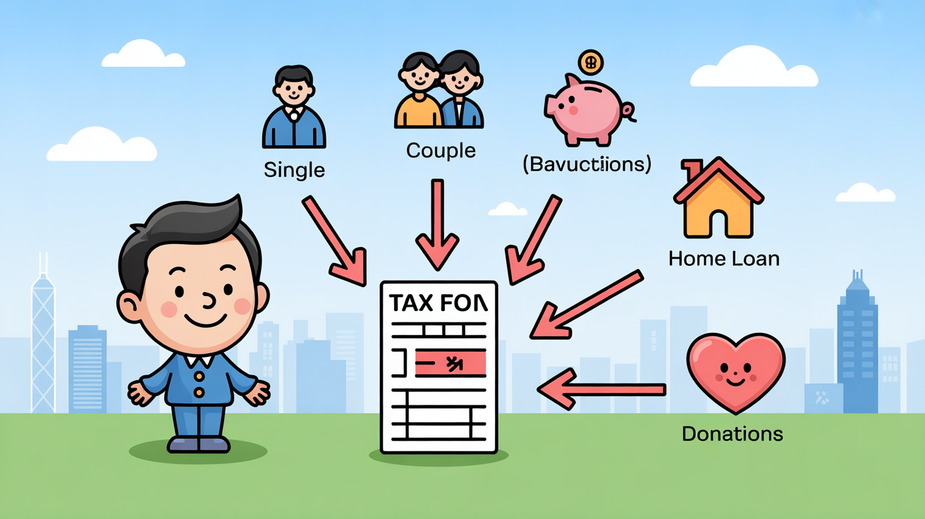
Hong Kong’s Personal Allowances and How They Reduce Your Tax Bill
📋 Key Facts at a Glance
- Basic Personal Allowance: HK$132,000 for single taxpayers (2024/25 tax year)
- Married Person’s Allowance: HK$264,000 for joint assessment couples
- Child Allowance: HK$130,000 per child, plus HK$130,000 additional in year of birth
- Maximum MPF Deduction: HK$18,000 per year for retirement contributions
- Home Loan Interest Deduction: Up to HK$100,000 annually for 20 years maximum
Did you know that Hong Kong taxpayers can legally reduce their tax bills by hundreds of thousands of dollars each year? The city’s generous personal allowance system provides substantial tax relief for individuals and families, but many taxpayers miss out on these benefits simply because they don’t understand how the system works. Whether you’re a single professional, a married couple, or supporting a family, mastering Hong Kong’s personal allowances could be your most effective financial strategy this tax season.
What Are Personal Allowances and How Do They Work?
Personal allowances are statutory deductions granted by Hong Kong’s Inland Revenue Department (IRD) that directly reduce your taxable income. Think of them as “tax-free income buckets” – specific amounts that the government considers non-taxable to acknowledge your personal and family responsibilities. These allowances work by lowering your assessable income before tax rates are applied, which can dramatically reduce your final tax bill.
Here’s a simple example: If your assessable income is HK$400,000 and you qualify for a HK$132,000 basic allowance plus HK$130,000 child allowance, your taxable income drops to just HK$138,000. The progressive tax rates apply to this reduced amount, potentially saving you thousands in taxes.
Complete Guide to 2024-25 Personal Allowances
Hong Kong offers a comprehensive range of personal allowances designed to support different life stages and family situations. Here’s your complete guide to what’s available for the 2024/25 tax year:
| Allowance Type | Amount (2024/25) | Key Eligibility Criteria |
|---|---|---|
| Basic Allowance | HK$132,000 | Available to all individual taxpayers filing separately |
| Married Person’s Allowance | HK$264,000 | For married couples electing joint assessment (cannot be claimed if filing separately) |
| Child Allowance | HK$130,000 per child | For each child under 18, or over 18 but in full-time education |
| Additional Child Allowance (Year of Birth) | HK$130,000 | One-time additional allowance in the year a child is born |
| Dependent Parent/Grandparent (60+) | HK$50,000 | For each dependent parent/grandparent aged 60+ receiving financial support |
| Single Parent Allowance | HK$132,000 | For unmarried, divorced, or separated parents supporting children |
Understanding Dependent Allowances
Dependent allowances require careful attention to eligibility criteria. For child allowances, the child must be:
- Under 18 years old, OR
- Over 18 but receiving full-time education, OR
- Physically or mentally incapacitated and unable to support themselves
For dependent parent/grandparent allowances, they must be:
- Aged 55 or older (HK$25,000) or 60+ (HK$50,000)
- Ordinarily resident in Hong Kong
- Receiving financial support from you
- Not earning more than a specified amount (currently HK$148,000 per year)
Essential Tax Deductions You Shouldn’t Miss
Beyond personal allowances, Hong Kong offers valuable deductions for specific expenses. These can be claimed in addition to your allowances, providing further tax relief:
| Deduction Type | Maximum Amount (2024/25) | Key Details |
|---|---|---|
| MPF Contributions | HK$18,000/year | Both mandatory and voluntary employee contributions |
| Charitable Donations | 35% of assessable income | To approved charitable institutions in Hong Kong |
| Home Loan Interest | HK$100,000/year | Maximum 20 years for same property, owner-occupied only |
| Self-Education Expenses | HK$100,000/year | For courses leading to a degree or professional qualification |
| Domestic Rent | HK$100,000/year | For taxpayers without property ownership in Hong Kong |
| Qualifying Annuity/Voluntary MPF | HK$60,000/year | For qualifying deferred annuity premiums and TVC MPF |
Step-by-Step Tax Calculation: Putting It All Together
Understanding how allowances and deductions work in practice is crucial. Follow this step-by-step guide to calculate your tax liability:
- Step 1: Calculate Total Income
Add up all your income sources: salary, bonuses, commissions, allowances, and other taxable emoluments. This is your gross income. - Step 2: Apply Deductions
Subtract your eligible deductions (MPF contributions, charitable donations) from your gross income to get your assessable income. - Step 3: Apply Personal Allowances
Subtract your total personal allowances (basic, married, child, dependent allowances) from your assessable income to get your net chargeable income. - Step 4: Calculate Tax Using Both Methods
Hong Kong uses two calculation methods, and you pay the lower amount:
Method A: Progressive rates on net chargeable income
Method B: Standard rate on net assessable income (after MPF and donations only) - Step 5: Pay the Lower Amount
Compare the results from both methods and pay the lower tax amount.
Real-World Example: Family of Four
Let’s consider a married couple with two children and a combined income of HK$800,000:
- Gross Income: HK$800,000
- MPF Contributions: HK$18,000 (deduction)
- Married Person’s Allowance: HK$264,000
- Child Allowances (2 children): HK$260,000
- Net Chargeable Income: HK$800,000 – HK$18,000 – HK$264,000 – HK$260,000 = HK$258,000
- Tax Payable (Progressive): Approximately HK$21,660
- Effective Tax Rate: Just 2.7% of total income!
Common Mistakes to Avoid
Many taxpayers miss out on allowances or make errors that could lead to penalties. Here are the most common mistakes:
- Failing to Update Personal Circumstances: Marriage, divorce, birth of a child, or changes in dependent status must be reported promptly to the IRD.
- Missing Documentation Deadlines: Tax returns are typically issued in early May and due about one month later. Late submissions may result in penalties.
- Incorrect Dependent Claims: Simply listing a dependent isn’t enough. You must meet specific criteria for age, residency, and financial support.
- Overlooking Joint Assessment Benefits: Married couples should calculate both separate and joint assessments to determine which yields lower total tax.
- Not Keeping Proper Records: Maintain records for 7 years, including proof of dependent support, donation receipts, and MPF statements.
Advanced Strategies for Maximum Tax Savings
Beyond basic claims, consider these strategic approaches to optimize your tax position:
1. Family Coordination for Dependent Claims
When multiple family members can claim the same dependent (like an elderly parent), coordinate to maximize overall tax savings. Typically, the family member in the highest tax bracket should make the claim, as the allowance provides greater tax relief at higher marginal rates.
2. Strategic Charitable Giving
Since charitable donations are deductible up to 35% of your assessable income, consider timing larger donations to maximize tax benefits. If you’re close to the limit in one year, you might defer some donations to the next tax year.
3. Retirement Planning with MPF
Maximize your MPF voluntary contributions up to the HK$18,000 limit. Not only do you get immediate tax relief, but you’re also building your retirement savings with tax-deferred growth.
4. Life Event Planning
Major life events like marriage, childbirth, or becoming a caregiver for elderly parents create new allowance opportunities. Update your tax profile immediately with the IRD to ensure you don’t miss any benefits.
✅ Key Takeaways
- Hong Kong’s personal allowances can reduce your taxable income by hundreds of thousands of dollars annually
- Always calculate both separate and joint assessment for married couples to find the most beneficial option
- Keep meticulous records for 7 years and update the IRD promptly about life changes
- Combine allowances with deductions (MPF, donations, home loan interest) for maximum tax savings
- The standard tax calculation uses the lower of progressive rates or standard rate (15% on first HK$5M, 16% above)
Hong Kong’s personal allowance system offers substantial tax relief for residents at all income levels and life stages. By understanding and strategically claiming your eligible allowances and deductions, you can significantly reduce your tax burden while remaining fully compliant with IRD requirements. Remember that tax planning is an ongoing process – review your situation annually, stay informed about changes, and consider consulting a qualified tax professional for complex situations. Your proactive approach to tax optimization today can yield substantial financial benefits for years to come.
📚 Sources & References
This article has been fact-checked against official Hong Kong government sources and authoritative references:
- Inland Revenue Department (IRD) – Official tax rates, allowances, and regulations
- Rating and Valuation Department (RVD) – Property rates and valuations
- GovHK – Official Hong Kong Government portal
- Legislative Council – Tax legislation and amendments
- IRD Salaries Tax Guide – Comprehensive salaries tax information
- IRD Allowances and Deductions – Detailed allowance criteria and limits
- GovHK Allowances Guide – Official government allowances information
Last verified: December 2024 | Information is for general guidance only. Consult a qualified tax professional for specific advice.