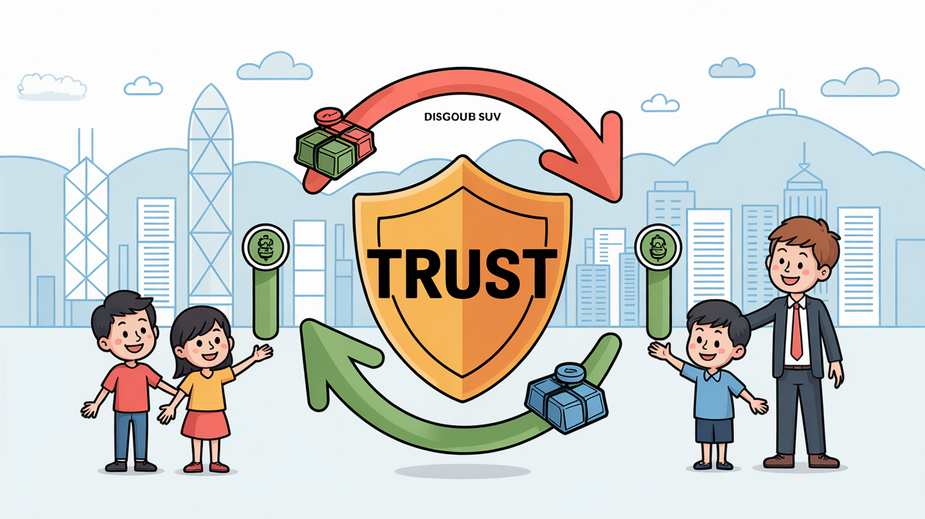
How Discretionary Trusts Can Optimize Your Hong Kong Tax Liability
📋 Key Facts at a Glance
- Tax Efficiency: Discretionary trusts can potentially reduce overall tax liability through strategic income distribution among beneficiaries
- Legal Separation: Assets are legally owned by the trustee, not beneficiaries, creating a protective barrier
- Flexible Control: Trustees have discretion over when, how much, and to whom distributions are made
- Hong Kong Advantages: No capital gains tax, no inheritance tax, and territorial taxation system
What if you could legally reduce your family’s tax burden while maintaining control over your wealth and protecting assets for future generations? In Hong Kong’s favorable tax environment, discretionary trusts offer precisely this opportunity. These sophisticated legal structures have become increasingly popular among high-net-worth individuals and families seeking to optimize their tax position while ensuring their wealth is managed according to their wishes. Let’s explore how discretionary trusts work and how they can be strategically used within Hong Kong’s 2024-2025 tax framework.
What Exactly is a Discretionary Trust?
A discretionary trust is a legal arrangement where assets are transferred to a trustee who holds and manages them for the benefit of a defined group of beneficiaries. Unlike fixed trusts where beneficiaries have predetermined entitlements, discretionary trusts give the trustee complete discretion over:
- Which beneficiaries receive distributions
- When distributions are made
- How much each beneficiary receives
- Whether to distribute income or capital
This flexibility is governed by the trust deed—the legal document that establishes the trust and outlines the trustee’s powers and responsibilities. The trust deed is the cornerstone of the arrangement, providing the framework within which the trustee must operate.
The Critical Legal Separation: Trustee vs. Beneficiary
One of the most important principles in trust law is the separation between legal ownership and beneficial ownership:
| Legal Owner (Trustee) | Beneficial Owner (Beneficiaries) |
|---|---|
| Holds legal title to trust assets | Have equitable rights to benefit from assets |
| Manages and administers assets | Receive distributions at trustee’s discretion |
| Has fiduciary duties to beneficiaries | No direct control over assets |
| Files tax returns for the trust | Pay tax on distributions received |
Tax Optimization Strategies with Discretionary Trusts
Hong Kong’s tax system offers several advantages that make discretionary trusts particularly effective for tax planning. Here’s how they can optimize your tax position:
1. Strategic Income Distribution
The trustee can distribute income to beneficiaries in lower tax brackets, potentially reducing the overall tax burden. For example:
- Distribute to adult children with little or no other income
- Allocate to elderly parents who may qualify for additional allowances
- Time distributions to coincide with years when beneficiaries have lower taxable income
2. Capital Gains Tax Advantage
Hong Kong does not tax capital gains. When the trust sells assets at a profit, no capital gains tax is payable. This is particularly advantageous for:
- Investment portfolios with significant unrealized gains
- Property investments that have appreciated in value
- Business interests that may be sold in the future
3. Profits Tax Planning for Trust Businesses
If the trust operates a business, it’s subject to Hong Kong’s two-tiered profits tax system:
| Entity Type | First HK$2M Profits | Remaining Profits |
|---|---|---|
| Corporations (including corporate trustees) | 8.25% | 16.5% |
| Unincorporated businesses | 7.5% | 15% |
Practical Implementation: Setting Up Your Trust
- Define Your Objectives: Clearly articulate what you want to achieve—tax optimization, asset protection, succession planning, or a combination.
- Choose Your Trustee: This could be a professional trustee company, a trusted individual, or yourself (though this has different legal implications).
- Draft the Trust Deed: Work with legal professionals to create a comprehensive document that outlines trustee powers, beneficiary classes, distribution guidelines, and termination conditions.
- Transfer Assets: Legally transfer assets into the trust. This may have stamp duty implications depending on the assets transferred.
- Establish Administration Systems: Set up proper accounting, record-keeping, and compliance systems for the trust.
Stamp Duty Considerations
When transferring property into a trust, stamp duty may apply. As of February 28, 2024, Hong Kong has abolished several property cooling measures:
Common Scenarios and Examples
Scenario 1: Family Business Succession
A family business owner establishes a discretionary trust to hold company shares. The trustee can:
- Distribute dividends to family members in lower tax brackets
- Maintain control over business decisions through the trustee
- Avoid probate and inheritance issues upon the settlor’s death
- Potentially sell the business in the future with no capital gains tax
Scenario 2: Investment Portfolio Management
An investor transfers a HK$10 million investment portfolio into a discretionary trust:
- Dividend income can be distributed strategically among family members
- Capital gains from portfolio rebalancing are tax-free
- Assets are protected from personal creditors
- Professional investment management can be mandated in the trust deed
Compliance and Reporting Requirements
Trustees have specific legal and tax obligations in Hong Kong:
- Tax Returns: Trustees must file annual tax returns for the trust if it generates Hong Kong-sourced income
- Record Keeping: Maintain proper records for at least 7 years as required by Hong Kong tax law
- Beneficiary Reporting: Provide beneficiaries with information about distributions for their personal tax returns
- Fiduciary Duties: Act in the best interests of all beneficiaries, not favoring any particular individual
✅ Key Takeaways
- Discretionary trusts offer flexibility in income distribution, potentially reducing overall family tax liability
- Hong Kong’s tax advantages—no capital gains tax, no inheritance tax, and territorial taxation—make trusts particularly effective
- The separation between legal ownership (trustee) and beneficial ownership (beneficiaries) provides asset protection
- Strategic planning can optimize the use of personal allowances and progressive tax rates among family members
- Proper implementation requires professional advice, comprehensive documentation, and ongoing compliance
Discretionary trusts represent a powerful tool for wealth management and tax optimization in Hong Kong’s favorable tax environment. By providing flexibility in income distribution, asset protection, and succession planning, they can help families preserve wealth across generations while minimizing tax liabilities. However, successful implementation requires careful planning, professional guidance, and ongoing compliance with Hong Kong’s trust and tax laws. As with any sophisticated financial structure, the key is to align the trust’s design with your specific family circumstances, objectives, and values.
📚 Sources & References
This article has been fact-checked against official Hong Kong government sources and authoritative references:
- Inland Revenue Department (IRD) – Official tax rates, allowances, and regulations
- Rating and Valuation Department (RVD) – Property rates and valuations
- GovHK – Official Hong Kong Government portal
- Legislative Council – Tax legislation and amendments
- IRD Profits Tax Guide – Two-tiered profits tax rates and rules
- IRD Salaries Tax Guide – Progressive tax rates and personal allowances
- IRD Stamp Duty Guide – Current stamp duty rates and regulations
Last verified: December 2024 | Information is for general guidance only. Consult a qualified tax professional for specific advice.