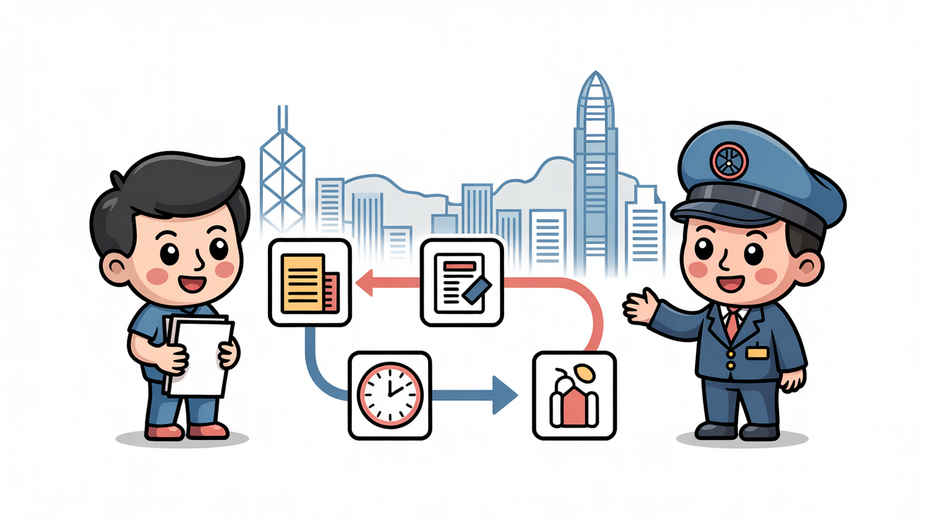
Navigating Hong Kong Tax Disputes: A Step-by-Step Guide for Foreign Entrepreneurs
📋 Key Facts at a Glance
- Critical Deadline: You must file a written objection within one month of receiving a tax assessment notice – miss this and you lose your appeal rights
- “Pay First, Argue Later”: Hong Kong requires tax payment during disputes unless the Commissioner grants a holdover, with interest at 8.25% from July 2025
- Burden of Proof on You: The taxpayer must prove the assessment is excessive or incorrect – the IRD has no obligation to prove its position
- Multi-Level Process: Disputes can escalate from IRD objection to Board of Review to Court of First Instance, taking 1-6 years total
- FSIE Compliance Essential: Since January 2023, foreign-sourced income received in Hong Kong by MNEs requires economic substance to remain tax-exempt
What happens when the Hong Kong Inland Revenue Department challenges your tax position? For foreign entrepreneurs navigating Hong Kong’s territorial tax system, understanding the dispute resolution process isn’t just helpful—it’s essential for protecting your business interests. With strict deadlines, complex procedures, and the burden of proof squarely on your shoulders, a misstep can be costly. This comprehensive guide walks you through every stage of Hong Kong’s tax dispute process, from initial objection to court appeals, with practical strategies based on 2024-2025 regulations.
Understanding Hong Kong’s Tax System for Foreign Businesses
The Territorial Source Principle
Hong Kong operates on a territorial source principle of taxation, meaning only profits with a Hong Kong source are subject to Profits Tax. While this principle is clear, its application in specific cases can be highly contentious and is a frequent source of disputes between foreign businesses and the Inland Revenue Department (IRD).
For trading companies, the IRD applies the “contract effected test”:
- Both contracts in Hong Kong: If both purchase and sale contracts are effected in Hong Kong, profits are taxable
- Both contracts offshore: If both contracts are effected outside Hong Kong, profits are not taxable
- Mixed scenario: If either contract is effected in Hong Kong, there’s an initial presumption that profits are taxable
Foreign-Sourced Income Exemption (FSIE) Regime
Since January 1, 2023, Hong Kong’s FSIE regime has fundamentally changed how multinational enterprise (MNE) groups must treat certain foreign-sourced income. The regime was expanded on January 1, 2024 (FSIE 2.0) to comply with EU requirements.
Key Points About the FSIE Regime:
- Specified Income Types: Applies to foreign-sourced dividends, interest, intellectual property (IP) income, equity interest disposal gains, and disposal gains from other assets
- Economic Substance Requirement: To maintain tax exemption, Hong Kong entities must demonstrate adequate economic substance through the ESR, participation requirement, or nexus requirement
- Deeming Provision: Foreign-sourced income “received in Hong Kong” by an MNE entity is deemed Hong Kong-sourced and taxable unless exemption requirements are met
- Source Test Remains: The territorial source principle is unchanged; FSIE only applies to income already determined to be foreign-sourced
Transfer Pricing Scrutiny
Since the enactment of the Inland Revenue (Amendment) (No. 6) Ordinance 2018 on July 13, 2018, Hong Kong has had codified transfer pricing rules largely consistent with OECD Transfer Pricing Guidelines. The IRD has been increasingly active in transfer pricing audits, with a record 7 Mutual Agreement Procedure (MAP) cases initiated in 2022 related to transfer pricing disputes.
Foreign businesses must maintain comprehensive transfer pricing documentation, including Master Files, Local Files, and Country-by-Country (CbC) Reports as required by DIPN 46 and DIPN 48.
Common Tax Dispute Issues for Foreign Entrepreneurs
1. Offshore Claim Rejections
The IRD has been taking an increasingly stringent approach in reviewing offshore claims. Common challenges include:
- Agency arrangements: Activities by agents outside Hong Kong may not result in offshore-sourced profits if key decisions are made in Hong Kong
- Substance over form: The IRD examines the economic reality of transactions, not merely contractual arrangements
- Related party transactions: Transactions with related parties receive heightened scrutiny
- Lack of documentation: Insufficient evidence to support the location where contracts were effected
2. FSIE Economic Substance Disputes
With the FSIE regime now in effect, disputes are emerging over:
- Whether the Hong Kong entity has “adequate” employees and expenditure for economic substance
- Whether core income-generating activities (CIGA) are being carried out in Hong Kong
- Proper documentation and contemporaneous records of substance
- Whether income was actually “received in Hong Kong”
3. Transfer Pricing Adjustments
Transfer pricing disputes typically involve:
- Disagreements over the appropriate transfer pricing method
- Selection of comparable transactions for benchmarking
- Functional analysis and profit allocation
- Insufficient or inadequate transfer pricing documentation
The Hong Kong Tax Dispute Resolution Process: Step-by-Step
| Stage | Timeline | Key Actions | Estimated Duration |
|---|---|---|---|
| 1. Objection to IRD | Within 1 month of assessment | Submit Form IR831 with detailed grounds | 1-2 years |
| 2. Commissioner’s Determination | After IRD review | Receive written determination with reasons | Included in Stage 1 |
| 3. Board of Review Appeal | Within 1 month of determination | Submit notice of appeal with grounds | 2 years |
| 4. Court of First Instance | Within 1 month of BOR decision | Apply for leave to appeal on law | 2 years |
| 5. Court of Appeal/CFA | After CFI decision | Further appeals on legal questions | 1-2 years |
Stage 1: Filing an Objection with the IRD
Critical Deadline
You must file a written objection within one month from the date of issue of the notice of assessment. This deadline is strictly enforced. Late objections are rarely accepted unless you can demonstrate:
- Absence from Hong Kong
- Sickness
- Other exceptional circumstances that prevented timely filing
How to File
Submit a notice of objection using Form IR831 (Notice of Objection / Application for Revision of Assessment). The objection must:
- Be in writing: Complete the relevant sections of Form IR831 or submit a detailed letter
- State precise grounds: Clearly explain the specific legal and factual basis for your objection
- Include supporting evidence: Attach all relevant documentation
- Be properly submitted: Send by post (P.O. Box 28777, Concorde Road Post Office, Hong Kong), fax (2877 1232), or via your eTax account
Payment During Objection
Hong Kong operates on a “pay first, argue later” principle. You must pay the tax shown on the assessment by the due date unless the Commissioner grants a holdover of payment. To request a holdover:
- Submit a written request explaining why payment should be held over
- Provide evidence supporting your objection’s merits
- The Commissioner has discretion to grant full, partial, or no holdover
- If granted, interest may accrue on the held-over amount at 8.25% from July 2025
Stage 2: Appeal to the Board of Review
If you disagree with the Commissioner’s determination, you may appeal to the Board of Review (BOR), an independent statutory body separate from the IRD.
Filing an Appeal
You must file within one month after receiving the Commissioner’s written determination. Your notice of appeal must include:
- A copy of the Commissioner’s written determination (including reasons and statement of facts)
- A statement of all grounds of appeal
- Be served on both the Clerk to the Board of Review and the Commissioner
Address: Clerk to the Board of Review, 15/F, Inland Revenue Centre, 5 Concorde Road, Kai Tak, Kowloon, Hong Kong
Alternative Dispute Resolution Mechanisms
Advance Rulings
To obtain certainty and avoid disputes, foreign entrepreneurs can apply for an Advance Ruling from the IRD before implementing a transaction or arrangement.
| Aspect | Details |
|---|---|
| Form | Form IR1297 (Application for Advance Ruling) |
| Fee (Territorial Source) | HK$45,000 (non-refundable) |
| Fee (Other Rulings) | HK$15,000 (non-refundable) |
| Processing Time | Approximately 6 weeks (1 month for FSIE ESR rulings) |
| Submission Address | Deputy Commissioner (Technical), 15/F, Inland Revenue Centre, 5 Concorde Road, Kai Tak, Kowloon |
| Binding Effect | Legally binding on the IRD if facts match the application |
Advance Pricing Arrangements (APAs)
For transfer pricing matters, taxpayers can enter into an Advance Pricing Arrangement (APA) with the IRD to pre-agree transfer pricing methodologies for related party transactions.
- Types: Unilateral (Hong Kong only), bilateral (Hong Kong and one other jurisdiction), or multilateral (multiple jurisdictions)
- Benefits: Provides certainty, minimizes double taxation risk, reduces compliance costs
- Guidance: Detailed procedures are set out in DIPN 48 (revised July 2020)
- Trend: The first Hong Kong-Chinese Mainland MAP case was successfully concluded in late 2023, demonstrating the effectiveness of this mechanism
Practical Strategies for Foreign Entrepreneurs
- Maintain Comprehensive Documentation: The burden of proof is on you. From the outset, maintain detailed records of contract execution, decision-making locations, economic substance activities, and transfer pricing documentation.
- Engage Local Tax Professionals Early: Foreign entrepreneurs should engage Hong Kong tax professionals (accountants and tax lawyers) at the earliest stage for structuring advice, compliance support, and objection preparation.
- Consider Advance Rulings for Uncertain Matters: If your business model, offshore claims, or FSIE compliance position is uncertain, an advance ruling provides binding certainty before committing to the structure.
- Respond Promptly to IRD Inquiries: The IRD frequently issues inquiry letters requesting information about offshore claims, FSIE compliance, or transfer pricing. These are often the precursor to additional assessments.
- Evaluate Settlement Opportunities: At the administrative level (before Board of Review), the IRD may be open to settlement discussions. Assess the strength of your position realistically.
- Understand the “Pay First, Argue Later” Principle: Cash flow planning is critical since you generally must pay assessed tax even while disputing it. Budget for potential tax payments during disputes.
- Stay Current on Regulatory Developments: Hong Kong’s tax landscape is evolving rapidly with FSIE refinements, transfer pricing enforcement, and upcoming global minimum tax implementation from 2025.
Recent Developments and Trends (2024-2025)
Increased IRD Scrutiny
The IRD has adopted a more conservative and stringent approach in recent years, driven by:
- Anti-BEPS (Base Erosion and Profit Shifting) initiatives
- International pressure for tax good governance
- Revenue enhancement objectives
- Greater information exchange with other jurisdictions
Global Minimum Tax Implementation
Hong Kong enacted the OECD’s global minimum tax framework (Pillar Two) on June 6, 2025, effective from January 1, 2025. This includes:
- Rate: 15% minimum effective tax rate
- Applies to: MNE groups with revenue ≥ EUR 750 million
- Includes: Income Inclusion Rule (IIR) and HK Minimum Top-up Tax (HKMTT)
✅ Key Takeaways
- Act immediately on deadlines: The one-month objection deadline is strict and non-negotiable in most cases. Calendar it immediately upon receiving an assessment.
- Documentation is everything: You bear the burden of proof. Contemporaneous, comprehensive documentation is critical to success in tax disputes.
- Understand FSIE requirements: Since 2023, foreign-sourced passive income received in Hong Kong by MNEs requires economic substance compliance.
- Engage Hong Kong tax professionals: From initial structuring through dispute resolution, local expertise is essential for navigating technical procedures and case law.
- Plan for “pay first, argue later”: Budget for tax payments during disputes unless holdovers are granted. Cash flow planning is critical for multi-year dispute processes.
- Consider proactive solutions: For uncertain positions or significant transactions, advance rulings (HK$15,000-45,000) provide certainty and are far cheaper than retrospective disputes.
- Stay current on developments: Hong Kong’s tax system is evolving rapidly with FSIE refinements, transfer pricing enforcement, and global minimum tax implementation.
Navigating Hong Kong tax disputes requires a strategic approach, meticulous documentation, and professional guidance. While the process can be lengthy and complex, understanding your rights, obligations, and the available mechanisms can significantly improve your chances of a favorable outcome. Remember that prevention through proper structuring and compliance is always more effective than cure through dispute resolution.
📚 Sources & References
This article has been fact-checked against official Hong Kong government sources and authoritative references:
- Inland Revenue Department (IRD) – Official tax rates, allowances, and regulations
- Rating and Valuation Department (RVD) – Property rates and valuations
- GovHK – Official Hong Kong Government portal
- Legislative Council – Tax legislation and amendments
- IRD FSIE Regime – Foreign-sourced income exemption requirements and guidance
- Board of Review Functions & Procedures – Official appeal process information
- GovHK Objections and Appeals – Official guidance on tax dispute procedures
Last verified: December 2024 | Information is for general guidance only. Consult a qualified tax professional for specific advice.