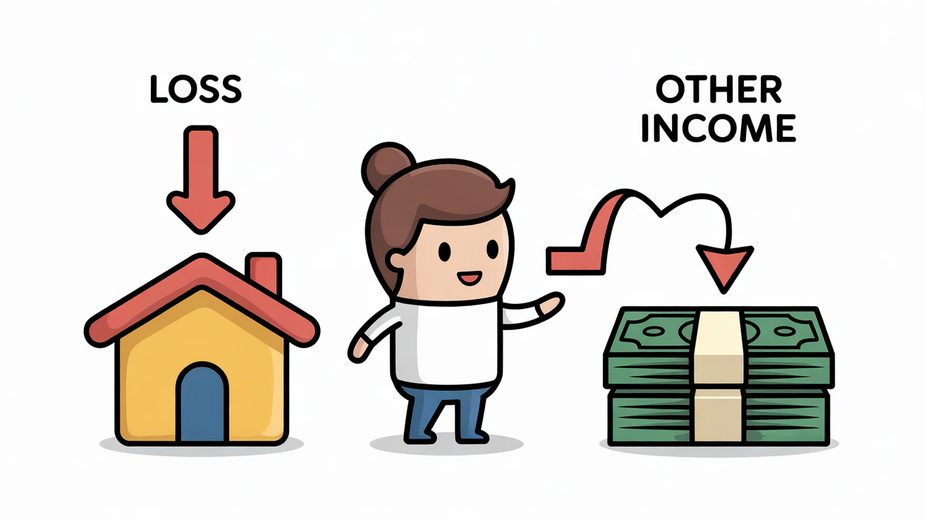
Rental Losses in Hong Kong: Can You Offset Them Against Other Income?
📋 Key Facts at a Glance
- Property Tax Rate: 15% on Net Assessable Value (rental income minus allowable expenses)
- Loss Offset Method: Rental losses can offset other income ONLY through Personal Assessment election
- Loss Carry-forward: Unused rental losses can be carried forward indefinitely against future rental profits
- Key Deductions: Rates, government rent, management fees, repairs, and mortgage interest (if eligible)
- Record Retention: Must keep supporting documents for 7 years for IRD verification
Did you know that nearly 30% of Hong Kong property investors face rental losses at some point? Whether due to market downturns, extended vacancies, or unexpected repairs, rental properties don’t always generate positive cash flow. But here’s the crucial question: Can those losses actually reduce your overall tax bill by offsetting against your salary or other income? The answer is more nuanced than you might think, and understanding Hong Kong’s specific tax rules could save you thousands in taxes.
What Exactly is a Rental Loss in Hong Kong?
A rental loss occurs when your allowable expenses for a Hong Kong property exceed the rental income it generates within a tax year (April 1 to March 31). This situation is surprisingly common and can result from various factors:
- Extended vacancies: Empty properties still incur costs while generating zero income
- Market corrections: Rents may drop below expectations while expenses remain constant
- Unexpected repairs: Major maintenance issues can significantly increase costs
- High mortgage interest: In the current interest rate environment, financing costs can consume most rental income
Allowable vs. Non-Allowable Expenses
| Expense Type | Affects Cash Flow? | Deductible for Tax Loss? | Notes |
|---|---|---|---|
| Rental Income | Yes (Positive) | Yes (Positive) | Gross amount before expenses |
| Rates & Government Rent | Yes (Negative) | Yes (Negative) | Only if paid by owner |
| Management Fees | Yes (Negative) | Yes (Negative) | Must be for property management |
| Routine Repairs | Yes (Negative) | Yes (Negative) | Maintenance only, not improvements |
| Mortgage Interest | Yes (Negative) | Yes (Negative, if eligible) | Only if loan used to acquire rental property |
| Mortgage Principal | Yes (Negative) | No | Capital repayment, not deductible |
| Major Renovations | Yes (Negative) | No | Capital improvements, not deductible |
| Initial Furnishing | Yes (Negative) | No | Capital expenditure |
The Golden Key: Personal Assessment for Loss Offsetting
Here’s the most important fact for Hong Kong property investors: Rental losses cannot directly offset salary income under normal Property Tax assessment. Hong Kong’s tax system maintains separate “silos” for different income types. However, there’s a powerful mechanism that changes everything: Personal Assessment.
How Personal Assessment Works
Personal Assessment allows you to aggregate various income sources and be taxed as one combined amount. When you elect for Personal Assessment, your rental income (or loss) is combined with:
- Salary income
- Business profits (if you operate a sole proprietorship or partnership)
- Other assessable income
This aggregation creates a single “net total income” figure. If your rental property shows a loss, it reduces this combined total, potentially lowering your overall tax liability.
Business vs. Investment Property: A Critical Distinction
There’s another important scenario: If your rental property is part of a business (operated through a sole proprietorship or partnership), the rental income and expenses are included in your business’s Profits Tax calculation. Business losses can be offset against other income under Personal Assessment rules.
Calculating Your Net Assessable Value (NAV)
To determine if you have a rental loss, you must calculate the Net Assessable Value (NAV) using this formula:
NAV = (Rental Income – Rates Paid) × 80% × 15% Tax Rate
The 20% statutory allowance covers repairs and other outgoings automatically
Let’s walk through a practical example for the 2024-25 tax year:
| Item | Amount (HKD) | Deductible? | Calculation Impact |
|---|---|---|---|
| Gross Annual Rent | 180,000 | N/A | +180,000 |
| Rates Paid | 15,000 | Yes | -15,000 |
| Government Rent | 5,000 | Yes | -5,000 |
| Minor Repairs | 10,000 | Yes | -10,000 |
| Mortgage Interest | 160,000 | Yes | -160,000 |
| Mortgage Principal | 50,000 | No | 0 |
| Kitchen Renovation | 30,000 | No | 0 |
| Total Deductible Expenses | 190,000 | ||
| Net Assessable Value (NAV) | -10,000 | LOSS |
In this example, deductible expenses (HK$190,000) exceed rental income (HK$180,000), creating a HK$10,000 loss. This loss can be carried forward or potentially offset against other income through Personal Assessment.
Loss Carry-forward Rules and Limitations
Hong Kong’s tax system provides valuable flexibility through loss carry-forward provisions:
- Indefinite Carry-forward: Rental losses can be carried forward indefinitely to offset future rental profits from the same property
- Source-specific: Losses from Property A can only offset future profits from Property A (unless under Personal Assessment)
- No Carry-back: Unlike some jurisdictions, Hong Kong doesn’t allow carrying losses back to previous tax years
- Change of Ownership: Losses generally don’t transfer to new owners if you sell the property
Joint Ownership Considerations
For jointly owned properties, rental income, expenses, and losses are allocated based on ownership shares. Each owner reports their proportionate share on their individual tax return. This means:
- If you own 60% of a property, you report 60% of the rental income and 60% of the deductible expenses
- Each owner’s share of any loss is calculated separately
- Each owner must decide individually whether to elect for Personal Assessment
Documentation and Compliance Requirements
The IRD takes rental loss claims seriously and requires thorough documentation. Failure to provide adequate evidence can result in disallowed deductions and penalties.
| Document Type | Required For | Retention Period |
|---|---|---|
| Tenancy Agreement | Rental income verification | 7 years |
| Bank Statements | Income receipts & expense payments | 7 years |
| Rate Demand Notes | Rates deduction proof | 7 years |
| Management Fee Invoices | Management cost deduction | 7 years |
| Repair Invoices/Receipts | Maintenance expense proof | 7 years |
| Mortgage Statements | Interest deduction verification | 7 years |
| Property Insurance Documents | Insurance cost deduction | 7 years |
Strategic Planning for Property Investors
While rental losses present short-term challenges, they offer strategic opportunities for long-term investors:
Tax Efficiency Over the Investment Cycle
Property investments often follow a cycle where early years show losses (due to high mortgage interest and setup costs) while later years generate profits. Hong Kong’s indefinite loss carry-forward allows you to:
- Accumulate losses during the initial investment phase
- Offset these losses against future rental profits when the property becomes cash-flow positive
- Smooth your tax liability over the entire holding period
- Enhance overall after-tax returns on investment
Integration with Other Tax Planning
Rental property taxation should be considered alongside other tax planning strategies:
| Tax Element | Interaction with Rental Losses | 2024-25 Limits |
|---|---|---|
| Personal Assessment | Allows rental losses to offset salary/business income | Elect annually on tax return |
| MPF Contributions | Separate deduction, not affected by rental losses | Max HK$18,000/year |
| Home Loan Interest | Separate allowance for owner-occupied property | Max HK$100,000/year (20 years max) |
| Domestic Rent Deduction | For tenants, separate from property ownership | Max HK$100,000/year |
| Charitable Donations | Separate deduction, limited to 35% of income | No absolute limit |
✅ Key Takeaways
- Rental losses CAN offset other income, but ONLY through Personal Assessment election
- Distinguish carefully between cash flow expenses and tax-deductible expenses
- Unused rental losses can be carried forward indefinitely against future rental profits
- Maintain meticulous records for 7 years – the IRD requires proof for all deductions
- Calculate both assessment methods each year to determine the most tax-efficient approach
- Consider the long-term investment cycle when planning for tax efficiency
Navigating rental losses in Hong Kong requires understanding both the limitations and opportunities within the tax system. While you can’t directly offset property losses against salary income under normal assessment, the Personal Assessment mechanism provides a powerful tool for tax optimization. The key is accurate record-keeping, proper expense classification, and strategic planning across your entire investment horizon. Remember that while tax efficiency is important, it should never compromise proper property maintenance or compliance with tenancy obligations. Always consult with a qualified tax professional for personalized advice tailored to your specific circumstances.
📚 Sources & References
This article has been fact-checked against official Hong Kong government sources and authoritative references:
- Inland Revenue Department (IRD) – Official tax rates, allowances, and regulations
- Rating and Valuation Department (RVD) – Property rates and valuations
- GovHK – Official Hong Kong Government portal
- Legislative Council – Tax legislation and amendments
- IRD Property Tax Guide – Official property tax regulations and deductions
- GovHK Personal Assessment Guide – Official Personal Assessment information
- IRD Personal Assessment Calculator 2024-25 – Official computation tool
Last verified: December 2024 | Information is for general guidance only. Consult a qualified tax professional for specific advice.