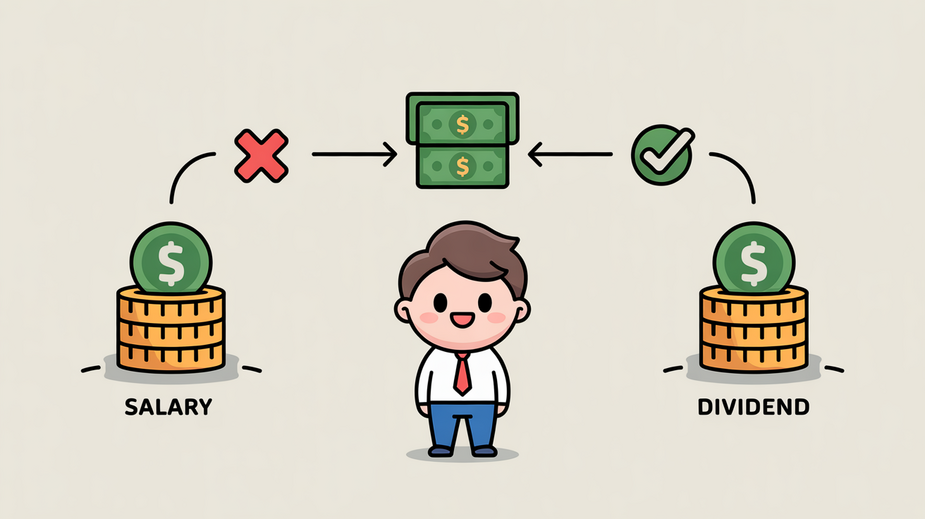
Salary vs. Dividend Payments: Tax Optimization for Non-Resident Business Owners in Hong Kong
📋 Key Facts at a Glance
- Tax Rate Difference: Corporate profits tax: 8.25% on first HK$2M, 16.5% on remainder vs. Personal salaries tax: progressive rates up to 17%
- Dividend Advantage: Dividends from Hong Kong taxed profits are tax-exempt for recipients in Hong Kong
- Territorial System: Only Hong Kong-sourced income is taxable, regardless of residency status
- Two-Tier System: Only one entity per connected group can claim the lower 8.25% profits tax rate
As a non-resident business owner operating in Hong Kong, you face a critical decision: should you take money out of your company as salary or dividends? This choice isn’t just about immediate cash flow—it affects your tax bill, compliance requirements, and even your company’s long-term valuation. With Hong Kong’s unique territorial tax system and recent global tax reforms, making the right decision requires understanding both local rules and international implications. Let’s explore how to optimize your profit extraction strategy in 2024-2025.
Hong Kong’s Territorial Tax System: What Non-Residents Need to Know
Hong Kong operates on a territorial tax principle that’s particularly advantageous for international business owners. Unlike many countries that tax worldwide income, Hong Kong only taxes income with a source in Hong Kong. This applies equally to residents and non-residents—your residency status doesn’t change the fundamental rule. The key question is always: “Where did this income originate?”
Two Main Tax Categories for Business Owners
For non-resident business owners, two tax categories matter most:
- Profits Tax: Applies to assessable profits from trade, profession, or business carried on in Hong Kong. This is paid by your company.
- Salaries Tax: Applies to income from employment, offices, or pensions sourced in Hong Kong. This is paid by you personally.
Salary vs. Dividends: The Tax Comparison
The fundamental difference between salary and dividend payments lies in who pays tax and at what rate. Understanding this distinction is crucial for optimizing your tax position.
| Income Type | Subject to Hong Kong Tax? | Who Pays Tax? | Tax Rate/Treatment (2024-25) |
|---|---|---|---|
| Salary (from HK source) | Yes (Salaries Tax) | Individual Recipient | Progressive rates: 2% to 17% on net chargeable income |
| Company Profits (from HK source) | Yes (Profits Tax) | The Company | Corporations: 8.25% on first HK$2M, 16.5% on remainder |
| Dividends (from HK taxed profits) | No (Exempt) | N/A (Profits already taxed) | Tax-exempt for recipient in Hong Kong |
Understanding the Progressive Salaries Tax System
Hong Kong’s salaries tax uses progressive rates on net chargeable income (after deductions and allowances):
| Income Bracket | Tax Rate |
|---|---|
| First HK$50,000 | 2% |
| Next HK$50,000 | 6% |
| Next HK$50,000 | 10% |
| Next HK$50,000 | 14% |
| Remainder | 17% |
Legal Compliance: Salary vs. Dividend Requirements
Choosing between salary and dividends isn’t just about tax rates—it’s about compliance. Both approaches have specific legal requirements that must be followed to avoid penalties and challenges from the Inland Revenue Department (IRD).
Salary Payments: The Arm’s Length Principle
If you take a salary as a director or employee of your Hong Kong company, it must meet the arm’s length principle. This means your compensation should be comparable to what an unrelated party would pay for similar services in the open market. The IRD will scrutinize whether your salary is commercially justifiable and reflects the actual value of services rendered.
- Document Your Role: Create clear employment contracts or service agreements detailing your responsibilities
- Benchmark Market Rates: Research comparable salaries for similar positions in Hong Kong
- Maintain Time Records: Document the time spent on company activities to justify compensation
Dividend Payments: Corporate Governance Requirements
While dividends from Hong Kong taxed profits are tax-exempt for recipients, the distribution process must follow corporate law:
- Dividends must be paid from lawfully available distributable reserves
- Proper board resolutions and shareholder approvals are required
- Follow procedures outlined in your company’s articles of association
- Maintain clear records of all dividend declarations and payments
Strategic Profit Extraction: Beyond Basic Tax Rates
The optimal strategy often involves a combination of salary and dividends, tailored to your specific circumstances. Consider these factors when designing your approach:
Timing and Flexibility Advantages
Salaries are typically paid regularly, while dividends offer greater timing flexibility. You can declare dividends based on accumulated profits when it’s most advantageous for your personal financial planning or when tax landscapes change.
Business Growth vs. Personal Liquidity
High salaries reduce company profits and retained earnings, which can affect:
- Company Valuation: Lower profits mean lower valuation multiples
- Financing Options: Reduced retained earnings may limit internal funding for expansion
- Investor Appeal: Strong balance sheets attract better investment terms
Cross-Border Compliance and Global Tax Reforms
As a non-resident owner, you must consider both Hong Kong rules and regulations in your home country. Recent global tax reforms add another layer of complexity.
Foreign-Sourced Income Exemption (FSIE) Regime
Hong Kong’s FSIE regime, expanded in January 2024, affects how certain foreign-sourced income is taxed. While dividends from Hong Kong taxed profits remain exempt, understanding FSIE rules is crucial if your company receives foreign-sourced dividends, interest, disposal gains, or IP income.
Global Minimum Tax (Pillar Two)
Hong Kong enacted the Global Minimum Tax framework effective January 1, 2025. This 15% minimum effective tax rate applies to multinational enterprise groups with revenue ≥ EUR 750 million. While this may not affect smaller businesses directly, it’s important to understand how these rules could impact your overall international tax planning.
Double Taxation Agreements (DTAs)
Hong Kong has DTAs with 45+ jurisdictions. These agreements can reduce withholding taxes on cross-border payments and provide mechanisms to avoid double taxation. Check the specific DTA between Hong Kong and your country of residence to understand how it affects salary and dividend payments.
Long-Term Business Strategy Considerations
Your profit extraction strategy affects more than just this year’s tax bill—it shapes your company’s future. Consider these long-term implications:
Succession Planning and Wealth Transfer
Strategic dividend distributions can facilitate:
- Funding retirement plans outside the business
- Wealth transfer to family members
- Structuring buy-sell agreements for ownership transitions
- Preparing the company for eventual sale
Holding Company Structures
For sophisticated international operations, consider using a holding company structure. Hong Kong’s Family Investment Holding Vehicle (FIHV) regime offers 0% tax on qualifying income for vehicles with minimum AUM of HK$240 million and substantial activities in Hong Kong.
✅ Key Takeaways
- Dividends from Hong Kong taxed profits are tax-exempt for recipients, while salaries face progressive rates up to 17%
- Use a combination strategy: modest salary up to allowances, then dividends for additional extraction
- Always comply with arm’s length principles for salaries and corporate governance for dividends
- Consider both Hong Kong taxes and your home country’s reporting requirements
- Align your extraction strategy with long-term business growth and succession planning goals
The optimal balance between salary and dividend payments depends on your specific circumstances: your income level, business profitability, growth plans, and international tax obligations. While dividends often offer tax advantages in Hong Kong, a thoughtful combination approach typically provides the best results. Remember that tax optimization should support—not undermine—your business’s long-term health and compliance standing. Consult with a qualified tax professional who understands both Hong Kong regulations and your home country’s tax laws to develop a strategy tailored to your unique situation.
📚 Sources & References
This article has been fact-checked against official Hong Kong government sources and authoritative references:
- Inland Revenue Department (IRD) – Official tax rates, allowances, and regulations
- Rating and Valuation Department (RVD) – Property rates and valuations
- GovHK – Official Hong Kong Government portal
- Legislative Council – Tax legislation and amendments
- IRD Profits Tax Guide – Corporate tax rates and two-tier system
- IRD Salaries Tax Guide – Progressive rates and personal allowances
- IRD FSIE Regime – Foreign-sourced income exemption rules
- OECD BEPS – Global minimum tax framework
Last verified: December 2024 | Information is for general guidance only. Consult a qualified tax professional for specific advice.