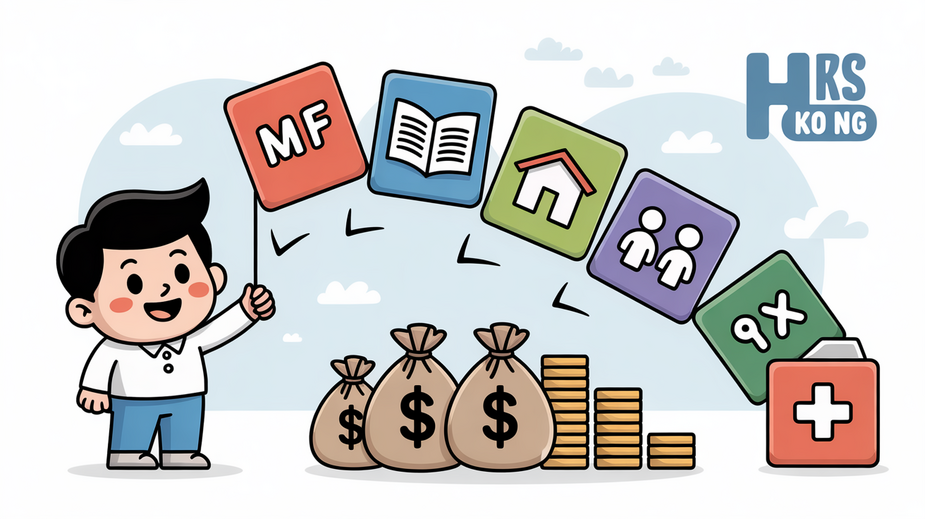
Strategic Tax Planning: Leveraging Hong Kong’s Personal Deductions for Maximum Savings
📋 Key Facts at a Glance
- Fact 1: Hong Kong’s two-tiered tax system means you pay the lower of progressive rates (2-17%) or standard rates (15-16%) on your income
- Fact 2: Personal allowances can reduce your taxable income by up to HK$264,000 for married couples plus HK$130,000 per child
- Fact 3: Strategic use of deductions can save thousands annually, with MPF contributions, home loan interest, and self-education offering significant tax relief
Did you know that the average Hong Kong taxpayer could save HK$15,000 or more annually by simply maximizing their available deductions? In a city where every dollar counts, understanding Hong Kong’s unique tax deduction system isn’t just smart financial planning—it’s essential wealth management. Whether you’re a young professional starting your career, a growing family managing multiple expenses, or approaching retirement, strategic use of personal deductions can significantly reduce your tax burden while supporting your life goals. Let’s explore how to transform your tax return from a chore into a powerful financial tool.
How Hong Kong’s Tax System Works: Your Deduction Advantage
Hong Kong operates on a unique two-tiered tax calculation system that gives taxpayers a built-in advantage. Your final tax bill is determined by comparing two calculations and paying the lower amount. First, progressive rates apply to your “Net Chargeable Income” (income after allowances and deductions), starting at 2% and reaching 17% for higher earners. Second, standard rates apply to your “Net Assessable Income” (income after allowances but before deductions), currently at 15% for the first HK$5 million and 16% for amounts above that. This dual system creates opportunities where deductions can push you into a lower progressive bracket while potentially beating the standard rate calculation.
| Progressive Tax Rates (2024-25) | Rate | Standard Rate (2024-25) | Rate |
|---|---|---|---|
| First HK$50,000 | 2% | First HK$5 million | 15% |
| Next HK$50,000 | 6% | Amount exceeding HK$5 million | 16% |
| Next HK$50,000 | 10% | ||
| Next HK$50,000 | 14% | ||
| Remainder | 17% |
Deductions work by reducing your Net Chargeable Income—the amount subject to progressive rates. They’re applied after personal allowances but before the final tax calculation. This means every dollar of legitimate deduction not only reduces your taxable income but could potentially move you into a lower tax bracket, creating compound savings.
Top 3 Tax-Saving Deductions You Should Prioritize
While Hong Kong offers numerous deduction opportunities, focusing on these three high-impact areas can yield the most significant savings for the majority of taxpayers. These deductions combine substantial limits with broad eligibility, making them accessible to professionals, families, and homeowners alike.
1. Retirement Savings: MPF & Annuity Contributions
Your retirement planning can deliver immediate tax benefits through Hong Kong’s generous deduction system. While mandatory MPF contributions are automatically deducted, the real tax-saving opportunity lies in voluntary contributions:
- Mandatory MPF: Up to HK$18,000 per year deductible
- Tax Deductible Voluntary Contributions (TVC): Additional voluntary contributions to MPF schemes
- Qualifying Annuity Premiums: Premiums paid to approved deferred annuity policies
The combined deduction limit for qualifying annuity premiums and tax-deductible voluntary MPF contributions is HK$60,000 per year. This creates a powerful opportunity to reduce your current tax burden while building retirement wealth.
2. Home Loan Interest: The Homeowner’s Advantage
If you own your home in Hong Kong, the home loan interest deduction can provide substantial annual savings. You can claim interest paid on loans used to purchase your principal place of residence, with these key parameters:
- Annual Limit: HK$100,000 per year
- Maximum Period: Up to 20 tax years
- Eligibility: Must be your principal place of residence in Hong Kong
- Documentation: Annual mortgage interest statement from your bank
This deduction is particularly valuable given Hong Kong’s high property prices and mortgage amounts. A HK$100,000 deduction could save you up to HK$17,000 in tax if you’re in the highest progressive bracket.
3. Self-Education: Investing in Your Future
Hong Kong encourages continuous learning by allowing deductions for self-education expenses. This covers courses that maintain or improve skills for your current employment or business:
- Annual Limit: HK$100,000 per year
- Eligible Expenses: Tuition fees, examination fees, course materials
- Qualifying Courses: Must be offered by approved educational institutions
- Purpose: Must relate to your current employment or business
Maximizing Family-Related Allowances
Family circumstances significantly impact your tax position in Hong Kong. The 2024-25 tax year offers generous allowances that can dramatically reduce your taxable income. Here’s what you need to know about claiming for your family:
| Allowance Type | 2024-25 Amount (HKD) | Key Requirements |
|---|---|---|
| Basic Personal Allowance | 132,000 | Available to all taxpayers |
| Married Person’s Allowance | 264,000 | Spouse has no taxable income |
| Child Allowance (per child) | 130,000 | Child under 18 or in full-time education |
| Additional Child Allowance (year of birth) | 130,000 | For year child is born |
| Dependent Parent/Grandparent (60+) | 50,000 | Resident in HK, supported by taxpayer |
| Single Parent Allowance | 132,000 | Supports child alone |
A married couple with two children and one dependent parent could potentially reduce their taxable income by HK$654,000 through allowances alone (HK$264,000 + HK$260,000 + HK$50,000). This demonstrates the powerful impact of properly claiming family-related allowances.
Charitable Giving: Smart Philanthropy with Tax Benefits
Hong Kong encourages philanthropy through one of Asia’s most generous charitable donation deduction systems. When done strategically, your generosity can provide meaningful tax relief while supporting causes you care about:
- Approved Charities: Must be registered under Section 88 of the Inland Revenue Ordinance
- Deduction Limit: Up to 35% of your assessable income
- Minimum Donation: No minimum amount required (previously HK$100)
- Eligible Donations: Cash donations only (property or shares have different rules)
Strategic timing of charitable donations can maximize your tax benefits. Consider these approaches:
- Annual Planning: Calculate your expected income and plan donations to utilize the 35% limit effectively
- Bunching Strategy: For larger donations, consider “bunching” multiple years’ donations into one tax year to exceed the standard deduction threshold
- Year-End Timing: Ensure donations are made and receipts dated before March 31 to claim in the current tax year
Avoiding Common Deduction Pitfalls
Even experienced taxpayers can stumble when claiming deductions. Being aware of these common mistakes can save you from penalties, audits, and missed opportunities:
| Pitfall | What Goes Wrong | How to Avoid It |
|---|---|---|
| Missed Deadlines | Tax returns due ~1 month after issue (early June), late filing penalties up to HK$10,000 | Mark calendar when you receive return, aim to file within 2 weeks |
| Inadequate Documentation | No receipts for donations, missing mortgage statements, unverified educational expenses | Keep all records for 7 years, organize by tax year, digitize important documents |
| Overclaiming Expenses | Claiming personal expenses as business, exceeding limits, claiming ineligible items | Understand exact eligibility criteria, when in doubt consult IRD guidelines or professional |
| Family Allowance Conflicts | Both divorced parents claiming same child, incorrect dependent status | Coordinate with ex-spouse, ensure dependents meet residency and support requirements |
Medical Expenses: Unlimited Deduction Potential
Unlike many other deductions with fixed limits, medical expenses offer unlimited deduction potential—a unique feature of Hong Kong’s tax system. This can be particularly valuable during years with significant medical needs:
- No Upper Limit: Claim 100% of eligible medical expenses
- Covered Expenses: Treatment by registered doctors/dentists, hospital fees, surgery, therapy
- Dependent Coverage: Includes spouse, children, and dependent parents/grandparents
- Insurance Premiums: Qualifying Voluntary Health Insurance Scheme (VHIS) premiums
Maintain detailed records including doctor’s receipts, hospital bills, and insurance premium statements. While you don’t submit these with your return, you must be able to produce them if requested by the IRD.
Year-Round Tax Planning Strategy
Effective tax planning isn’t a March activity—it’s a year-round discipline. Implement this systematic approach to maximize your deductions every year:
- January-March (Planning Phase): Review last year’s return, estimate current year income, identify deduction opportunities, make strategic donations and MPF contributions before March 31 deadline
- April-June (Filing Phase): Receive tax return (early May), gather all documentation, complete and submit return within deadline (~1 month from issue), keep copies of everything submitted
- July-December (Monitoring Phase): Track expenses for next year, update records for life changes (marriage, children, home purchase), review tax law changes in Budget announcements
✅ Key Takeaways
- Hong Kong’s two-tiered tax system means deductions reduce your progressive rate calculation, potentially beating the standard rate
- Prioritize MPF/annuity contributions (HK$60,000 limit), home loan interest (HK$100,000), and self-education (HK$100,000) for maximum impact
- Family allowances can reduce taxable income by HK$654,000+ for a typical family with children and dependent parents
- Charitable donations offer up to 35% deduction of your income—plan timing to maximize benefits
- Medical expenses have no upper limit—keep thorough records for you and your dependents
- Document everything for 7 years and file returns promptly to avoid penalties and audits
Strategic tax planning in Hong Kong is about more than just annual compliance—it’s an ongoing wealth management strategy that rewards proactive behavior. By understanding the deduction landscape, maintaining organized records, and planning throughout the year, you can transform tax season from a burden into an opportunity. Remember that while this guide provides comprehensive information, individual circumstances vary. For complex situations or significant financial decisions, consulting a qualified tax professional can provide personalized advice tailored to your specific needs and goals.
📚 Sources & References
This article has been fact-checked against official Hong Kong government sources and authoritative references:
- Inland Revenue Department (IRD) – Official tax rates, allowances, and regulations
- Rating and Valuation Department (RVD) – Property rates and valuations
- GovHK – Official Hong Kong Government portal
- Legislative Council – Tax legislation and amendments
- IRD Salaries Tax Guide – Comprehensive salaries tax information
- GovHK MPF Deductions – MPF contribution deduction rules
- GovHK Home Loan Interest – Home loan interest deduction guidelines
Last verified: December 2024 | Information is for general guidance only. Consult a qualified tax professional for specific advice.