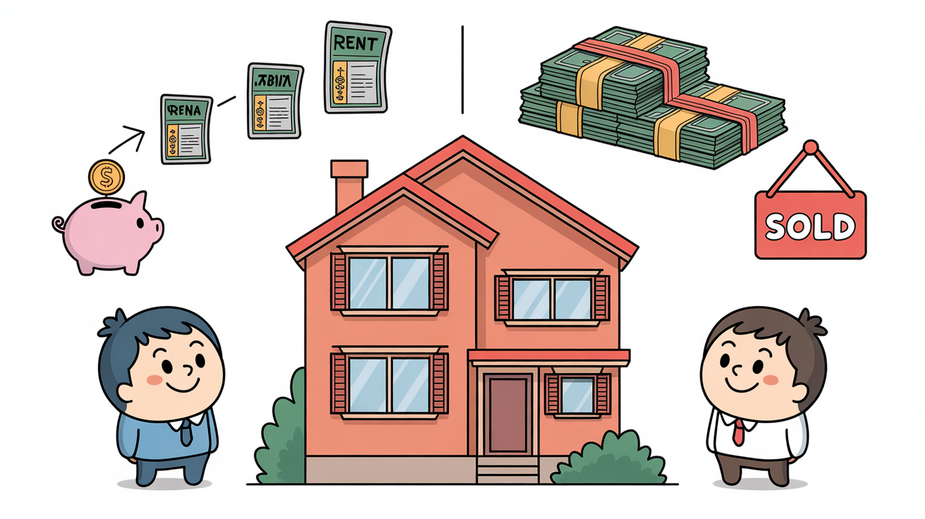
Tax Implications of Renting Out Your Hong Kong Property vs. Selling It
📋 Key Facts at a Glance
- Property Tax Rate: 15% on net assessable value (rental income minus rates, with 20% statutory allowance)
- Stamp Duty on Sale: Progressive rates from 1.5% to 4.25% based on property value (ad valorem duty)
- Stamp Duty on Lease: 0.25% to 1% based on lease term and rent amount
As a Hong Kong property owner, you face a critical financial decision: should you rent out your property for steady income or sell it for a lump sum? This choice isn’t just about cash flow—it triggers completely different tax obligations that can significantly impact your bottom line. Understanding the tax implications of renting versus selling is essential for making an informed decision that aligns with your financial goals and compliance requirements.
Initial Tax Obligations: The First Financial Hurdle
Your decision to rent or sell immediately sets you on different tax paths with distinct upfront costs and administrative requirements. The initial tax obligations represent your first financial hurdle and can significantly influence your cash flow planning.
| Tax Aspect | Renting Out Property | Selling Property |
|---|---|---|
| Primary Transaction Tax | Stamp Duty on Tenancy Agreement | Ad Valorem Stamp Duty on Property Transfer |
| Calculation Basis | Based on rent amount and lease duration | Based on property value (progressive rates) |
| Typical Initial Cost | Relatively modest (0.25%-1% of rent) | Significantly higher (1.5%-4.25% of property value) |
| Registration Requirements | Property tax registration with IRD | Property transfer reporting |
Stamp Duty: The Major Cost Divider
Stamp duty represents the most significant initial cost difference between renting and selling. When you rent out your property, stamp duty applies to the tenancy agreement based on these rates:
- Lease term ≤ 1 year: 0.25% of total rent payable
- Lease term 1-3 years: 0.5% of average yearly rent
- Lease term > 3 years: 1% of average yearly rent
For example, if you rent a property for HK$30,000 per month on a 2-year lease, the stamp duty would be: (HK$30,000 × 12 × 2) ÷ 2 × 0.5% = HK$1,800.
When selling your property, the stamp duty is substantially higher and calculated on a progressive scale based on the property value:
| Property Value | Stamp Duty Rate |
|---|---|
| Up to HK$3,000,000 | HK$100 |
| HK$3,000,001 – 3,528,240 | HK$100 + 10% of excess |
| HK$3,528,241 – 4,500,000 | 1.5% |
| HK$4,500,001 – 4,935,480 | 1.5% to 2.25% |
| HK$4,935,481 – 6,000,000 | 2.25% |
| HK$6,000,001 – 6,642,860 | 2.25% to 3% |
| HK$6,642,861 – 9,000,000 | 3% |
| HK$9,000,001 – 10,080,000 | 3% to 3.75% |
| HK$10,080,001 – 20,000,000 | 3.75% |
| HK$20,000,001 – 21,739,120 | 3.75% to 4.25% |
| Above HK$21,739,120 | 4.25% |
Ongoing Tax Responsibilities: The Long-Term Commitment
Choosing to rent transforms you into a landlord with recurring tax obligations, while selling typically represents a one-time transaction with final tax implications.
Property Tax for Rental Income
If you choose to rent, you’ll need to register for property tax with the Inland Revenue Department (IRD) and file annual tax returns. Property tax is calculated as follows:
- Step 1: Calculate gross rental income for the tax year (April 1 to March 31)
- Step 2: Deduct rates paid to the government (property tax paid to Rating and Valuation Department)
- Step 3: Apply 20% statutory allowance for repairs and outgoings
- Step 4: Apply 15% property tax rate to the net assessable value
Example Calculation: If your property generates HK$300,000 annual rent and you pay HK$10,000 in rates:
- Gross rent: HK$300,000
- Less rates: HK$10,000 = HK$290,000
- Less 20% allowance: HK$290,000 × 80% = HK$232,000 (net assessable value)
- Property tax: HK$232,000 × 15% = HK$34,800
Registration and Compliance Requirements
Both renting and selling require specific compliance actions:
| Requirement | Renting | Selling |
|---|---|---|
| IRD Notification | Register for property tax within 4 months of becoming landlord | Report property transfer in tax return |
| Annual Filing | Property tax return (Form BIR57) due annually | One-time reporting in year of sale |
| Record Keeping | 7 years of rental records, expenses, and agreements | 7 years of sale documentation |
| Penalties for Non-compliance | Fines up to HK$10,000 plus additional tax | Fines up to HK$10,000 plus additional tax |
Making the Right Choice: Financial Considerations
Your decision should balance immediate cash needs against long-term financial goals. Consider these factors:
- Immediate Cash Flow: Selling provides a lump sum but incurs high stamp duty. Renting provides steady income with minimal upfront costs.
- Market Conditions: In a rising market, holding and renting may yield better long-term returns. In a stagnant or declining market, selling might be preferable.
- Administrative Burden: Renting requires ongoing management, tenant relations, and annual tax filings. Selling is a one-time transaction.
- Tax Efficiency: Property tax on rental income is relatively low (effective rate around 12% after allowances). No tax on capital gains from selling (unless deemed trading).
- Future Plans: Consider whether you might need to sell later—additional stamp duty would apply then.
✅ Key Takeaways
- Stamp duty is the biggest cost difference: 0.25%-1% for leases vs. 1.5%-4.25% for sales
- Renting triggers ongoing property tax (15% on net assessable value) and annual filing requirements
- Selling typically has no capital gains tax but requires paying substantial stamp duty upfront
- Both options require proper registration and compliance with IRD notification requirements
- Your decision should balance immediate cash needs, market conditions, and long-term financial goals
Ultimately, the choice between renting and selling your Hong Kong property depends on your individual financial situation, cash flow needs, and investment horizon. While renting offers steady income with lower upfront costs, selling provides immediate liquidity at the expense of higher transaction taxes. Whichever path you choose, ensure you understand the tax implications, comply with all registration requirements, and maintain proper records for at least seven years. Consider consulting a qualified tax professional to analyze your specific circumstances and optimize your tax position.
📚 Sources & References
This article has been fact-checked against official Hong Kong government sources and authoritative references:
- Inland Revenue Department (IRD) – Official tax rates, allowances, and regulations
- Rating and Valuation Department (RVD) – Property rates and valuations
- GovHK – Official Hong Kong Government portal
- Legislative Council – Tax legislation and amendments
- IRD Stamp Duty Guide – Official stamp duty rates and calculations
- IRD Property Tax Guide – Property tax regulations and filing requirements
- GovHK Property Tax Computation – How property tax is calculated
Last verified: December 2024 | Information is for general guidance only. Consult a qualified tax professional for specific advice.