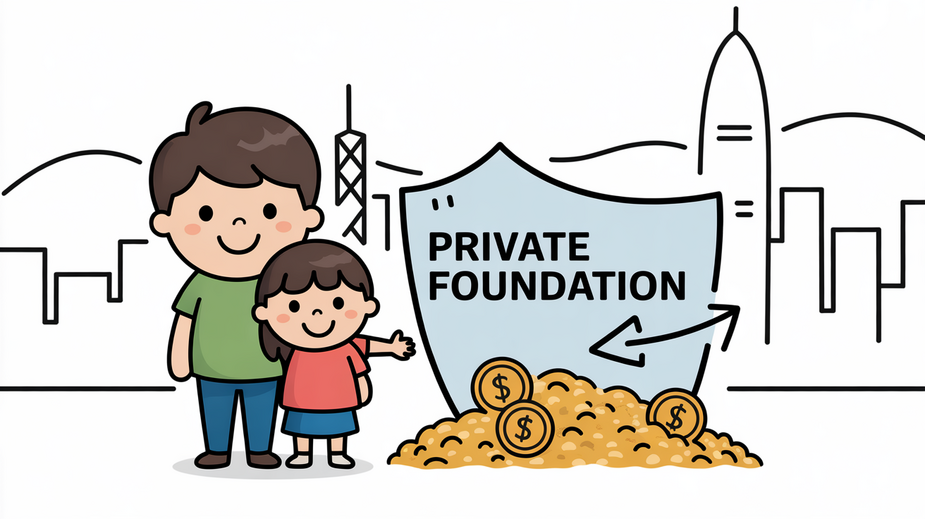
The Role of Private Foundations in Hong Kong Estate Planning
📋 Key Facts at a Glance
- Tax Advantage: Hong Kong has no estate duty since 2006, making foundations ideal for tax-efficient wealth transfer
- Legal Structure: Private foundations are separate legal entities governed by Hong Kong’s Foundations Ordinance
- Asset Protection: Foundation assets are legally separated from personal wealth, shielding them from creditors and disputes
- Tax Efficiency: Potential profits tax exemptions on qualifying passive investment income under Hong Kong’s territorial tax system
- Global Planning: Leverages Hong Kong’s 45+ double taxation agreements for international asset management
What if you could create a wealth preservation vehicle that not only protects your assets from creditors and family disputes but also operates within one of the world’s most tax-efficient jurisdictions? For high-net-worth individuals and families in Hong Kong, private foundations offer precisely this combination of robust asset protection and significant tax advantages. As wealth preservation strategies evolve beyond traditional wills and trusts, foundations are emerging as sophisticated tools for intergenerational wealth transfer in Asia’s premier financial hub.
Why Private Foundations Are Revolutionizing Hong Kong Estate Planning
In Hong Kong’s dynamic wealth management landscape, private foundations represent a paradigm shift in how families approach long-term asset preservation. Unlike traditional structures that may expose wealth to personal liabilities or complex probate processes, foundations create an independent legal entity that exists separately from both the founder and beneficiaries. This fundamental separation transforms how wealth is protected, managed, and transferred across generations.
The Core Advantages of Foundation Structures
Private foundations offer three primary benefits that make them particularly attractive for Hong Kong-based wealth planning:
- Legal Independence: Once established, the foundation becomes a separate legal entity, with assets owned by the foundation itself rather than individuals
- Asset Protection: Foundation assets are shielded from personal creditors, business risks, and family disputes through legal partitioning
- Customizable Governance: Founders can embed their vision directly into the foundation’s charter, ensuring their wishes are followed for generations
| Core Feature | Significance for Wealth Preservation |
|---|---|
| Distinct Legal Personality | Foundation legally owns assets, separate from individuals |
| Asset Partitioning | Provides strong protection against personal claims and risks |
| Customizable Governance | Founder defines structure, rules, and purpose via charter |
| Enduring Structure | Facilitates planned, continuous intergenerational wealth transfer |
Private Foundations vs. Trusts: Choosing the Right Structure
When planning for wealth transfer in Hong Kong, understanding the differences between foundations and trusts is crucial. Both serve similar purposes but operate under fundamentally different legal frameworks that affect control, transparency, and operational flexibility.
| Feature | Private Foundation | Trust |
|---|---|---|
| Legal Status | Separate Legal Entity | Legal Relationship / Obligation |
| Founder Influence Post-Establishment | Often allows formal roles (council, protector) for retained influence | Control transfers to trustees; founder reserves specific, limited powers |
| Beneficiary Rights & Management | Explicitly defined and governed by the formal charter | Defined by trust deed; management often involves significant trustee discretion |
| Public Profile / Transparency | Involves registration; structure potentially more formalized/visible | Typically governed by private document (trust deed); less public profile |
Hong Kong’s Tax Advantages for Private Foundations
Hong Kong’s favorable tax regime makes it particularly attractive for establishing private foundations. The combination of territorial taxation, no estate duty, and extensive double taxation agreements creates a powerful environment for tax-efficient wealth preservation.
Profits Tax Considerations
Private foundations in Hong Kong may qualify for profits tax exemptions under specific conditions. The key considerations include:
- Territorial Basis: Only Hong Kong-sourced profits are taxable
- Two-tiered Rates: Corporations pay 8.25% on first HK$2 million, 16.5% on remainder
- Passive Income: Qualifying passive investment income may be exempt from profits tax
- Economic Substance: Foundations must maintain sufficient economic substance in Hong Kong
No Estate Duty Advantage
Hong Kong abolished estate duty in 2006, creating one of the most significant advantages for foundation-based estate planning:
- No Inheritance Tax: Hong Kong imposes no taxes on death or inheritance
- Efficient Transfers: Assets transferred to foundations during lifetime avoid probate
- Cross-border Benefits: No Hong Kong tax on distributions to beneficiaries, regardless of location
Double Taxation Treaty Network
Hong Kong’s extensive network of over 45 comprehensive double taxation agreements (CDTAs) provides additional tax efficiency:
| Relevant Tax Aspect | Potential Benefit for a Hong Kong Foundation |
|---|---|
| Profits Tax | Potential exemption on qualifying passive investment income |
| Estate Duty | No estate tax imposed on asset transfers/distributions in Hong Kong context |
| Cross-Border Income | Potential reduction/elimination of foreign withholding tax via CDTAs |
Legal Framework and Compliance Requirements
Establishing a private foundation in Hong Kong requires navigating specific legal requirements primarily governed by the Foundations Ordinance. Compliance with these regulations ensures the foundation’s legal validity and operational integrity.
| Legal Aspect | Key Requirement / Role | Governing Legislation / Body |
|---|---|---|
| Legal Basis for Establishment | Entity creation and operation strictly governed by statute | Foundations Ordinance |
| Foundation Charter | Mandatory document defining purpose, structure, rules; must meet statutory criteria | Requires public filing with Companies Registry |
| Auditing | Regular financial audits by qualified professionals required for transparency | External Auditors; Subject to Companies Registry oversight |
| Regulatory Oversight | Registration process and ongoing monitoring of statutory compliance and filings | Companies Registry |
Step-by-Step Guide to Establishing a Private Foundation
Setting up a private foundation in Hong Kong involves a structured process that transforms your wealth preservation vision into a legally recognized entity. Follow these key steps to ensure proper establishment and compliance.
- Draft the Foundation Charter: Create a comprehensive document detailing the foundation’s purpose, governance structure, asset management rules, and distribution procedures. This serves as the foundation’s constitution.
- Appoint Governing Bodies: Select council members (similar to a board of directors) and consider establishing a supervisory body or protector for additional oversight.
- Register with Companies Registry: Complete formal registration to obtain legal personality, allowing the foundation to own assets, enter contracts, and operate independently.
- Capitalize the Foundation: Transfer assets or provide endowments to fund the foundation’s operations and enable it to pursue its stated objectives.
| Component | Action Required | Purpose Fulfilled |
|---|---|---|
| Foundation Charter | Drafting comprehensive document with clear purpose/governance clauses | Establishes the foundation’s legal framework, rules, and mission |
| Governing Bodies | Identifying and appointing council members and potential supervisors/protector | Puts management and oversight structure in place |
| Legal Status Formalisation | Registering the foundation with the Hong Kong Companies Registry | Grants the foundation its distinct legal personality and official recognition |
| Capitalisation | Transferring assets or providing endowments to the foundation | Provides the necessary resources for operations, asset management, and distributions |
Future Trends in Foundation-Based Estate Planning
The landscape for private foundations in Hong Kong continues to evolve, influenced by technological advancements, regulatory changes, and shifting global wealth patterns. Understanding these trends helps families make informed decisions about their long-term wealth preservation strategies.
Emerging Developments
- Technology Integration: Potential use of blockchain for transparent governance records and secure asset tracking
- Enhanced Compliance: Increasing AML/CFT regulations requiring robust due diligence and reporting frameworks
- Cross-border Structures: Growing use of Hong Kong foundations for managing assets across multiple Asian jurisdictions
- Family Office Integration: Alignment with Hong Kong’s Family Investment Holding Vehicle (FIHV) regime offering 0% tax on qualifying income
✅ Key Takeaways
- Private foundations offer superior asset protection through legal separation and customizable governance structures
- Hong Kong’s tax advantages—no estate duty, territorial taxation, and extensive treaty network—make it ideal for foundation-based planning
- Foundations provide greater founder control compared to trusts, with formal roles available for ongoing influence
- Compliance with Hong Kong’s Foundations Ordinance and evolving regulations (FSIE, Global Minimum Tax) is essential
- Future trends point toward technology integration, enhanced compliance, and cross-border foundation structures
Private foundations represent a sophisticated solution for families seeking to preserve wealth across generations while leveraging Hong Kong’s favorable legal and tax environment. By combining robust asset protection with significant tax efficiencies, foundations offer a compelling alternative to traditional estate planning methods. As wealth becomes increasingly global and regulatory landscapes evolve, foundations provide the flexibility and security needed for long-term wealth preservation in Asia’s premier financial hub.
📚 Sources & References
This article has been fact-checked against official Hong Kong government sources and authoritative references:
- Inland Revenue Department (IRD) – Official tax rates, allowances, and regulations
- Rating and Valuation Department (RVD) – Property rates and valuations
- GovHK – Official Hong Kong Government portal
- Legislative Council – Tax legislation and amendments
- IRD Estate Duty Information – Confirmation of estate duty abolition
- IRD FSIE Regime – Foreign-sourced income exemption requirements
- IRD FIHV Regime – Family Investment Holding Vehicle regulations
Last verified: December 2024 | Information is for general guidance only. Consult a qualified tax professional for specific advice.