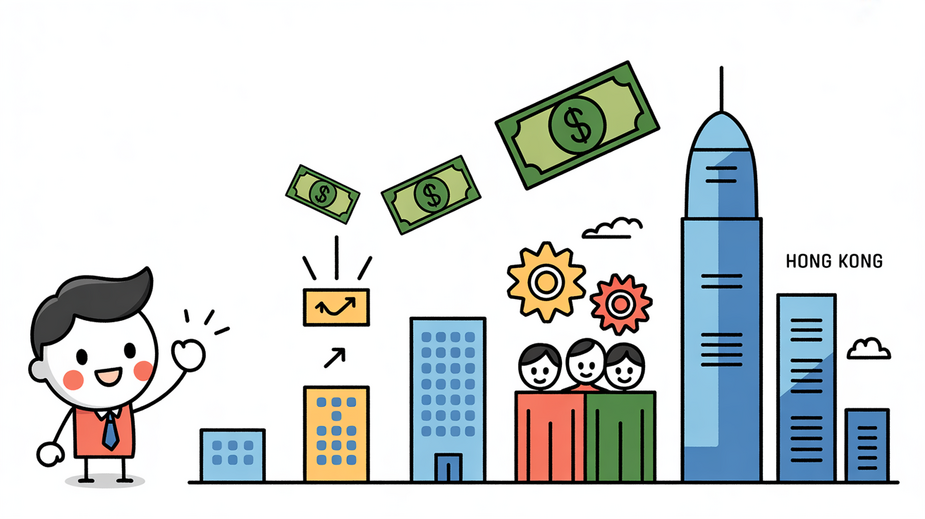
The Role of Tax Incentives in Hong Kong’s SME Growth Ecosystem
📋 Key Facts at a Glance
- Two-Tiered Profits Tax: Corporations pay 8.25% on first HK$2M, 16.5% on remainder; unincorporated businesses pay 7.5% and 15% respectively
- R&D Super Deduction: Up to 300% tax deduction for qualifying research and development expenditures
- SME Dominance: Over 98% of Hong Kong businesses are SMEs, employing 45% of the private sector workforce
Did you know that Hong Kong’s SMEs represent over 98% of all businesses and employ nearly half of the private sector workforce? In a city known for its competitive business environment, how do these small and medium-sized enterprises not only survive but thrive? The answer lies in Hong Kong’s strategic tax incentive ecosystem—a carefully designed framework that transforms tax savings into growth capital, innovation funding, and competitive advantage.
Hong Kong’s SME Landscape: The Economic Backbone
Hong Kong’s economic vitality is powered by its diverse SME sector, which spans everything from traditional manufacturing and retail to cutting-edge fintech and creative services. These businesses face unique challenges in one of the world’s most competitive markets, yet they continue to drive innovation, create employment, and maintain Hong Kong’s global competitiveness.
| Challenge Area | Impact on SMEs | Tax Solution |
|---|---|---|
| Access to Capital | Limited funding for expansion and innovation | Two-tiered profits tax preserves cash flow |
| Digital Transformation | High costs of technology adoption | R&D deductions reduce innovation costs |
| Operating Costs | High rent, labor, and compliance expenses | Reduced tax burden improves affordability |
| Talent Retention | Competition for skilled professionals | Tax savings fund competitive compensation |
Strategic Tax Incentives: Hong Kong’s Growth Catalyst
Hong Kong’s tax incentive framework is specifically designed to address the unique challenges faced by SMEs while amplifying their growth potential. These strategic measures provide more than just tax relief—they create a supportive ecosystem where businesses can reinvest, innovate, and scale effectively.
The Two-Tiered Profits Tax System
Introduced in 2018/19 and refined for 2024-2025, Hong Kong’s two-tiered profits tax system is a game-changer for SMEs. Corporations enjoy an 8.25% tax rate on their first HK$2 million of assessable profits, with the remainder taxed at 16.5%. For unincorporated businesses, the rates are even more favorable at 7.5% and 15% respectively.
R&D Super Deductions: Fueling Innovation
Hong Kong offers enhanced tax deductions for qualifying research and development expenditures, with some activities qualifying for up to 300% deductions. This means for every HK$100,000 spent on eligible R&D, SMEs can deduct HK$300,000 from their taxable profits, dramatically reducing the effective cost of innovation.
| R&D Activity Type | Deduction Rate | Maximum Benefit |
|---|---|---|
| Qualifying R&D expenditures | Up to 300% | Substantial reduction in taxable income |
| Payments to designated research institutions | 300% | Enhanced collaboration incentives |
| Capital expenditure on R&D plant/machinery | 100% immediate write-off | Accelerated equipment investment recovery |
Industry-Specific Concessions
Beyond general incentives, Hong Kong offers targeted tax concessions for strategic sectors. These include benefits for maritime businesses, aircraft leasing, corporate treasury centers, and family investment holding vehicles (FIHVs). The FIHV regime, for instance, offers a 0% tax rate on qualifying income for vehicles with at least HK$240 million in assets under management.
Transforming Tax Savings into Growth Capital
The true power of Hong Kong’s tax incentives lies not in the savings themselves, but in how SMEs strategically reinvest these funds. Successful businesses treat tax savings as growth capital, directing them toward areas that build long-term competitive advantage.
- Operational Scaling: Use tax savings to fund capital expenditures—upgrading facilities, acquiring advanced equipment, or expanding inventory. This direct investment supports physical growth without heavy reliance on external financing.
- Talent Development: Invest in competitive compensation packages, comprehensive training programs, and employee benefits. A skilled, motivated workforce drives innovation and productivity improvements.
- Technology Adoption: Fund digital transformation initiatives—modern software, automation tools, e-commerce platforms, and cybersecurity measures. These investments improve efficiency and future-proof your business.
- Market Expansion: Allocate resources to international market research, participation in global trade shows, and development of overseas distribution channels.
Navigating Compliance: Maximizing Your Benefits
To fully leverage Hong Kong’s tax incentives, SMEs must navigate compliance requirements effectively. This involves understanding eligibility criteria, maintaining proper documentation, and staying current with regulatory changes.
Essential Compliance Steps
- Verify Eligibility: Carefully review conditions for each incentive. R&D deductions, for example, require specific documentation proving the activities qualify as research and development.
- Maintain Comprehensive Records: Keep detailed financial ledgers, invoices, receipts, and documentation demonstrating compliance with incentive conditions. Hong Kong requires record retention for 7 years.
- Stay Updated: Tax regulations evolve. Monitor official IRD announcements, government publications, and professional tax updates to ensure you’re working with current information.
- Seek Professional Advice: Complex incentives like the FSIE regime or FIHV benefits often require specialized knowledge. Consulting with tax professionals can prevent costly errors.
Common Pitfalls to Avoid
| Pitfall | Consequence | Prevention Strategy |
|---|---|---|
| Incorrect R&D classification | Disallowed deductions and penalties | Document activities against IRD guidelines |
| Multiple entities claiming lower tier | Reassessment and interest charges | Coordinate within connected groups |
| Inadequate documentation | Inability to substantiate claims during audit | Implement systematic record-keeping |
| Missing filing deadlines | Late filing penalties and interest | Set calendar reminders for key dates |
Real-World Success Stories
Hong Kong’s tax incentives have fueled remarkable SME growth across diverse sectors. These success stories demonstrate how strategic tax planning translates into tangible business outcomes.
| Business Type | Incentives Leveraged | Growth Outcomes |
|---|---|---|
| Fintech Startup | R&D deductions, Two-tiered tax | Tripled development team, launched 3 new products in 18 months |
| Traditional Manufacturer | Two-tiered tax, Capital allowances | Automated 60% of production, increased output by 40% |
| Export Trading Company | Tax savings reinvestment | Expanded to 5 new markets, increased revenue by 150% |
| Creative Agency | Digital transformation incentives | Developed proprietary AI tools, won 8 major international clients |
Future-Proofing: Emerging Trends and Opportunities
Hong Kong’s tax incentive framework continues to evolve, with several emerging trends offering new opportunities for SMEs:
Digital Tax Administration
The IRD is enhancing digital platforms to streamline tax compliance. Future developments may include AI-powered filing assistance, real-time tax calculations, and simplified online documentation submission, reducing administrative burdens for SMEs.
Green Economy Incentives
As sustainability becomes increasingly important, Hong Kong is exploring tax incentives for green investments, renewable energy adoption, and environmentally friendly business practices. SMEs that embrace sustainability early may benefit from future tax concessions.
Global Minimum Tax Considerations
With Hong Kong implementing the OECD’s Pillar Two rules effective January 1, 2025, multinational SMEs with revenue exceeding €750 million need to plan for the 15% global minimum tax. While most SMEs won’t be affected, those approaching this threshold should monitor developments.
✅ Key Takeaways
- Hong Kong’s two-tiered profits tax system provides substantial savings: 8.25% on first HK$2M for corporations, 7.5% for unincorporated businesses
- R&D super deductions (up to 300%) make innovation financially viable for SMEs of all sizes
- Strategic reinvestment of tax savings into operations, talent, and technology drives sustainable growth
- Proper compliance and documentation are essential to maximize benefits and avoid penalties
- Emerging trends like digital administration and green incentives offer future opportunities
Hong Kong’s tax incentive ecosystem represents more than just financial relief—it’s a strategic growth catalyst that empowers SMEs to compete globally. By understanding and leveraging these incentives, businesses can transform tax savings into competitive advantages, driving innovation, expansion, and long-term success in one of the world’s most dynamic economies. The key lies not in merely claiming benefits, but in strategically deploying the resulting resources to build resilient, future-ready enterprises.
📚 Sources & References
This article has been fact-checked against official Hong Kong government sources and authoritative references:
- Inland Revenue Department (IRD) – Official tax rates, allowances, and regulations
- Rating and Valuation Department (RVD) – Property rates and valuations
- GovHK – Official Hong Kong Government portal
- Legislative Council – Tax legislation and amendments
- IRD Profits Tax Guide – Two-tiered profits tax system details
- IRD FSIE Regime – Foreign-sourced income exemption rules
- IRD FIHV Regime – Family investment holding vehicle incentives
Last verified: December 2024 | Information is for general guidance only. Consult a qualified tax professional for specific advice.