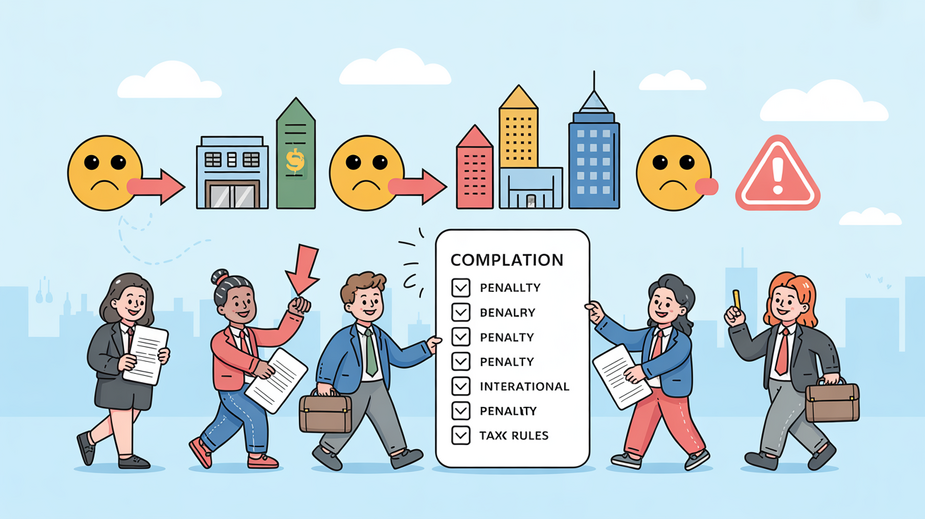
Transfer Pricing Penalties in Hong Kong: What Foreign Companies Need to Avoid
📋 Key Facts at a Glance
- Fact 1: Hong Kong follows OECD transfer pricing guidelines, requiring all cross-border related-party transactions to be priced at “arm’s length”
- Fact 2: The IRD can impose penalties up to 300% of the tax undercharged plus interest at 8.25% (from July 2025) for transfer pricing non-compliance
- Fact 3: Documentation requirements include Master File, Local File, and Country-by-Country reporting for large multinationals with revenue ≥ EUR 750 million
Did you know that a single transfer pricing misstep could cost your Hong Kong business hundreds of thousands in penalties, plus years of back taxes with interest? As Hong Kong strengthens its international tax compliance framework, foreign companies operating in the city face increasing scrutiny on their cross-border transactions. Understanding the penalty landscape isn’t just about avoiding fines—it’s about protecting your business from costly audits, reputational damage, and operational disruptions.
Hong Kong’s Transfer Pricing Framework: What Foreign Companies Must Know
Hong Kong has developed a sophisticated transfer pricing regulatory system that aligns with OECD standards while maintaining its competitive tax environment. The core principle is straightforward: transactions between related parties across borders must be priced as if they were between independent entities. This “arm’s length” principle applies to all cross-border transactions involving at least one Hong Kong entity, including:
- Goods and services sales between related companies
- Intellectual property licensing and royalty payments
- Intra-group loans, guarantees, and financial arrangements
- Management fees and service charges
- Cost-sharing arrangements
The Penalty Landscape: What’s at Stake for Non-Compliance
The Inland Revenue Department (IRD) takes transfer pricing compliance seriously, with penalties designed to deter non-compliance and ensure fair taxation. When the IRD identifies transfer pricing adjustments, the financial consequences can be substantial:
| Penalty Type | Description | Maximum Amount |
|---|---|---|
| Tax Undercharge Penalty | Additional tax on adjusted profits | Up to 300% of tax undercharged |
| Interest Charges | Interest on held-over tax | 8.25% per annum (from July 2025) |
| Documentation Penalties | Failure to maintain proper records | HK$100,000 per offense |
| Back Assessment Period | Years IRD can reassess | 6 years (10 years for fraud) |
Documentation Requirements: Your First Line of Defense
Proper documentation isn’t just paperwork—it’s your primary defense against transfer pricing penalties. Hong Kong follows a three-tiered documentation approach that varies based on your company’s size and complexity:
1. Master File Requirements
Required for multinational enterprises with consolidated group revenue exceeding HK$6.8 billion (approximately EUR 750 million). This high-level document provides an overview of the global business operations, including organizational structure, intangibles, intercompany transactions, and financial and tax positions.
2. Local File Requirements
Mandatory for Hong Kong entities engaged in related-party transactions exceeding specified thresholds. The Local File must include detailed information about the local entity’s related-party transactions, including:
- Detailed descriptions of related-party transactions
- Financial information of the local entity
- Comparability and functional analysis
- Transfer pricing methodology and application
- Supporting documentation and calculations
3. Country-by-Country (CbC) Reporting
Required for ultimate parent entities of multinational groups with consolidated revenue ≥ EUR 750 million. This report provides tax authorities with information on the global allocation of income, taxes paid, and economic activity among tax jurisdictions.
Common Pitfalls Foreign Companies Should Avoid
Based on IRD audit patterns and international experience, these are the most frequent transfer pricing mistakes that trigger penalties:
- Inadequate Documentation: Failing to prepare or maintain proper transfer pricing documentation is the #1 reason companies face penalties. Remember: if it’s not documented, it didn’t happen in the eyes of the IRD.
- Inconsistent Application of Methods: Using different transfer pricing methods for similar transactions without justification, or changing methods frequently without proper documentation.
- Ignoring Hong Kong’s Specific Rules: Assuming OECD guidelines apply exactly as in other jurisdictions without considering Hong Kong’s territorial tax system and specific regulations.
- Poor Comparables Selection: Using inappropriate comparable companies or failing to make proper adjustments for differences in markets, functions, and risks.
- Late or Incomplete Filing: Missing deadlines for Country-by-Country reports or other required filings can trigger automatic penalties.
Practical Steps for Compliance and Risk Mitigation
Protecting your business from transfer pricing penalties requires a proactive, systematic approach. Here’s a practical compliance roadmap:
| Step | Action Required | Timeline |
|---|---|---|
| 1. Risk Assessment | Identify all related-party transactions and assess compliance gaps | Quarterly review |
| 2. Documentation | Prepare Master File, Local File, and CbC reports as required | Contemporaneous |
| 3. Methodology Review | Ensure transfer pricing methods are appropriate and consistently applied | Annual review |
| 4. Record Keeping | Maintain all supporting documents for 7 years as required by law | Ongoing |
| 5. Professional Advice | Engage transfer pricing specialists for complex transactions | As needed |
The Global Context: Hong Kong’s Evolving International Tax Landscape
Hong Kong’s transfer pricing regime operates within a rapidly changing global tax environment. Two key developments foreign companies must monitor:
Foreign-Sourced Income Exemption (FSIE) Regime
Effective from January 2024, the expanded FSIE regime requires economic substance in Hong Kong for certain foreign-sourced income (dividends, interest, disposal gains, IP income) to qualify for tax exemption. This interacts closely with transfer pricing rules, as proper pricing of intra-group transactions affects substance requirements.
Global Minimum Tax (Pillar Two)
Enacted on June 6, 2025 and effective from January 1, 2025, this 15% minimum tax applies to multinational groups with revenue ≥ EUR 750 million. Transfer pricing directly impacts effective tax rates, making compliance more critical than ever for large multinationals.
✅ Key Takeaways
- Transfer pricing penalties in Hong Kong can reach 300% of tax undercharged plus 8.25% interest (from July 2025)
- Documentation is your best defense—prepare Master Files, Local Files, and CbC reports as required
- The IRD can reassess up to 6 years of tax returns (10 years for fraud cases)
- Hong Kong’s rules align with OECD standards but consider the territory’s specific tax system
- Proactive compliance is cheaper than reactive penalty management
In today’s interconnected global economy, transfer pricing isn’t just a technical tax issue—it’s a critical business risk management concern. Foreign companies operating in Hong Kong must view transfer pricing compliance as an integral part of their corporate governance, not just a year-end tax filing exercise. By investing in proper documentation, consistent methodologies, and professional advice, you can transform transfer pricing from a compliance burden into a strategic advantage that supports sustainable growth while minimizing tax risks.
📚 Sources & References
This article has been fact-checked against official Hong Kong government sources and authoritative references:
- Inland Revenue Department (IRD) – Official tax rates, allowances, and regulations
- Rating and Valuation Department (RVD) – Property rates and valuations
- GovHK – Official Hong Kong Government portal
- Legislative Council – Tax legislation and amendments
- IRD Transfer Pricing Documentation Guide – Master File and Local File requirements
- IRD Penalty Policy – Official penalty guidelines and rates
- OECD BEPS Guidelines – International transfer pricing standards
Last verified: December 2024 | Information is for general guidance only. Consult a qualified tax professional for specific advice.