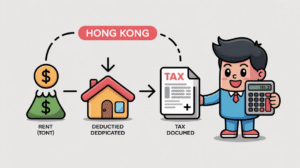
Renting to Family Members: Tax Pitfalls and Opportunities in Hong Kong
📋 Key Facts at a Glance
- Property Tax Rate: 15% on net assessable value (rental income minus rates and 20% statutory allowance)
- Stamp Duty Required: 0.25% to 1% of total rent depending on lease term (must be paid within 30 days)
- Market Rent Principle: IRD may assess tax based on market value if rent is significantly below market rate
- Family Member Restriction: Tenants cannot claim domestic rent deduction when renting from relatives
- Record Keeping: All rental records must be maintained for 7 years for tax compliance
- Arm’s Length Requirement: Family rentals must reflect terms comparable to unrelated parties
Thinking of renting your Hong Kong property to family members? While this arrangement seems convenient and trustworthy, it comes with specific tax obligations that many property owners overlook. Whether you’re helping adult children get started or providing accommodation to relatives, understanding Hong Kong’s property tax rules for family rentals is essential to avoid costly penalties and ensure full compliance with the Inland Revenue Department (IRD).
The Legal Foundation: Family Rentals Are Commercial Transactions
In Hong Kong, the law makes no distinction between renting to family members and renting to strangers. A tenancy relationship exists whenever you grant exclusive possession of a property for a defined period in exchange for rent. This legal definition applies regardless of your personal relationship with the tenant, and it triggers the same tax obligations and compliance requirements.
Essential Elements of a Valid Family Tenancy
- Exclusive Possession: Your family member tenant must have the right to exclude others, including you, from the property during the tenancy period
- Fixed Term: The agreement must specify a defined rental period with clear start and end dates
- Rent Consideration: Payment of rent must be agreed upon, regardless of whether it’s at market rate or a family discount
- Written Agreement: A formal written tenancy agreement is essential for tax purposes and legal protection
Critical Tax Pitfalls to Avoid
Pitfall #1: Below-Market Rent and IRD Scrutiny
The IRD does not automatically accept declared rental income from family members. If you charge rent significantly below market rate, the IRD may assess property tax based on the property’s fair market rental value rather than the actual rent received. This can result in unexpected tax liabilities.
Evidence You May Need to Provide:
- Comparative rental rates of similar properties in the same building or neighborhood
- Recent rental advertisements for comparable units (within the last 6 months)
- Professional valuation reports establishing market rental value
- Documentation showing the property’s size, condition, and amenities
Pitfall #2: Failure to Stamp Tenancy Agreements
Under Hong Kong’s Stamp Duty Ordinance, all tenancy agreements must be stamped within 30 days of execution, regardless of whether the tenant is a family member. The stamp duty rates for 2024-2025 are:
| Lease Term | Stamp Duty Rate | Calculation Basis |
|---|---|---|
| 1 year or less | 0.25% | Total rent payable |
| 1-3 years | 0.5% | Average yearly rent |
| More than 3 years | 1% | Average yearly rent |
Joint Liability: The landlord, tenant, and all signatories are jointly liable for stamp duty payment. While parties typically agree to split the cost equally, the law holds all parties responsible for full payment.
Pitfall #3: Confusing Non-Commercial Arrangements with Taxable Rentals
Not all arrangements where a family member occupies property constitute taxable rental income. Understanding this distinction is critical:
| Taxable Rental Arrangements | Non-Commercial Arrangements |
|---|---|
| Formal tenancy agreement with market-rate or near-market rent | Nominal contributions to household expenses without formal agreement |
| Regular payment of specified rent amounts | Cost-sharing in jointly owned property |
| Landlord’s clear profit motive | Accommodation provided without profit motive or commercial intent |
| Exclusive possession granted to family member | Minimal payments clearly not reflecting market value |
Property Tax Calculation: How It Works
Property tax in Hong Kong is charged at a flat rate of 15% on the net assessable value of rental property. Here’s how it’s calculated for the 2024-2025 tax year:
Net Assessable Value Calculation:
Gross Rental Income Received
Less: Rates paid by property owner
Less: Irrecoverable rent (if any)
Less: 20% statutory allowance for repairs and outgoings
= Net Assessable Value
Property Tax = Net Assessable Value × 15%
Understanding Allowable Deductions
- Rates Paid by Owner: Only rates actually paid by the property owner are deductible. Government rent charged on the same quarterly demand is not deductible for property tax purposes.
- Irrecoverable Rent: Only rent confirmed to be irrecoverable during the relevant year of assessment is deductible. If rent is subsequently recovered, it must be reported as rental income in the year of recovery.
- Statutory 20% Allowance: This allowance is automatically granted for repairs and outgoings. Property owners cannot claim actual repair expenses instead of this allowance for property tax purposes.
The Critical Restriction: No Domestic Rent Deductions for Family Tenants
This restriction prevents tax planning strategies where family members create rental arrangements primarily to generate tax deductions for the tenant while keeping rental income within the family. For the 2024-2025 tax year, the domestic rent deduction limits for qualifying non-family tenancies are:
- Standard maximum: HK$100,000 per year of assessment
- Enhanced maximum: HK$120,000 for taxpayers residing with a child born on or after 25 October 2023
Best Practices for Family Rental Arrangements
- Conduct Market Research: Before setting rental terms, research comparable properties in the area. Document rental rates for similar units in the same building or nearby buildings with similar size, condition, and amenities.
- Prepare a Comprehensive Written Agreement: Draft a formal tenancy agreement that includes full names and identification details, complete property description, rental amount and payment terms, lease duration with specific dates, and all responsibilities for utilities and repairs.
- Stamp the Agreement Promptly: Submit the tenancy agreement for stamping within 30 days of execution via the IRD e-Stamping service, in person at the Stamp Office, or by mail.
- Maintain Commercial Payment Practices: Ensure rent is paid regularly through traceable methods like bank transfers (preferred for audit trail), cheques with clear references, and issue proper receipts for all payments.
- File Accurate Property Tax Returns: Report rental income accurately and timely, claim only legitimate deductions, and retain supporting documentation for the required 7 years.
Real-World Scenarios and Tax Implications
Scenario 1: Market-Rate Rental to Adult Child
Situation: Parent rents apartment to adult child at HK$20,000 per month (market rate for the area) under a 2-year agreement.
Tax Implications:
- Stamp duty required: 0.5% of total rent (HK$20,000 × 24 months × 0.5% = HK$2,400)
- Property tax payable on net assessable value (after 20% deduction and rates)
- Adult child cannot claim domestic rent deduction (landlord is parent)
- Full commercial treatment; arm’s length principle satisfied
Scenario 2: Below-Market Rental to Sibling
Situation: Property owner rents apartment to sibling at HK$10,000 per month when comparable units rent for HK$18,000 per month.
Tax Implications:
- High risk of IRD scrutiny and challenge
- IRD may assess property tax based on market rental value (HK$18,000) rather than actual rent (HK$10,000)
- Owner must provide justification for below-market rent (e.g., property condition, limited amenities)
- Stamp duty calculated on actual rent paid but may need to defend rental amount
✅ Key Takeaways
- Treat family rentals as commercial transactions with formal agreements and proper documentation
- Charge market-rate rent to satisfy the IRD’s arm’s length principle and avoid tax assessments based on market value
- Stamp all tenancy agreements within 30 days at rates of 0.25% to 1% of total rent to avoid penalties up to 10 times the duty
- Understand that family member tenants cannot claim domestic rent deductions when renting from relatives
- Maintain comprehensive records for 7 years, including agreements, payment records, and market comparisons
- Distinguish between commercial rentals and non-commercial arrangements to determine taxability
- Consider professional advice for complex family rental situations to ensure full compliance
Renting property to family members in Hong Kong requires careful navigation of tax rules that treat these arrangements no differently than commercial transactions with strangers. By understanding the property tax calculation, stamp duty requirements, and the critical restriction on domestic rent deductions for family tenants, you can structure your family rental arrangement properly. Remember that thorough documentation, market-appropriate rental rates, and timely compliance are your best defenses against IRD scrutiny. When in doubt, consult with a qualified tax professional who can provide guidance specific to your circumstances.
📚 Sources & References
This article has been fact-checked against official Hong Kong government sources and authoritative references:
- Inland Revenue Department (IRD) – Official tax rates, allowances, and regulations
- Rating and Valuation Department (RVD) – Property rates and valuations
- GovHK – Official Hong Kong Government portal
- Legislative Council – Tax legislation and amendments
- IRD Property Tax Guide – Official property tax regulations and calculations
- IRD Stamp Duty Guide – Official stamp duty rates and requirements
- IRD Domestic Rent Deduction – Official guidance on domestic rent deductions
Last verified: December 2024 | Information is for general guidance only. Consult a qualified tax professional for specific advice.