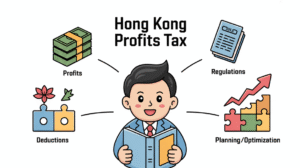

Tax Planning Strategies for Hong Kong Businesses: Reducing Your Profits Tax Liability
📋 Key Facts at a Glance
- Two-Tier Profits Tax: Corporations pay 8.25% on first HK$2M, 16.5% on remainder; unincorporated businesses pay 7.5% and 15% respectively
- Territorial Basis: Hong Kong only taxes profits sourced in Hong Kong – offshore profits may be exempt
- Loss Utilization: Trading losses can be carried forward indefinitely to offset future profits
- Transfer Pricing: Arm’s length principle applies to all cross-border related-party transactions
Did you know that Hong Kong businesses can legally reduce their profits tax liability by thousands of dollars through strategic planning? With Hong Kong’s competitive tax system offering significant advantages, understanding how to navigate the rules effectively can make a substantial difference to your bottom line. This comprehensive guide explores proven strategies that smart businesses use to optimize their tax position while maintaining full compliance with the Inland Revenue Department.
Mastering Hong Kong’s Two-Tier Profits Tax System
Hong Kong’s two-tier profits tax system, introduced in 2018/19, represents one of the most business-friendly tax structures in Asia. This system provides substantial tax relief for small and medium-sized enterprises while maintaining competitive rates for larger corporations. Understanding how to maximize benefits from this structure is the foundation of effective tax planning.
| Business Type | First HK$2M Rate | Remainder Rate | Effective Tax on HK$3M Profit |
|---|---|---|---|
| Corporation | 8.25% | 16.5% | HK$247,500 |
| Unincorporated Business | 7.5% | 15% | HK$225,000 |
Strategic Timing of Revenue and Expenses
While you cannot artificially split profits between entities, you can strategically time revenue recognition and expense accrual across financial years. This legitimate approach involves:
- Accelerating deductible expenses into the current year when profits are high
- Deferring revenue recognition to the next year if current profits exceed HK$2 million
- Planning capital expenditures to maximize depreciation allowances in profitable years
- Timing bonus payments and other deductible staff costs strategically
Maximizing Deductible Business Expenses
The fundamental principle of Hong Kong profits tax is that you’re taxed on net profits – your income minus allowable expenses. The key test is whether expenses are incurred “wholly and exclusively” for producing taxable profits. Proper expense management can significantly reduce your tax liability.
Commonly Overlooked Deductible Expenses
Many businesses miss legitimate deductions that could reduce their tax bill. Ensure you’re claiming these common expenses:
| Expense Category | Examples | Key Requirements |
|---|---|---|
| Staff Costs | Salaries, bonuses, MPF contributions, training | Employment relationship must exist |
| Office Expenses | Rent, utilities, maintenance, cleaning | Must be for business premises |
| Professional Fees | Legal, accounting, consulting services | Must relate to business operations |
| Marketing & Promotion | Advertising, website costs, trade shows | Must promote business activities |
Strategic Depreciation Allowances
Depreciation allowances let you deduct the cost of business assets over their useful life. Hong Kong offers both initial allowances (in the year of purchase) and annual allowances (over subsequent years). Strategic timing of asset purchases can optimize your tax position.
Key Depreciation Strategies
- Time purchases strategically: Buying qualifying assets just before your financial year-end allows you to claim the initial allowance in the current tax year, providing immediate tax relief.
- Identify special allowances: Certain assets, particularly environmentally friendly equipment, may qualify for accelerated depreciation rates. Check current IRD guidelines for eligible categories.
- Maintain asset registers: Keep detailed records of all business assets, including purchase dates, costs, and usage details to support depreciation claims.
- Review asset classifications: Ensure assets are correctly classified as plant and machinery, industrial buildings, or commercial buildings, as different rates apply.
Optimizing Business Structure for Tax Efficiency
Your choice of business structure significantly impacts your tax liability. Hong Kong offers several options, each with different tax implications. The optimal structure depends on your business size, growth plans, and international operations.
| Feature | Sole Proprietorship | Limited Company |
|---|---|---|
| Taxation Basis | Owner taxed personally on business profits | Company taxed as separate entity |
| Tax Rates | Progressive rates up to 15% or standard rate | 8.25% on first HK$2M, 16.5% on remainder |
| Liability Protection | Unlimited personal liability | Limited liability protection |
| Offshore Claims | Available but less common | Commonly used for international operations |
Leveraging Hong Kong’s Territorial Tax System
Hong Kong operates on a territorial basis of taxation – only profits sourced in Hong Kong are taxable. This creates significant opportunities for businesses with international operations. To qualify for offshore profits exemption:
- Maintain operations outside Hong Kong: Key business activities, decision-making, and value creation should occur outside Hong Kong
- Document everything: Keep detailed records of contracts, negotiations, and operations conducted outside Hong Kong
- Structure contracts carefully: Ensure contracts are negotiated and signed outside Hong Kong where possible
- Consider the FSIE regime: Since January 2024, the Foreign-Sourced Income Exemption regime requires economic substance in Hong Kong for certain types of passive income
Effective Loss Utilization Strategies
Business losses aren’t just setbacks – they’re potential tax assets. Hong Kong allows trading losses to be carried forward indefinitely to offset future profits. Effective loss management can provide significant tax relief during recovery periods.
| Year | Assessable Profit/(Loss) | Loss Utilized | Loss Carried Forward | Taxable Profit |
|---|---|---|---|---|
| Year 1 | (HK$500,000) | HK$0 | HK$500,000 | HK$0 |
| Year 2 | HK$300,000 | HK$300,000 | HK$200,000 | HK$0 |
| Year 3 | HK$400,000 | HK$200,000 | HK$0 | HK$200,000 |
Transfer Pricing Compliance for International Businesses
For businesses with cross-border transactions between related entities, transfer pricing compliance is essential. Hong Kong follows the arm’s length principle, requiring that transactions between related parties be priced as if they were between independent entities.
Essential Transfer Pricing Documentation
The Inland Revenue Department requires comprehensive documentation to support transfer pricing policies. Key components include:
- Master File: Overview of the global business operations, organizational structure, and transfer pricing policies
- Local File: Detailed analysis of specific Hong Kong transactions, including functional analysis and benchmarking studies
- Country-by-Country Report: Required for multinational groups with consolidated revenue exceeding €750 million
- Supporting documentation: Contracts, invoices, financial statements, and market analyses supporting pricing decisions
Proactive Tax Risk Management
Effective tax planning isn’t just about minimizing current liabilities – it’s about managing future risks. With Hong Kong’s tax environment evolving (including the new Global Minimum Tax effective January 2025), proactive risk management is essential.
Building a Robust Tax Compliance Framework
- Implement real-time tracking: Use integrated systems to monitor tax positions continuously and identify issues early
- Maintain audit-ready records: Keep all documentation organized and accessible for at least 7 years
- Stay informed on changes: Monitor updates to Hong Kong tax laws and international developments like BEPS 2.0
- Conduct regular reviews: Periodically assess your tax positions and strategies for optimization opportunities
- Consider the Global Minimum Tax: If your group revenue exceeds €750 million, prepare for the 15% minimum tax effective from January 2025
✅ Key Takeaways
- Hong Kong’s two-tier profits tax system offers significant savings: 8.25% on first HK$2M for corporations
- Proper expense documentation and strategic timing can legally reduce taxable profits by thousands
- Business structure choice impacts both tax rates and liability protection – limited companies offer advantages
- Offshore profits may be exempt from Hong Kong tax if properly structured and documented
- Transfer pricing compliance is essential for businesses with cross-border related-party transactions
- Proactive tax risk management prepares your business for audits and regulatory changes
Effective tax planning in Hong Kong requires balancing optimization with compliance. While the strategies outlined here can significantly reduce your tax liability, they must be implemented within the legal framework. The most successful businesses combine strategic planning with meticulous record-keeping and professional advice. Remember, tax planning is an ongoing process – regularly review your position, stay informed about regulatory changes, and adapt your strategies to maximize benefits while maintaining full compliance with Hong Kong’s evolving tax landscape.
📚 Sources & References
This article has been fact-checked against official Hong Kong government sources and authoritative references:
- Inland Revenue Department (IRD) – Official tax rates, allowances, and regulations
- Rating and Valuation Department (RVD) – Property rates and valuations
- GovHK – Official Hong Kong Government portal
- Legislative Council – Tax legislation and amendments
- IRD Profits Tax Guide – Comprehensive profits tax information and rates
- IRD Transfer Pricing Documentation – Master File and Local File requirements
- IRD Territorial Source Principle Guide – Offshore profits exemption guidance
Last verified: December 2024 | Information is for general guidance only. Consult a qualified tax professional for specific advice.