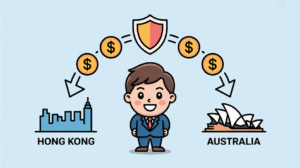

The Impact of Hong Kong’s Double Tax Treaties on Dividend and Interest Income
📋 Key Facts at a Glance
- Fact 1: Hong Kong has Comprehensive Double Taxation Agreements (CDTAs) with 45+ jurisdictions, including Mainland China, Singapore, UK, Japan, and major European countries
- Fact 2: Without treaty protection, foreign withholding tax on dividends can reach 30%, but treaties typically reduce this to 5-15% based on ownership levels
- Fact 3: Interest income often qualifies for 0% withholding tax under Hong Kong treaties when paid to approved financial institutions or qualifying entities
Did you know that a Hong Kong company receiving dividends from a foreign subsidiary could pay up to 30% in withholding tax without treaty protection, but with the right double tax treaty, that rate could drop to just 5%? Hong Kong’s extensive network of Comprehensive Double Taxation Agreements (CDTAs) serves as a powerful tool for international businesses, transforming cross-border income flows from tax-heavy burdens to efficient profit streams. In this guide, we’ll explore how these treaties specifically impact dividend and interest income, and how you can leverage them to optimize your international tax position.
Hong Kong’s Expanding Treaty Network: Your Global Tax Passport
Hong Kong’s strategic position as an international financial hub is reinforced by its growing network of Comprehensive Double Taxation Agreements (CDTAs). As of 2024, Hong Kong has established treaties with over 45 jurisdictions worldwide, including economic powerhouses like Mainland China, Singapore, the United Kingdom, Japan, and numerous European nations. These agreements aren’t just legal documents—they’re your business’s global tax passport, providing predictable tax treatment across borders.
The primary purpose of these treaties is to eliminate double taxation—the scenario where the same income gets taxed in both the source country and the recipient’s home country. By clearly defining which country has the right to tax specific types of income, CDTAs create a stable, predictable environment that encourages cross-border investment and trade. For businesses operating internationally, understanding which jurisdictions have treaties with Hong Kong is the first step toward tax-efficient global operations.
How Treaties Differentiate Between Income Types
Double tax treaties treat different types of income differently. While both dividends and interest are considered passive investment income, they’re governed by separate treaty articles with distinct rules and rate limitations. Understanding these differences is crucial for effective tax planning:
| Income Type | Treaty Article | Key Characteristics |
|---|---|---|
| Dividends | Article 10 | Rates often vary by ownership percentage (5% for substantial holdings, 10-15% for portfolio) |
| Interest | Article 11 | Often 0% for approved financial institutions, 10-15% for others |
| Royalties | Article 12 | Typically 3-10% depending on treaty terms |
Dividend Taxation: From 30% to 5% with Treaty Protection
Without treaty protection, dividends flowing across borders face significant tax erosion. Many countries impose withholding taxes of up to 30% on dividends paid to foreign entities. This means for every HK$1,000,000 in dividends, HK$300,000 could be withheld at source before the payment reaches Hong Kong. The impact becomes even more severe in multi-layered corporate structures where dividends pass through multiple jurisdictions.
| Payment Stage | Dividend Amount | Withholding Tax (No Treaty) | Net Amount Received |
|---|---|---|---|
| Operating Co. to Intermediate Holding | HK$1,000,000 | HK$300,000 (30%) | HK$700,000 |
| Intermediate to Parent Co. | HK$700,000 | HK$210,000 (30%) | HK$490,000 |
| Total Tax Erosion | HK$1,000,000 | HK$510,000 (51%) | HK$490,000 |
How Treaties Transform Dividend Taxation
Hong Kong’s double tax treaties dramatically reduce these withholding tax rates. Most treaties establish maximum caps on dividend withholding, typically ranging from 5% to 15%. The specific rate often depends on the level of ownership the Hong Kong entity holds in the dividend-paying company:
| Ownership Threshold | Typical Treaty Rate | Example Jurisdictions |
|---|---|---|
| Substantial Holding (≥10% or 25%) | 5% | Mainland China, Singapore, UK, Japan |
| Portfolio Holding (<10% or 25%) | 10-15% | Most treaty partners |
Interest Income: The 0% Withholding Tax Opportunity
Interest income presents even more significant optimization opportunities under Hong Kong’s tax treaties. While dividends often face graduated rates, interest payments can frequently qualify for 0% withholding tax at source. This makes Hong Kong an exceptionally attractive location for regional treasury centers and financing operations.
Many of Hong Kong’s treaties contain specific provisions that eliminate withholding tax on interest payments when certain conditions are met. The most common qualification is that the recipient must be an “approved financial institution” or similar qualifying entity. This includes:
- Licensed banks and financial institutions
- Government entities and central banks
- In some treaties, unrelated commercial entities
- Entities specifically approved by the source country’s tax authorities
Navigating Anti-Abuse Provisions
Modern tax treaties include robust anti-abuse provisions to prevent treaty shopping. The most common are:
- Principal Purpose Test (PPT): Denies treaty benefits if obtaining the benefit was one of the principal purposes of the arrangement
- Limitation of Benefits (LOB): Sets specific criteria that must be met to qualify for treaty benefits
- Beneficial Ownership Requirement: Ensures the Hong Kong entity genuinely owns and controls the income
Practical Treaty Application: Real-World Examples
Example 1: Mainland China Dividends
A Hong Kong company holds 30% of a Mainland Chinese subsidiary. Without the Mainland China-Hong Kong Double Taxation Arrangement, dividends would face 10% withholding tax. With the treaty, the rate drops to 5% because the Hong Kong company holds more than 25% and is the beneficial owner. For HK$10 million in dividends, this saves HK$500,000 in withholding tax.
Example 2: ASEAN Interest Payments
A Hong Kong licensed bank provides a loan to a project in Singapore. Under the Hong Kong-Singapore treaty, interest payments to approved financial institutions qualify for 0% withholding tax. Without the treaty, Singapore would withhold 15%. For HK$50 million in annual interest, this saves HK$7.5 million.
Example 3: European Holding Structure
A multinational uses a Hong Kong holding company for its European investments. Dividends from a French subsidiary (where the Hong Kong company holds 15%) face 15% withholding under the treaty, compared to 30% without. Interest payments to the Hong Kong entity (if it qualifies) could be at 0% instead of France’s domestic rate.
Compliance Essentials: Claiming Your Treaty Benefits
Claiming treaty benefits requires proactive compliance. The process typically involves:
- Obtain a Tax Residency Certificate (TRC): Apply to the Hong Kong Inland Revenue Department for this official document proving your Hong Kong tax residency
- Submit Documentation to Source Country: Provide the TRC, beneficial ownership declarations, and supporting documents to the foreign payer or tax authority
- Complete Required Forms: Many countries have specific forms for claiming reduced treaty rates
- Maintain Robust Records: Keep all documentation for at least 7 years as required by Hong Kong law
| Document Type | Purpose | Issuing Authority |
|---|---|---|
| Tax Residency Certificate (TRC) | Proof of Hong Kong tax residency | Hong Kong IRD |
| Beneficial Ownership Declaration | Evidence of genuine income control | Company-prepared with supporting docs |
| Corporate Structure Chart | Illustrates ownership chain | Company-prepared |
| Financial Institution License | For 0% interest rate claims | Hong Kong Monetary Authority |
Future-Proofing Your Treaty Strategy
The international tax landscape is evolving rapidly. To future-proof your treaty strategy:
- Monitor Treaty Developments: Hong Kong continues to negotiate new treaties and update existing ones
- Consider Global Minimum Tax: Hong Kong enacted the 15% global minimum tax effective January 1, 2025, which may interact with treaty benefits
- Maintain Substance: Ensure your Hong Kong entity has genuine economic substance to withstand scrutiny
- Review Structures Regularly: What works today may not be optimal tomorrow as treaties and domestic laws evolve
✅ Key Takeaways
- Hong Kong’s 45+ double tax treaties can reduce dividend withholding from 30% to as low as 5% for substantial holdings
- Interest income often qualifies for 0% withholding tax under treaties when paid to approved financial institutions
- Claiming treaty benefits requires a Tax Residency Certificate and proof of beneficial ownership
- The FSIE regime and global minimum tax (effective 2025) interact with treaty benefits and require careful planning
- Maintaining economic substance in Hong Kong is essential for both treaty claims and domestic tax compliance
Hong Kong’s double tax treaty network represents one of the city’s most valuable assets for international businesses. By strategically leveraging these agreements, companies can transform cross-border dividend and interest flows from tax-heavy burdens to efficient profit streams. However, successful treaty utilization requires more than just checking a box—it demands proactive compliance, robust documentation, and ongoing monitoring of the evolving international tax landscape. As global tax transparency increases and anti-abuse measures strengthen, the businesses that thrive will be those that build genuine substance in Hong Kong while expertly navigating the treaty benefits available to them.
📚 Sources & References
This article has been fact-checked against official Hong Kong government sources and authoritative references:
- Inland Revenue Department (IRD) – Official tax rates, allowances, and regulations
- Rating and Valuation Department (RVD) – Property rates and valuations
- GovHK – Official Hong Kong Government portal
- Legislative Council – Tax legislation and amendments
- IRD Comprehensive Double Taxation Agreements – Complete list of Hong Kong’s tax treaties
- IRD Foreign-Sourced Income Exemption (FSIE) Regime – Guidance on foreign income taxation
- IRD Certificate of Resident Status – Tax Residency Certificate application guidance
Last verified: December 2024 | Information is for general guidance only. Consult a qualified tax professional for specific advice.