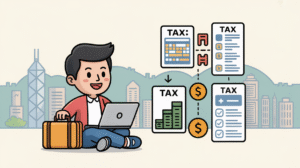
Navigating Double Taxation: Relief Strategies for Expats in Hong Kong and Mainland China
📋 Key Facts at a Glance
- Hong Kong-Mainland DTA: Comprehensive agreement covering Salaries Tax, Profits Tax, Property Tax, and Individual/Enterprise Income Tax
- Tax Relief Methods: Primary mechanisms include tax credit method and foreign income exemption
- Critical Deadline: Hong Kong individual tax returns typically due early June 2025 for 2024/25 tax year
- Residency Determination: Uses “tie-breaker” rules including 183-day test and permanent home test
- Global Minimum Tax: Hong Kong enacted Pillar Two legislation effective January 1, 2025 for large MNEs
Are you an expat earning income in both Hong Kong and Mainland China? Do you worry about paying tax twice on the same earnings? With Hong Kong’s territorial tax system and Mainland China’s worldwide income approach, navigating cross-border taxation can feel like walking through a regulatory minefield. The good news: a comprehensive Double Taxation Arrangement (DTA) exists to protect you from double taxation, but only if you understand how to use it properly.
Understanding Double Taxation: When Two Tax Authorities Want Your Money
Double taxation occurs when the same income is subject to tax claims from both Hong Kong and Mainland China. This typically happens because each jurisdiction has different rules about who they tax and what income is taxable. Hong Kong operates on a territorial basis—only Hong Kong-sourced profits are taxable. Mainland China, however, taxes worldwide income for its tax residents. When your work, investments, or business activities span both territories, you risk being caught in the middle.
Common Double Taxation Scenarios for Expats
Several income types are particularly vulnerable to double taxation. Understanding these scenarios helps you identify potential issues before they become costly problems:
| Income Type | Double Taxation Risk |
|---|---|
| Employment Income | Working physically in one jurisdiction while being tax resident in the other; cross-border commuting arrangements |
| Dividends & Interest | Taxed at source (where payer is located) and potentially again by recipient’s country of tax residence |
| Rental Income | Taxed where property is located (source rule) and potentially again by individual’s country of tax residence |
| Business Profits | Taxed where permanent establishment exists and potentially by home jurisdiction |
Hong Kong-Mainland China DTA: Your Protection Against Double Taxation
The “Arrangement for the Avoidance of Double Taxation and the Prevention of Fiscal Evasion with respect to Taxes on Income” is the official bilateral agreement that prevents you from being taxed twice. This comprehensive DTA covers all major taxes: Hong Kong’s Salaries Tax, Profits Tax, and Property Tax, plus Mainland China’s Individual Income Tax and Enterprise Income Tax.
How the DTA Allocates Taxing Rights
The DTA provides clear rules about which jurisdiction has primary taxing rights over different income types. Here’s how it typically works:
| Income Type | Primary Taxing Right | Relief Method |
|---|---|---|
| Employment Income | Where employment is physically exercised (subject to 183-day rule) | Tax Credit Method |
| Business Profits | Only taxable in other jurisdiction if through Permanent Establishment | Tax Credit Method |
| Dividends, Interest, Royalties | Both source and residence jurisdictions (with treaty rate limits) | Tax Credit Method |
Determining Your Tax Residency: The Foundation of DTA Benefits
Your tax residency status determines which jurisdiction has primary taxing rights and how DTA benefits apply. Getting this wrong can invalidate your entire tax strategy. Both Hong Kong and Mainland China have specific residency tests:
Key Residency Tests and Documentation
- 183-Day Test: Physical presence for 183 days or more in a tax year often creates tax residency
- Permanent Home Test: Where you maintain a dwelling continuously available to you
- Center of Vital Interests: Location of your personal and economic relations
- Habitual Abode: Where you normally live
- Nationality: Final tie-breaker if other tests don’t resolve dual residency
Maintain meticulous documentation to support your residency claims:
- Passport stamps: To verify physical presence dates for 183-day test
- Lease agreements/property documents: For permanent home test
- Utility bills and bank statements: Showing location of economic activities
- Family and social records: Evidence of where your vital interests lie
Claiming Tax Relief: Methods, Procedures, and Deadlines
Successfully claiming DTA benefits requires understanding the relief methods and strict adherence to filing deadlines. Missing deadlines can mean forfeiting your right to relief and facing double taxation.
Two Primary Relief Methods
The DTA provides two main ways to eliminate double taxation:
- Tax Credit Method: Most common. Tax paid in one jurisdiction is credited against tax liability on same income in other jurisdiction. Limited to tax that would have been payable in residence jurisdiction.
- Foreign Income Exemption: Certain income types may be exempt in one jurisdiction if DTA grants sole taxing right to other jurisdiction.
Critical Filing Deadlines for 2024-2025
| Filing/Claim Type | Typical Deadline | Key Considerations |
|---|---|---|
| Hong Kong Salaries Tax Return | Early June 2025 (issued early May) | Electronic filing may allow extension. DTA claims made within tax return submission |
| Mainland China IIT Final Settlement | March 1 – June 30 annually | Reconciles provisional filings; includes DTA credit claims |
| Specific DTA Relief Application | With annual return or assessment notice | Requires formal application with proof of tax paid in other jurisdiction |
Cross-Border Reporting: What You Must Disclose
Expats with income in both jurisdictions face specific reporting obligations. Transparency is crucial, especially with international information exchange initiatives:
Hong Kong Reporting Requirements
- Form IR56B: Employers must file this detailing employee income and benefits
- Individual Tax Returns: Must accurately reflect all Hong Kong-sourced income
- DTA Claims: Must be properly documented and submitted with tax returns
Mainland China Reporting Requirements
- Common Reporting Standard (CRS): Financial institutions report non-resident accounts to tax authorities
- Global Income Disclosure: Tax residents must declare worldwide income
- DTA Benefit Claims: Must be properly documented in annual IIT filings
Avoiding Common Cross-Border Tax Pitfalls
Even with the DTA, expats can fall into traps that lead to audits, penalties, or unexpected tax bills. Here are the most common pitfalls and how to avoid them:
| Common Pitfall | Impact | Mitigation Strategy |
|---|---|---|
| Unrecognized Permanent Establishment | Unexpected tax liability in secondary jurisdiction | Understand local PE definitions; track business activities meticulously |
| Accidental Double Non-Taxation | Risk of audit, penalties, and back taxes | Ensure all income declared in appropriate jurisdictions; apply DTA correctly |
| Currency Conversion Errors | Inaccurate reported income; potential penalties | Use official exchange rates; maintain consistent conversion methods |
| Missing DTA Deadlines | Forfeiture of relief entitlements; double taxation | Mark key dates; submit claims with required documentation |
Future-Proofing Your Cross-Border Tax Position
The international tax landscape is constantly evolving. To protect your cross-border tax position, consider these forward-looking strategies:
Monitor Global Tax Developments
- Pillar Two Implementation: Hong Kong enacted Global Minimum Tax legislation effective January 1, 2025, applying 15% minimum effective tax rate to MNE groups with revenue ≥ EUR 750 million
- FSIE Regime: Hong Kong’s Foreign-Sourced Income Exemption regime expanded in January 2024, requiring economic substance for dividends, interest, disposal gains, and IP income
- DTA Amendments: Monitor potential updates to Hong Kong-Mainland China DTA provisions
Leverage Advance Ruling Mechanisms
Both Hong Kong’s IRD and Mainland China’s State Taxation Administration offer advance ruling procedures. These allow you to get official determinations on:
- Tax residency status for complex situations
- Application of DTA benefits to specific income types
- Tax implications of planned cross-border activities
- Permanent establishment determinations
✅ Key Takeaways
- The Hong Kong-Mainland China DTA provides essential protection against double taxation through tax credits and exemptions
- Accurate tax residency determination is foundational—use tie-breaker rules and maintain thorough documentation
- Meet all filing deadlines (Hong Kong returns typically due early June) to preserve DTA benefits
- Be aware of global developments including Pillar Two (effective Jan 1, 2025) and FSIE regime requirements
- Consider advance rulings for complex situations to obtain certainty before filing
- Maintain transparency with both jurisdictions to avoid penalties and ensure compliance
Navigating cross-border taxation between Hong Kong and Mainland China requires careful planning, but the comprehensive Double Taxation Arrangement provides clear pathways to avoid double taxation. By understanding your residency status, applying the correct relief methods, meeting all deadlines, and staying informed about evolving regulations, you can optimize your tax position while maintaining full compliance. Remember: when in doubt, seek professional advice tailored to your specific circumstances—the complexity of cross-border taxation often warrants expert guidance.
📚 Sources & References
This article has been fact-checked against official Hong Kong government sources and authoritative references:
- Inland Revenue Department (IRD) – Official tax rates, allowances, and regulations
- Rating and Valuation Department (RVD) – Property rates and valuations
- GovHK – Official Hong Kong Government portal
- Legislative Council – Tax legislation and amendments
- IRD Certificate of Resident Status – Official residency certification
- IRD Salaries Tax Guide – Individual income tax regulations
- IRD FSIE Regime – Foreign-sourced income exemption rules
Last verified: December 2024 | Information is for general guidance only. Consult a qualified tax professional for specific advice.