The Tax Advantages of Hong Kong’s Limited Partnership Fund (LPF) for Family Offices
📋 Key Facts at a Glance
- Introduction Date: LPF regime commenced 31 August 2020 under Cap. 637
- Profits Tax Exemption: 0% profits tax under Unified Fund Exemption (UFE) regime
- Carried Interest: 0% tax on eligible carried interest (effective 1 April 2020)
- Stamp Duty: Exemption on contribution, transfer, or withdrawal of LPF interests
- Capital Requirements: No minimum capital requirements
- Investment Scope: Flexible across PE, VC, credit, real assets, and family office structures
- Recent Developments: November 2024 consultation proposes expanded qualifying investments and simplified compliance
Are you a family office seeking to optimize your wealth management structure while maintaining tax efficiency? Hong Kong’s Limited Partnership Fund (LPF) regime offers a compelling solution that combines sophisticated regulatory oversight with world-class tax advantages. Since its introduction in 2020, the LPF has positioned Hong Kong as Asia’s premier destination for family wealth management, competing directly with traditional offshore jurisdictions while offering unique advantages for families focused on Asian investments.
Why Hong Kong’s LPF is Transforming Family Wealth Management
Hong Kong has strategically positioned itself as Asia’s leading wealth management hub, and the LPF regime represents a cornerstone of this strategy. Unlike traditional corporate structures, LPFs offer family offices a flexible, tax-efficient vehicle that can accommodate diverse investment strategies while providing limited liability protection. The regime was specifically designed to attract family offices away from offshore jurisdictions like the Cayman Islands and Singapore, offering comparable tax benefits with the added advantage of Hong Kong’s robust regulatory framework and proximity to Asian markets.
Understanding the LPF Structure: Legal Framework and Formation
Core Structural Elements
The Limited Partnership Fund Ordinance (Cap. 637) establishes a purpose-built regime that combines the flexibility of partnership structures with the legal certainty of corporate entities. An LPF consists of at least one general partner (GP) with unlimited liability and one or more limited partners (LPs) whose liability is restricted to their committed capital contributions.
- Separate Legal Personality: The LPF operates as a distinct legal entity capable of holding assets, entering contracts, and conducting legal proceedings in its own name
- Contractual Freedom: The limited partnership agreement governs all aspects of the fund’s operations with minimal statutory interference
- Mandatory Investment Manager: All LPFs must be managed by a licensed Type 9 (asset management) license holder regulated by the Securities and Futures Commission (SFC)
- Registration Requirement: LPFs must register with the Companies Registry and maintain a registered office in Hong Kong
Why LPFs Excel for Family Office Structures
The LPF structure offers particular advantages for family offices seeking to consolidate diverse investment portfolios. The regime accommodates both traditional closed-ended structures typical of private equity funds and modified open-ended arrangements through unitization of partnership interests. For single-family offices, the LPF can serve as the primary investment holding vehicle, with family members as limited partners and a family-controlled entity or professional manager acting as general partner.
Comprehensive Tax Advantages: The LPF’s Competitive Edge
Unified Fund Exemption (UFE) Regime: 0% Profits Tax
The cornerstone of the LPF’s tax efficiency is access to Hong Kong’s Unified Fund Exemption regime, which provides complete exemption from Hong Kong profits tax on qualifying transactions. This represents a significant advantage compared to standard corporate tax rates of 8.25% on the first HK$2 million and 16.5% on the remainder for corporations.
| Qualifying Condition | Requirement |
|---|---|
| Qualifying Investment Manager | Must be managed by a Type 9 licensed manager in Hong Kong |
| Qualifying Transactions | Profits must arise from specified transactions in qualifying assets |
| Non-Specified Person Requirement | Fund must not be a “specified person” carrying on other businesses |
| Incidental Transactions | Non-qualifying transactions must be incidental to main business |
Carried Interest Tax Concession: 0% Tax on Performance Fees
Beyond fund-level exemptions, Hong Kong offers a 0% tax rate on eligible carried interest received by fund managers and investment professionals. This concession, effective from 1 April 2020, directly addresses a key competitive disadvantage compared to jurisdictions like Singapore and Luxembourg.
- Qualifying Recipient: Fund managers, employees providing investment management services, and certain related entities
- Qualifying Payer: Must be paid by a fund that qualifies under the UFE regime
- Profit-Related Return: Must represent a profit-related return (hurdle rate requirement proposed for removal)
- Investment Management Services: Must be received for investment management services provided to the fund
Stamp Duty Exemptions: Frictionless Capital Movements
Hong Kong’s stamp duty regime has been significantly streamlined, with several key exemptions benefiting LPFs:
- Partnership Interest Transfers: Contributions, transfers, and withdrawals of interests in LPFs are exempt from stamp duty
- Underlying Asset Transactions: Qualifying transactions in securities undertaken by UFE-eligible funds are exempt from stamp duty
- Property Stamp Duty Updates: Important to note that Special Stamp Duty (SSD), Buyer’s Stamp Duty (BSD), and New Residential Stamp Duty (NRSD) were abolished on 28 February 2024
Hong Kong’s Broader Tax Advantages for Family Offices
Beyond the specific LPF concessions, family offices benefit from Hong Kong’s overall tax-friendly environment:
- Territorial Tax System: Only Hong Kong-sourced profits are taxable
- No Capital Gains Tax: Profits from disposal of capital assets are non-taxable unless part of a trading business
- Dividend Exemption: Dividends received are generally exempt from profits tax
- No Withholding Tax: No withholding tax on dividend, interest, or royalty payments to non-residents (except for certain IP royalties)
- No Estate Duty: Hong Kong abolished estate duty in 2006, facilitating efficient inter-generational wealth transfer
Integration with Family-Owned Investment Holding Vehicle (FIHV) Regime
In March 2023, Hong Kong introduced a dedicated tax concession regime for Family-Owned Investment Holding Vehicles (FIHVs), providing an alternative structuring option that complements the LPF framework.
Key Features of the FIHV Regime
- Profits Tax Exemption: 0% tax on qualifying transactions similar to the UFE
- Asset Threshold: Minimum asset threshold of HK$240 million under management
- Family Ownership: At least 95% of beneficial interests must be held by family members (reducible to 75% under specified conditions)
- Substantial Activities Requirement: Must employ at least two full-time qualified employees and incur minimum annual operating expenditure of HK$2 million in Hong Kong
- No Pre-Approval Required: Self-assessment compliance with exemption claimed in tax returns
LPF vs FIHV: Choosing the Right Structure
| Factor | LPF Structure | FIHV Structure |
|---|---|---|
| Legal Form | Limited Partnership | Corporation or other entity |
| Liability Protection | Limited for LPs; GP unlimited | Limited for all shareholders |
| Governance Flexibility | High contractual freedom | Subject to corporate law constraints |
| Regulatory Requirements | Must have Type 9 licensed manager | Must have eligible SFO manager |
| Minimum Assets | None | HK$240 million |
| Family Ownership | No specific requirement | 95% (or 75%) family-held |
| Best Suited For | Alternative investment strategies; multi-family offices; professional external management | Single-family offices; traditional long-only portfolios; smaller asset bases (above HK$240m threshold) |
Many sophisticated family offices utilize hybrid structures, combining an FIHV for liquid portfolio investments with one or more LPFs for alternative strategies such as private equity, venture capital, or real estate—thereby optimizing tax efficiency across the entire wealth platform.
November 2024 Proposed Enhancements: Expanding Competitiveness
On 25 November 2024, Hong Kong’s Financial Services and Treasury Bureau issued a comprehensive consultation paper proposing significant enhancements to the UFE, FIHV, and carried interest regimes. The consultation closed on 3 January 2025, with legislative amendments expected in 2025 and retrospective application anticipated.
Expanded Qualifying Investments
The consultation proposes expanding qualifying investments to include previously excluded asset classes that are increasingly important to modern family office portfolios:
- Immovable Property Outside Hong Kong: Addressing a significant gap for real estate-focused funds and family offices with global property holdings
- Direct Lending and Private Credit: Recognizing the rapid growth of private credit as an alternative asset class
- Interests in Non-Corporate Private Entities: Including partnerships, enabling investment in other LPFs and private partnership structures
- Virtual Assets: Encompassing cryptocurrencies, digital tokens, and other blockchain-based assets
- Environmental, Social and Governance (ESG) Assets: Including emission derivatives, carbon credits, and allowances
- Insurance-Linked Securities: Expanding access to alternative risk premia and catastrophe bonds
Enhanced Carried Interest Concession
The consultation proposes several improvements to make the carried interest regime more flexible and accessible:
- Removal of Hurdle Rate Requirement: Eliminating the preferred return threshold to accommodate venture capital and growth equity structures
- Expanded Profit Sources: Eligible carried interest would encompass profits from all UFE-qualifying transactions plus non-taxable offshore income
- Flexible Payment Flows: Removing restrictions to enable more efficient structuring for offshore master-feeder arrangements
- Simplified Certification: Eliminating the current Hong Kong Monetary Authority certification requirement
Operational Considerations and Compliance Framework
Regulatory Oversight Requirements
While LPFs enjoy significant tax advantages, they operate within a comprehensive regulatory framework:
- Investment Manager Licensing: All LPFs must appoint a Type 9 licensed manager subject to SFC conduct requirements
- Anti-Money Laundering (AML): Subject to Hong Kong’s AML/CTF regime with customer due diligence and monitoring requirements
- Tax Compliance: While exempt from profits tax, LPFs must file annual tax returns and maintain documentation supporting exemption claims
- Annual Returns: Must file annual returns with the Companies Registry disclosing prescribed information
Documentation and Governance Best Practices
Successful LPF operation requires robust documentation and governance practices:
- Limited Partnership Agreement: Core governing document addressing capital commitments, profit distribution, and governance rights
- Investment Management Agreement: Defines scope of services, compensation, and liability limitations
- Compliance Manuals: Comprehensive policies covering investment restrictions, conflicts of interest, and risk management
- Board and Advisory Committee Structure: Many family office LPFs establish advisory committees to oversee strategy and monitor performance
Practical Implementation Roadmap for Family Offices
- Phase 1: Strategic Assessment (4-6 weeks): Evaluate investment strategy alignment with UFE qualifying transactions, model tax efficiency versus current structure, assess operational readiness and Hong Kong presence requirements, engage tax advisors to confirm eligibility
- Phase 2: Structure Design (6-8 weeks): Design partnership structure (GP/LP allocation, capital commitments), select or establish investment manager entity, draft Limited Partnership Agreement and ancillary documentation, determine governance and succession planning
- Phase 3: Regulatory and Operational Setup (8-12 weeks): Register LPF with Companies Registry, obtain or confirm Type 9 license for investment manager, establish Hong Kong bank accounts and custodial arrangements, implement compliance infrastructure, appoint service providers
- Phase 4: Launch and Ongoing Management: Execute capital contributions and fund initial investments, establish regular compliance calendar, monitor regulatory developments, conduct periodic structure reviews
✅ Key Takeaways
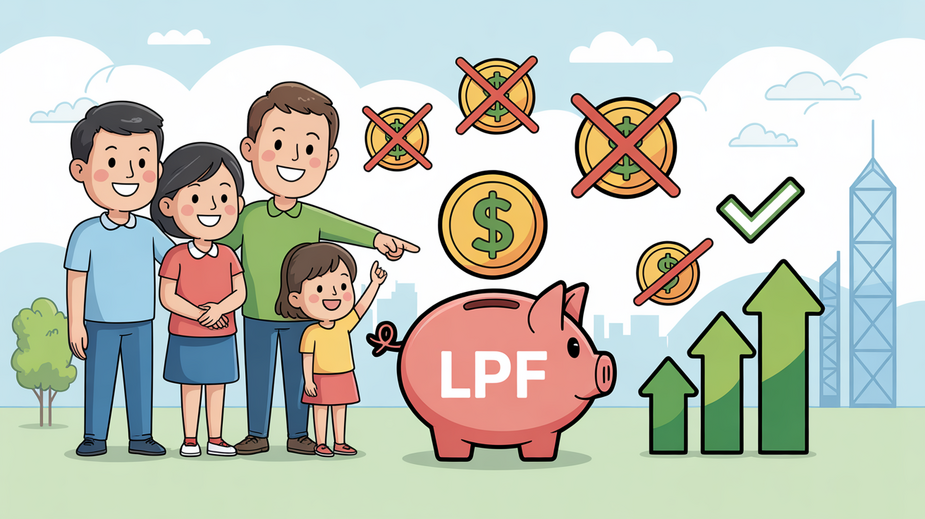
- Comprehensive Tax Efficiency: Hong Kong’s LPF regime delivers 0% profits tax under the Unified Fund Exemption, 0% carried interest tax, and stamp duty exemptions
- Structural Flexibility: LPFs accommodate diverse investment strategies from traditional private equity to emerging alternatives like private credit and virtual assets
- No Capital Barriers: Unlike many competitor jurisdictions, Hong Kong imposes no minimum asset requirements for LPF tax benefits
- Regulatory Credibility: Mandatory SFC-licensed investment manager requirements provide institutional credibility
- Re-Domiciliation Pathway: Family offices can migrate existing offshore structures to Hong Kong while preserving legal continuity
- Complementary FIHV Option: The parallel Family-Owned Investment Holding Vehicle regime provides an alternative corporate structure for traditional portfolios
- Strategic Asian Gateway: For families focused on Asian investments, Hong Kong offers geographic, time zone, and connectivity advantages
- Future-Proofed Framework: Ongoing government consultation demonstrates commitment to maintaining global competitiveness
- Implementation Roadmap: Successful LPF establishment requires 4-6 months of strategic assessment, structure design, and regulatory setup
- Action Required: The November 2024 proposed enhancements create an opportune moment for family offices to evaluate Hong Kong LPF structures
Hong Kong’s Limited Partnership Fund regime represents a sophisticated, tax-efficient solution for family offices seeking to optimize their wealth management structures. With comprehensive tax exemptions, flexible investment mandates, and a robust regulatory framework, the LPF positions Hong Kong as Asia’s premier destination for family wealth management. As the proposed 2024 enhancements demonstrate, Hong Kong remains committed to evolving its offering to meet the changing needs of global family offices while maintaining its competitive edge in the Asian wealth management landscape.
📚 Sources & References
This article has been fact-checked against official Hong Kong government sources and authoritative references:
- Inland Revenue Department (IRD) – Official tax rates, allowances, and regulations
- Rating and Valuation Department (RVD) – Property rates and valuations
- GovHK – Official Hong Kong Government portal
- Legislative Council – Tax legislation and amendments
- IRD FIHV Regime – Family-Owned Investment Holding Vehicle tax concessions
- IRD Profits Tax Guide – Corporate tax rates and exemptions
- IRD Stamp Duty Guide – Stamp duty rates and exemptions
Last verified: December 2024 | Information is for general guidance only. Consult a qualified tax professional for specific advice.